Skip to Content

About: Joann

Recent Posts by Joann

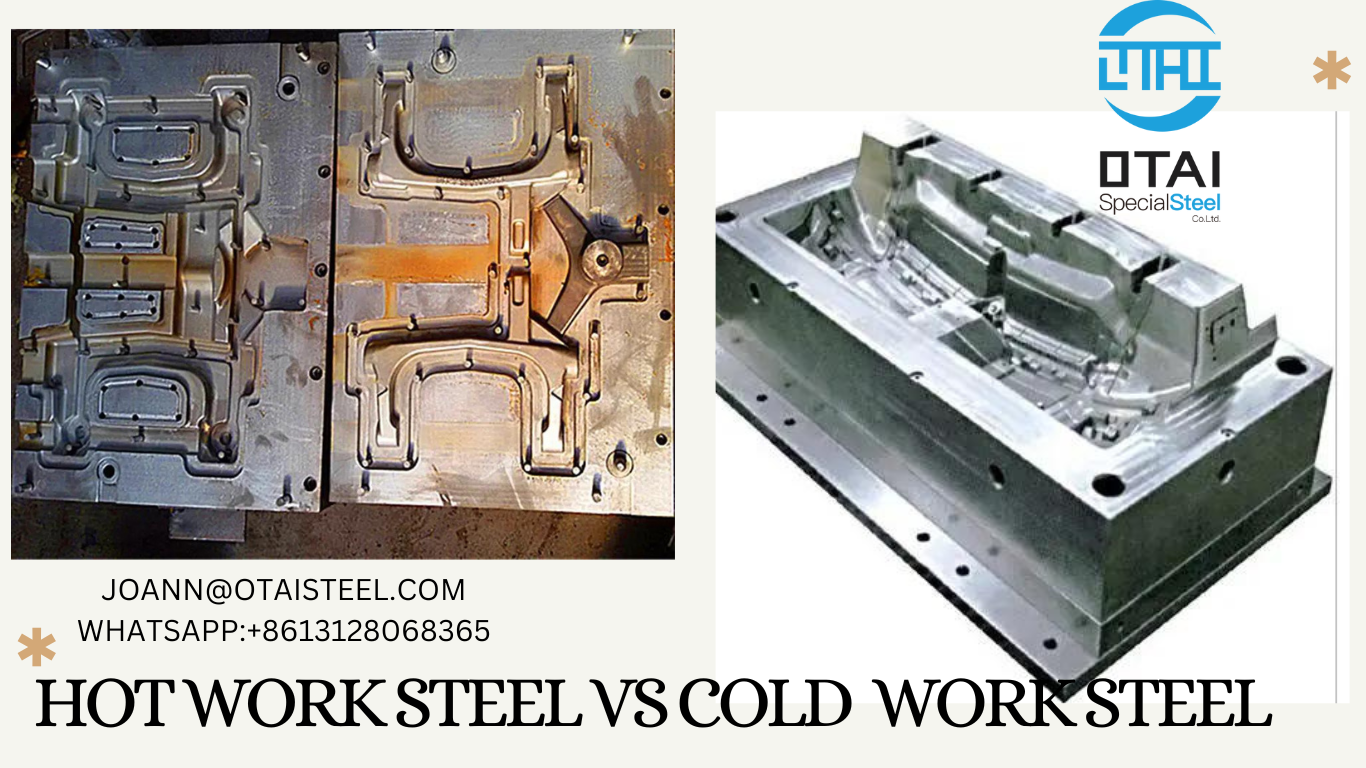
Hot Work Tool Steel VS Cold Work Tool Steel

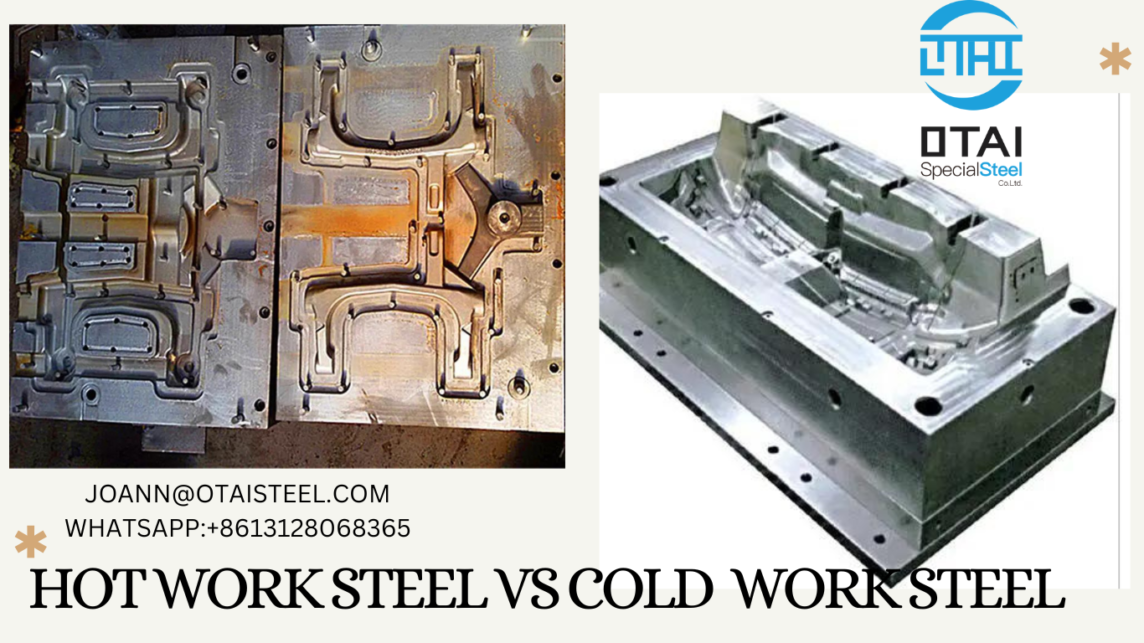
Two prominent categories of tool steels are hot work tool steel and cold work tool steel.  Hot work  steel and cold work steel and are two commonly used die steel materials. There are some differences between them in terms of material, processing technology and performance.Through a comparison of their applications, chemical compositions, and properties, we aim to provide a comprehensive understanding of their distinct characteristics.

Cold Work Tool Steel

Introduction:

Some engineer also call cold work tool steel as cold work mold steel. The  typical  steel grade like 1.2379,1.2080,1.2550 , DC53,1.2436 etc.Cold work tool steel is used in the processes that work under cold conditions, away from the heat.

Cold work mould Application:

Cold work die steel is mainly used to manufacture molds for pressing and forming workpieces in a cold state. Such as cold blanking dies, cold stamping dies, cold drawing dies, imprinting dies, cold extrusion dies, thread pressing dies and powder pressing dies, etc.  And some cutting tools  also request to use cold work steel.

When the cold work mold is working, due to the relatively low deformation resistance of the material to be processed, the working part of the mold is subject to great pressure, bending force, impact force and friction. Therefore, the mold needs to have high hardness, wear resistance and high wear resistance. Bending strength and sufficient toughness to ensure the smooth progress of the stamping process.

Chemical composition 

Cold work tool steel usually has a high carbon content (1.45% 2.30%) that makes it wear resistant and power scalable. On the other hand, high work tool steel has carbon content within the medium range (0.3% 0.6%) that matches its requirements for hardness, thermal conductivity, and wear-resistance.

Hot Work Tool Steel

Introduction:

Hot work tool steel is used for the manufacturing process that includes high abrasion.The use condition usaually in a high temperture condition.The  typical  steel grade like 1.2344,1.2343,1.2714 etc.

Application:

Hot work die steel is mainly used to manufacture molds for pressure processing of workpieces under high temperature. Such as hot forging dies, hot extrusion dies, die-casting dies, hot upsetting dies, etc.

The main characteristic of the working conditions of hot work molds is that they are in contact with hot metal. Therefore, the basic performance of hot work mold steel is to have high thermoplastic deformation resistance, including high temperature hardness and high temperature strength, high thermoplastic deformation resistance and good thermal resistance. Fatigue resistance. This ensures that the hot work mold has a long service life.

Chemical composition:

Hot work tool steels all contain a higher proportion of alloying elements to produce more carbides and handle higher operating temperatures. Hot work tool steel can operate at temperatures up to 1004°F (540°C). As a group, most hot work steel  have very low carbon levels, less than 0.6%.

Conclusion-Hot Work Steel vs Cold Work Steel

Cold work steel and hot work  steel are two commonly used die steel materials. There are some differences between them in terms of material, processing technology and performance.

Chemical Composition

First of all, the chemical composition of cold work  steel and hot work  steel are different. Cold work steel usually uses low alloy tool steel, such as Cr12, Cr12MoV, etc. Its main characteristics are high hardness, good wear resistance and strong impact resistance. Hot work  steel usually uses high alloy tool steel, such as H13, H11, etc. Its main features are high temperature resistance, good thermal fatigue resistance and strong impact resistance.

Processing technical

Secondly, the processing techniques of cold work die steel and hot work die steel are different. Cold work  steel is mainly formed through cold working processes, such as cold forging, cold drawing, cold heading, etc., to improve the hardness and strength of the material. Hot work die steel is mainly formed through hot processing processes, such as hot forging, hot rolling, hot drawing, etc., to improve the plasticity and toughness of the material.

Performance

In addition, there are some differences in performance between cold work die steel and hot work die steel. Due to its high hardness, cold work die steel is usually used to manufacture stamping dies, shearing dies and other molds that require high hardness and wear resistance. Due to its good high temperature resistance, hot work mold steel is usually used to manufacture die-casting molds, plastic molds and other molds that require high temperature resistance and thermal fatigue resistance.

Besides that , there are some different issues that need to be paid attention to during the use of cold work die steel and hot work die steel. During the use of cold work die steel, attention should be paid to cooling measures to avoid overheating, which will cause the hardness of the material to decrease. During the use of hot work steel, attention should be paid to preheating and insulation measures to improve the plasticity and toughness of the material.

To sum up, there are some differences between cold work die steel and hot work die steel in terms of material, processing technology and performance. The selection of appropriate mold steel materials requires comprehensive consideration based on specific usage requirements and process conditions.

Want to know  more about the cold work and hot work  steel stock list   ?

Pls contact : JoannJoann -Otai specai steel

E-mail:joann@otaisteel.com

WhatsApp:+8613128068365
0 Continue Reading →

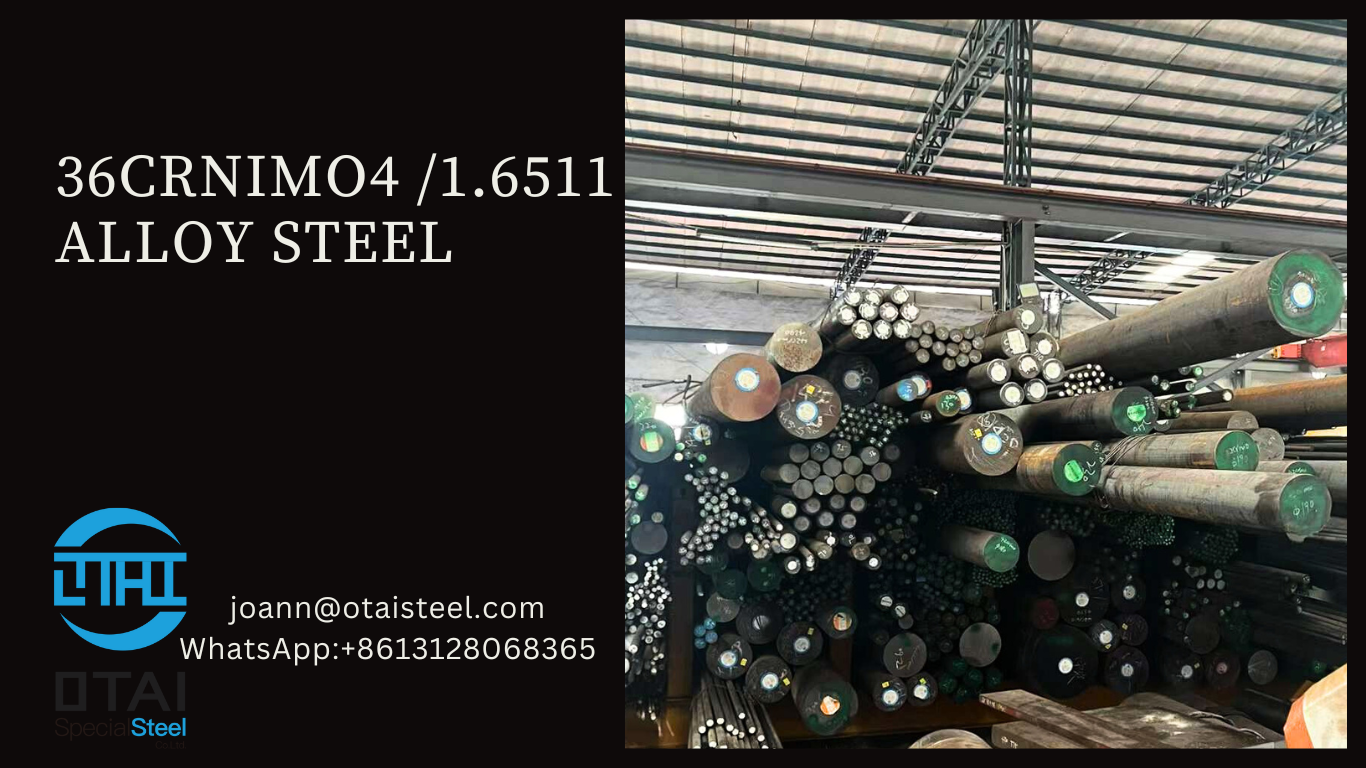
What is 36CrNiMo4/1.6511/4340 alloy steel?

36CrNiMo4 steel  also known as  1.6511 steel, is an alloy structural steel that belongs to the standard EN 10250-3. It equivalent ASTM 4340 which commonly used in gears, shafts, piston parts,and aircraft, and various wear-resistant parts.

36CrNiMo4 Steels And Equilvalents Chemical Composition 

Standard Grade C Mn P S Si Ni Cr Mo
ASTM A29 4340 0.38-0.43 0.60-0.80 0.035 0.040 0.15-0.35 1.65-2.00 0.70-0.90 0.20-0.30
EN 10250 36CrNiMo4/
1.6511
0.32-0.40 0.50-0.80 0.035 0.035 ≦0.40 0.90-1.20 0.90-1.2 0.15-0.30
BS 970 EN24/817M40 0.36-0.44 0.45-0.70 0.035 0.040 0.1-0.40 1.3-1.7 1.00-1.40 0.20-0.35
JIS G4103 SNCM 439/SNCM8 0.36-0.43 0.60-0.90 0.030 0.030 0.15-0.35 1.60-2.00 0.60-1.00 0.15-0.30

 Steel Mechanical Properties of 36CrNiMo4 Steels

The mechanical properties of 36CrNiMo4 steel are influenced by its composition and heat treatment. Here are typical mechanical properties for 36CrNiMo4:

  1. Tensile Strength (Rm): 980 – 1180 MPa
  2. Yield Strength (Rp0.2): 785 MPa (min)
  3. Elongation at Break (A): 11% (min)
  4. Impact Toughness (KV):
    • Charpy V-notch impact toughness values are typically specified.
    • Example: 27 J (at -20°C)
  5. Hardness:28-34 HRC (Rockwell C).

These mechanical properties make 36CrNiMo4 suitable for applications where require high strength, toughness, and resistance to fatigue and impact .

36CrNiMo4 round barPhysical Properties of 36CrNiMo4 Steels

  1. Density: 7.85 g/cm³ (0.284 lb/in³). This value represents the mass per unit volume of the material.
  2. Melting Point: Around 1420-1470°C (2590-2678°F).

Heat treatment of 36CrNiMo4 Steel

  1. Annealing:
    • Heated to a temperature between 850°C and 880°C (1562°F to 1616°F).
    • Held at that temperature for a sufficient duration after reaching the specified temperature.
    • Slow cooling in the furnace  then performed to relieve internal stresses and improve machinability.
  2. Normalizing:
    • Normalizing involves heating the steel to a temperature above the critical range (about 850°C to 890°C or 1562°F to 1634°F) and then allowing it to cool in air.
  3. Quenching:
    • Heated to a temperature typically between 850°C and 880°C (1562°F to 1616°F) and then quickly cooled by  oil or water.
  4. Tempering:
    • After quenching, the steel reheate to a temperature between 550°C and 650°C (1022°F to 1202°F).
    • Tempering helps to relieve internal stresses induced during quenching and reduces the brittleness of the material.

36CrNiMo4 steel application36CrNiMo4 round bar

36CrNiMo4 steel  commonly use  for  various industrial applications where high strength, toughness, and fatigue resistance are essential. Here are some typical applications of 36CrNiMo4 steel:

  1. Gears and Shafts:
    • Due to its excellent combination of strength and toughness, 36CrNiMo4 is frequently used for manufacturing gears and shafts in heavy-duty machinery and mechanical power transmission systems.
  2. Aerospace Parts:
    • In the aerospace industry, especially in the production of aircraft parts, 36CrNiMo4 is adopted for its high tensile strength and fatigue resistance, making it suitable for critical parts subjected to dynamic loads.
  3. Automotive Parts:
    • The steel is utilized in the automotive sector for manufacturing components such as crankshafts, connecting rods, and gears. Its ability to withstand high stress and fatigue makes it valuable in these applications.
  4. Heavy-Duty Crankshafts:
    • 36CrNiMo4 commonly use  for the production of heavy-duty crankshafts for engines. Its high strength and toughness are beneficial for withstanding the dynamic loads experienced by crankshafts.
  5. Oil and Gas Industry:
    • Components in the oil and gas industry, such as drill collars, gears, and other parts subjected to demanding conditions, may be made from 36CrNiMo4 due to its mechanical properties.
  6. Mining Equipment:
    • The steel is suitable for components used in mining equipment, where durability and resistance to wear and impact are crucial.
  7. Construction Machinery:
    • Various components in construction machinery, including gears, shafts, and structural parts, may be manufactured from 36CrNiMo4 to ensure reliability and performance.
  8. Railway Industry:
    • Some railway components, like axles and gears in heavy-duty rail applications, may utilize 36CrNiMo4 for its strength and resistance to wear and fatigue.

In Conclusion

36CrNiMo4 is a chromium-molybdenum alloy steel known for its high strength and toughness. It falls under the category of engineering steels and applicate in  where require high tensile strength, fatigue resistance, and good hardenability.

Want to know  more about the 36CrNiMo4  steel details and stock list ?

Pls contact : JoannJoann -Otai specai steel

E-mail:joann@otaisteel.com

WhatsApp:+8613128068365


0 Continue Reading →

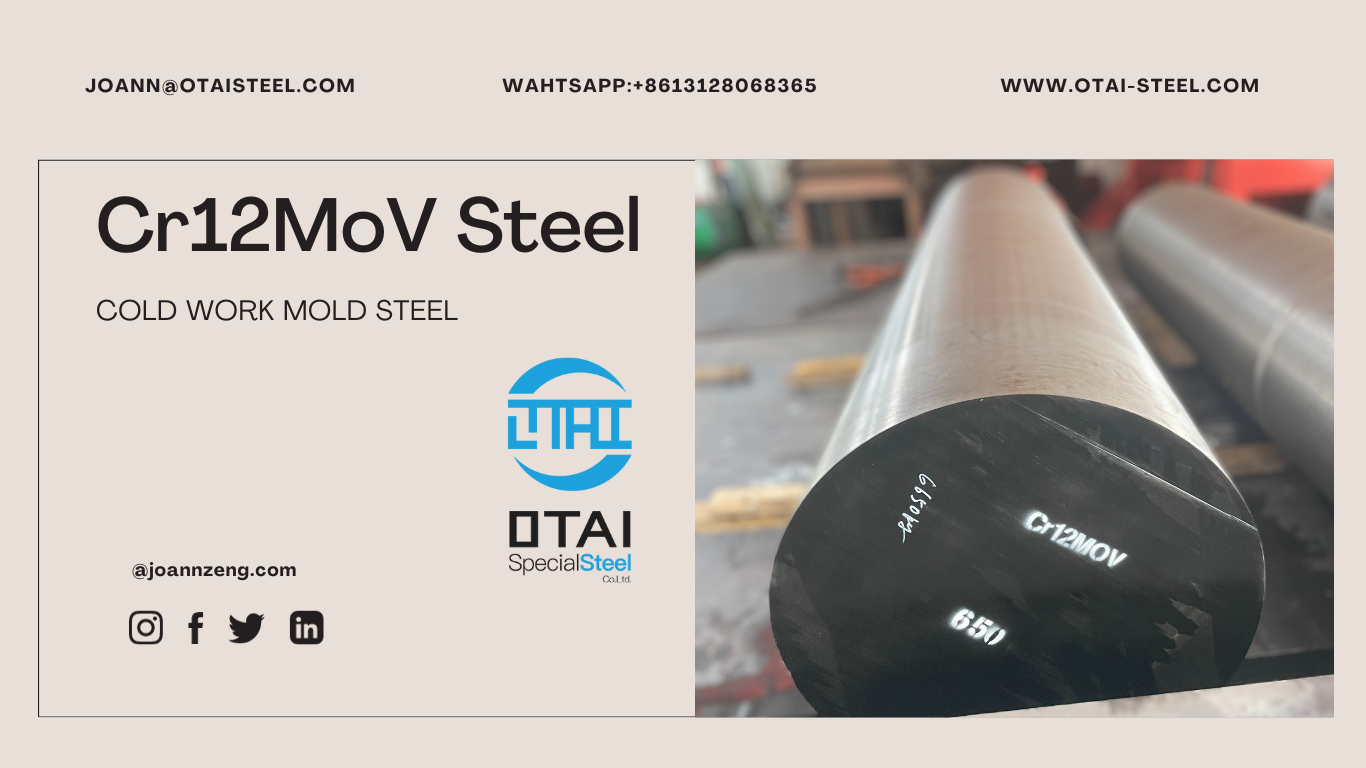
Detail Guide of Cr12MoV steel and its application

Cr12MoV steel is a kind of high carbon and high chromium steel, it is belong to GB/T 1999-2000.  Typical steel types such as Cr12, Cr12MoV, Cr12Mo1V1, D2, SKD11,X12MF etc. Cr12MoV have a carbon content of over 1.40% and a chromium content of 11.00%~13.00% and has excellent properties such as hardenability, hardness and flexural strength. It is an important material for manufacturing stamping dies, cold forming dies and other molds. It is widely used in various curved parts and molds with large cross-sections and complex shapes.

Chemical Compostion and it’s equivalent Grade:

Steel Country Code C(%) V(%) Si(%) Mn(%) P(%) S(%) Cr(%)
D2 ASTM 1.40-1.60 0.50-1.10 0.10-0.60 0.10-0.60 ≦0.030 ≦0.030 11.0-13.0
Cr12MoV GB 1.45-1.70 0.15-0.30 ≦0.40 ≦0.40 ≦0.030 ≦0.030 11.0-12.5
SKD11 JIS 1.40-1.60 0.20-0.50 ≦0.40 ≦0.60 ≦0.030 ≦0.030 11.0-13.0
X165Cr-MoV12 DIN 1.55-1.75 0.10-0.50 0.25-0.40 0.2-0.4 ≦0.030 ≦0.030 11.0-12.0

CR12MOV steel has improved the hardenability and hardenability of the steel due to the addition of appropriate amounts of chromium, molybdenum, vanadium and other alloying elements, making the material’s comprehensive mechanical properties after quenching much higher than other types of steel, and is widely used in the manufacture of molds.

Cr12MoV Steel Heat Treatment

Cr12MoV forged steel round bar-OtaiAnnealing

800 to 850°C
Slow controlled cooling in furnace at a rate of 10 to 20°C/hr down to approx. 600°C, further cooling in air. Hardness after annealing: max. 250 HB.

Stress relieving

650 to 700°C
Slow cooling in furnace; intended to relieve stresses set up by extensive machining, or in complex shapes. After through heating, hold in neutral atmosphere for 1-2 hours.

Hardening

980 to 1010°C
Oil, salt bath (220 to 250°C or 500 to 550°C), air blast, still air. Tools of intricate shape or with sharp edges should preferably be hardened in air or salt bath. Holding time after temperature equalization: 15 to 30 minutes.
Obtainable hardness: 63 – 65 HRC

Tempering

Slow heating to tempering temperature immediately after hardening/time in furnace 1 hour for each 20 mm of workpiece thickness but at least 2 hours/cooling in air.
For certain cases we recommend to reduce tempering temperature and increase holding time

Cr12MoV Steel Delivery Condition:

Annealed , 207-255HB

Cr12MoV Steel Application:

Cold work dies

  1. Cr12MoV steel is widely used in the manufacture of cold work dies with large cross-sections, complex shapes, large impact forces, and high wear resistance requirements, such as silicon steel sheet punching dies, cold cutting scissors, trimming dies, thread rolling dies, wire drawing dies, rolling dies, etc. Wire plate, thread rolling die, complex-shaped punching die, steel plate drawing die, etc.
  2. The service life of the rolls used to replace Cr2 steel in manufacturing rolled and welded steel pipes is increased by more than 7 times.

Extrusion punches

  1.  For pure aluminum blank reverse extrusion punches made of this steel, when the pressure is about 1000MPa, the life of the punch is guaranteed to be more than 50,000 pieces. The main failure modes are wear and surface roughening.
  2.  Used to manufacture punching dies with material thickness >3mm, punch dies, concave dies, and inserts with complex shapes. The recommended hardness is 58-62HRC when making punch molds, and the recommended hardness is 60-64HRC when making concave molds.Cr12MoV round bar-Otai
  3.  Used to make punches and concave dies that require high wear resistance in punching dies. When making punches, the recommended hardness is 60-62HRC, and when making concave dies, the recommended hardness is 62-64HRC.
  4.  Used to manufacture concave dies that require high wear resistance in drawing dies. The recommended hardness is 62-64HRC.
  5. Used to manufacture punches, concave dies, and inserts that require high hardness and complex shapes in bending dies. The recommended hardness is 60-62HRC when making punches, and 60-64HRC when making concave dies.
  6.  Used to make cold extrusion dies for aluminum parts. The recommended hardness for making punch molds is 60-62HRC, and for making concave molds, the recommended hardness is 62-64HRC.
  7. Used to manufacture cold extrusion concave and convex molds for copper parts. The recommended hardness is 62-64HRC.

Bend spring steel plates

  1.  Used to bend spring steel plates with a carbon content of 0.65%-0.80% (mass fraction), a hardness of 37-42HRC, and a service life of up to 150,000 times. If nitriding treatment carry out, the service life can reach 400,000 times.
  2. When used to manufacture thread rolling dies for processing 20Mn steel, after repeated upsetting and elongation, the carbide unevenness of the blank is ≤3, then the service life of the thread rolling dies will be increased from the original 20,000 pieces to 500,000 pieces.

Plastic molds

  1.  Used for manufacturing thermosetting plastic forming molds and general plastic molds.
  2. Cr12MoV steel stainless steel mold vacuum quenching + gas nitriding. At present, most domestic stainless steel molds are made of Cr12MoV steel.

Want to know  more about the Cr12MoV steel details  ?

Pls contact : JoannJoann -Otai specai steel

E-mail:joann@otaisteel.com

WhatsApp:+8613128068365


0 Continue Reading →

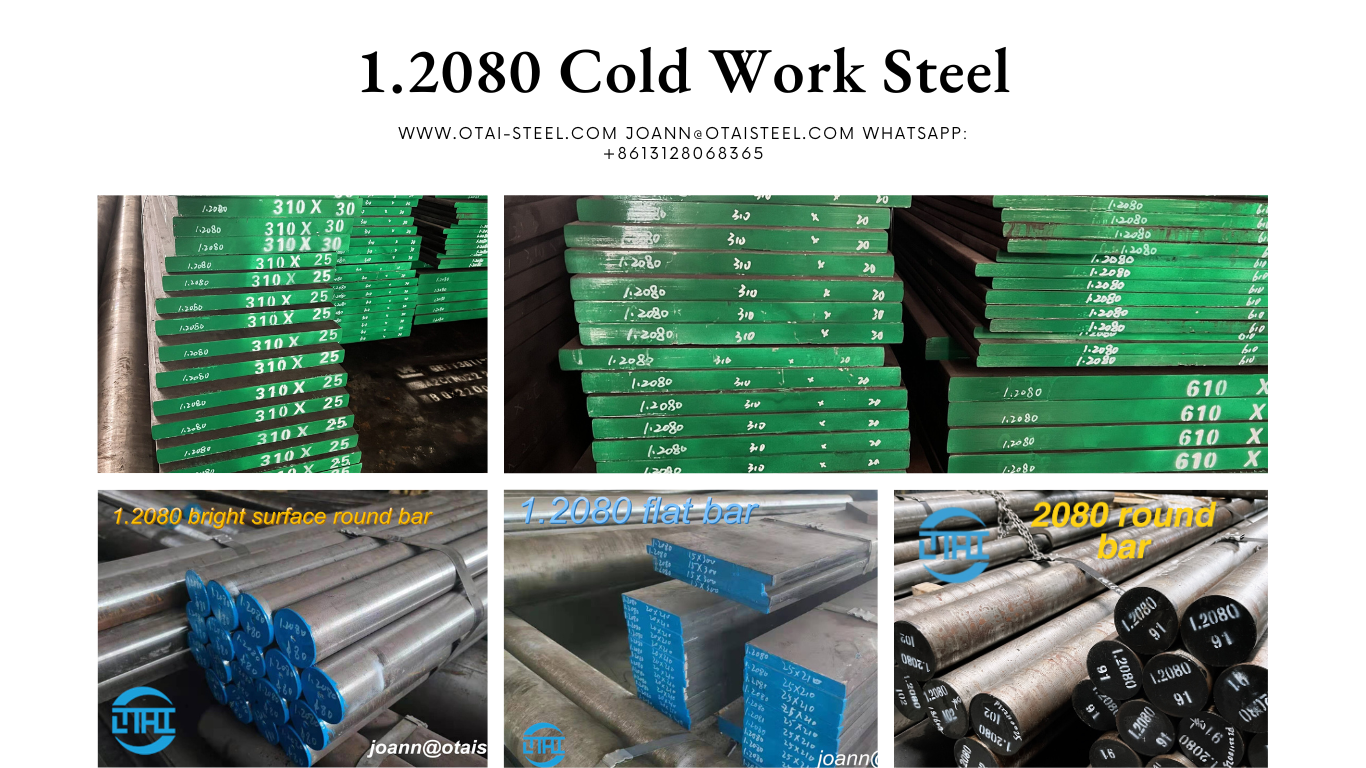
Cold work steel DIN 1.2080 (X210Cr12)/D3/SKD1

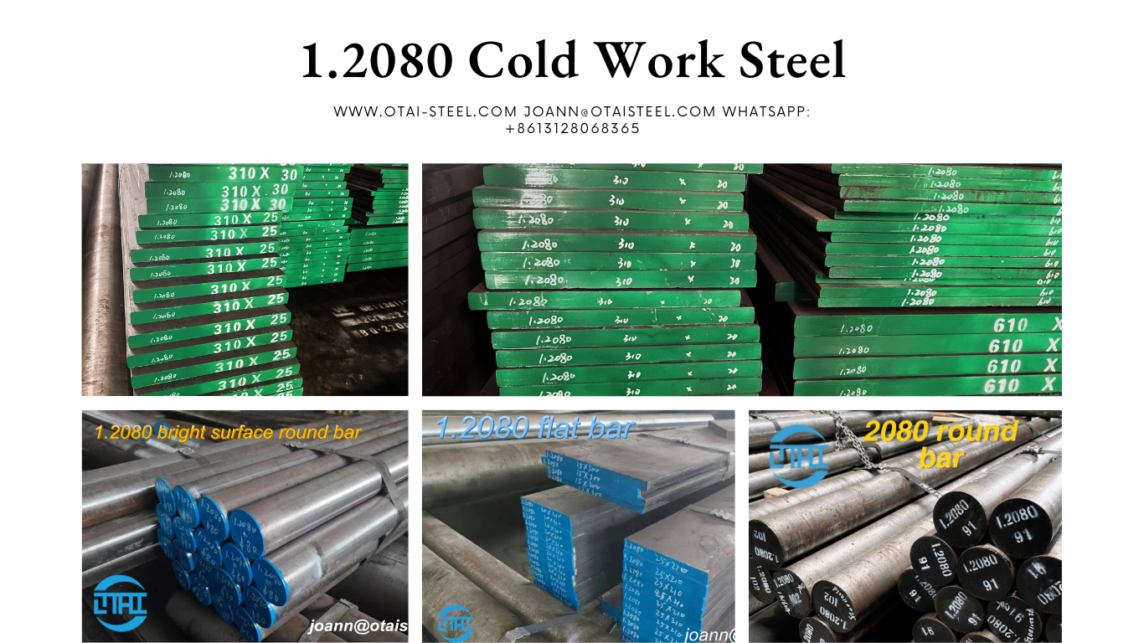
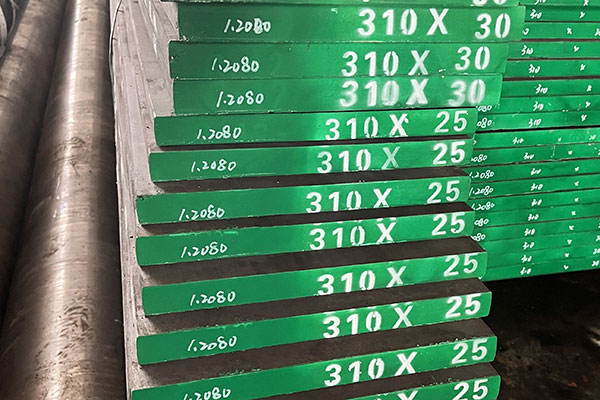
DIN 1.2080 also know as X210Cr12 steel ,it  belongs to  standard DIN EN ISO 4957. It is a widely used cold work steel with high strength, good hardenability and good wear resistance. It mainly used for cold punching dies and punches, cold cutting scissors, drill sleeves, gauges, wire drawing dies, stamping dies, thread rolling dies, drawing dies and thread rolling dies that bear small impact loads and require high wear resistance.

DIN 1.2080 Introduction

DIN 1.2080 steel is a high-carbon, high-chromium ledeburite steel . This steel has good hardenability, wear resistance, and hot workability. However , the composition don’t add VCarbides are well distributed in the steel and can be used for manufacturing Various cold work dies with complex shapes and heavy working conditions. Such as cold die punches, thread rolling dies, wire drawing dies, material dies, metallurgical powder dies, woodworking cutting tools, cold cutting scissors, drill sleeves and gauges.

DIN 1.2080 Steel and its Equivalent Chemical composition  :(%)

ASTM A681 C Mn P S Si Cr V T Mo
D3 2.00 2.35 0.10 0.60 Max 0.030 Max 0.030 0.10 0.60 11.00 13.50 . . . 1.10 . . . 1.00 . . . . . .
DIN ISO 4957 C Mn P S Si Cr V T Mo Ni
1.2080/X210Cr12 1.90 2.20 0.20 0.60 Max 0.030 Max 0.030 0.10 0.60 11.00 13.00
JIS G4404 C Mn P S Si Cr V T Mo Ni
SKD1 1.90 2.20 0.20 0.60 Max 0.030 Max 0.030 0.10 0.60 11.00 13.00

Characteristic:

1. Vacuum degassing and refining treatment make the steel pure.

2. Spheroidizing annealing and softening treatment, good cutting performance.

3. The strengthening element vanadium and molybdenum are specially added to provide extremely excellent wear resistance.

1.2080-steel-flat-barApplication:

1. Thickness no more than 2MM thin plate, high-efficiency blanking die, punching die and stamping die.

2. Various scissors, inlaid blades, woodworking blades.

3. Thread rolling die and wear-resistant slider.

4. Cold heading mold, thermosetting resin molding mold.

5. Stretch forming mold and cold extrusion mold.

Mechanical Properties:

Mechanical Properties Metric Imperial
Izod impact unnotched 28.0 J 20.7 ft-lb
Poisson’s ratio 0.27-0.30 0.27-0.30
Elastic modulus 190-210 GPa 27557-30457 ksi

Physical Properties:

Physical Properties Metric Imperial
Density 7.7 x 1000 kg/m3 0.278 lb/in3
Melting Point 1421°C 2590°F

DIN 1.2080 Steel Heat treatment :

Temperature Cooling Hardness
Soft annealing 800 – 840 °C Furnace Max 255 HB
Stress relief annealing 600 – 650°C Furnace  
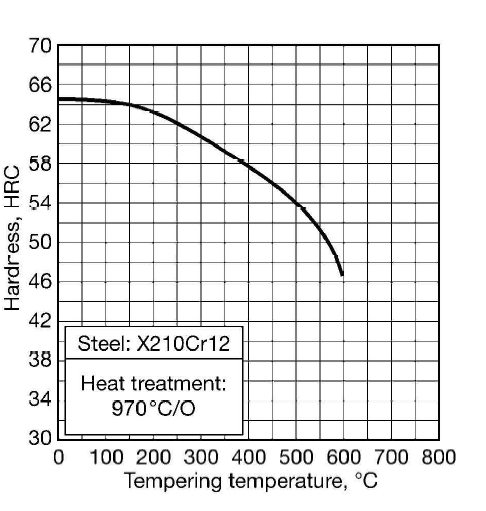
Hardening 950 – 980°C oil, pressure gas (N2), air or hot bath 500 – 550°C see tempering diagram

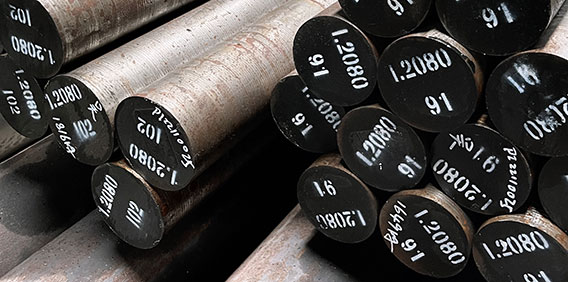
1.2080 Hardness -tempering temperature -curves 1.2080-STEEL-ROUND-BAR-TURNED

Delivery status:

The steel is delivered in an annealed state.

Conclusion:

DIN 1.2080 mold steel is also one of the internationally used cold work mold steels, but has recently been gradually replaced by better steel types such as Cr12MoV, Cr12Mo1V1 or matrix steel. It is mainly used for cold stamping die working parts that require high wear resistance and small impact load (punch and concave dies), cold extrusion die concave dies, etc. Although its use is subject to certain restrictions due to its obvious advantages and disadvantages, it is still used in some specific areas are still irreplaceable.

Want to know  more about the DIN 1.2080 ( X210Cr12 ) /D3/SKD1 steel details  ?

Pls contact : JoannJoann -Otai specai steel

E-mail:joann@otaisteel.com

WhatsApp:+8613128068365

0 Continue Reading →

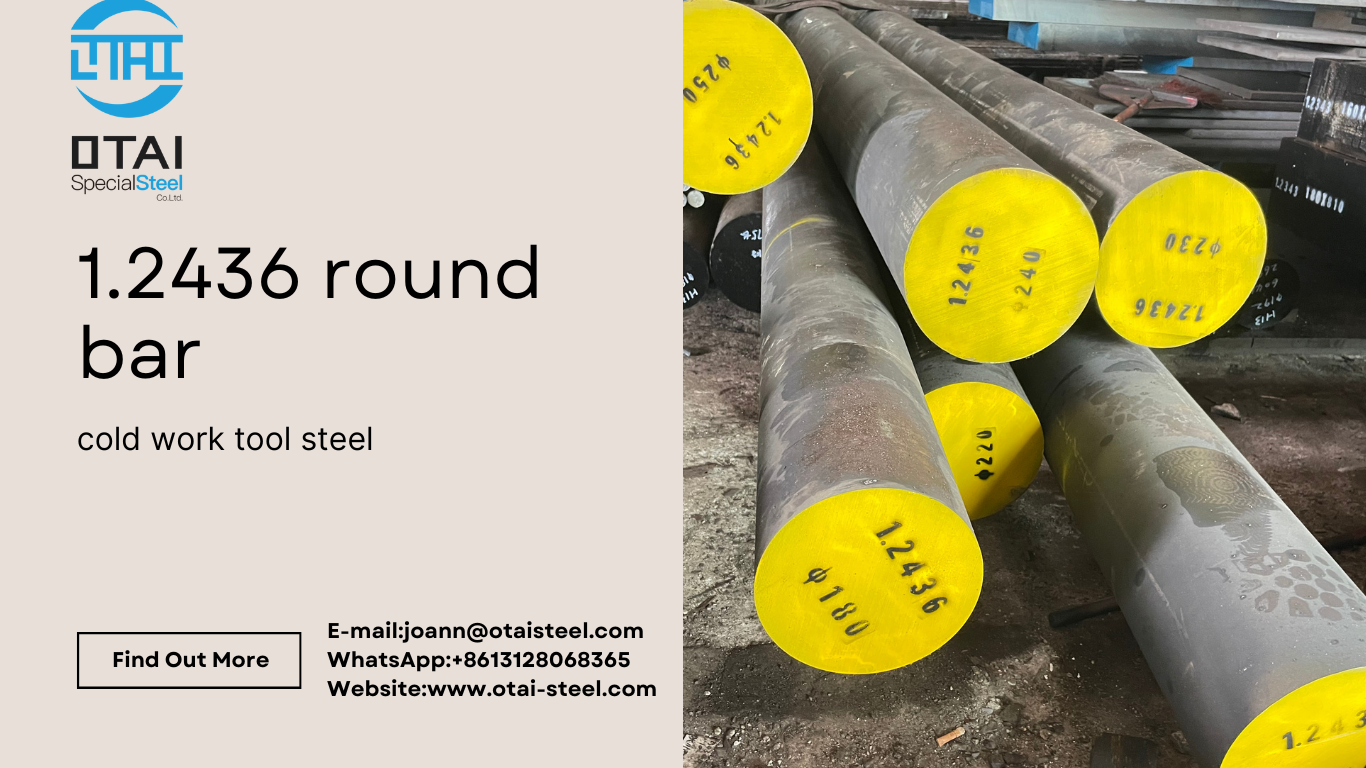
Discovery Cold Work Tool Steel DIN 1.2436(X210CrW12)/AISI D6/ JIS SKD2

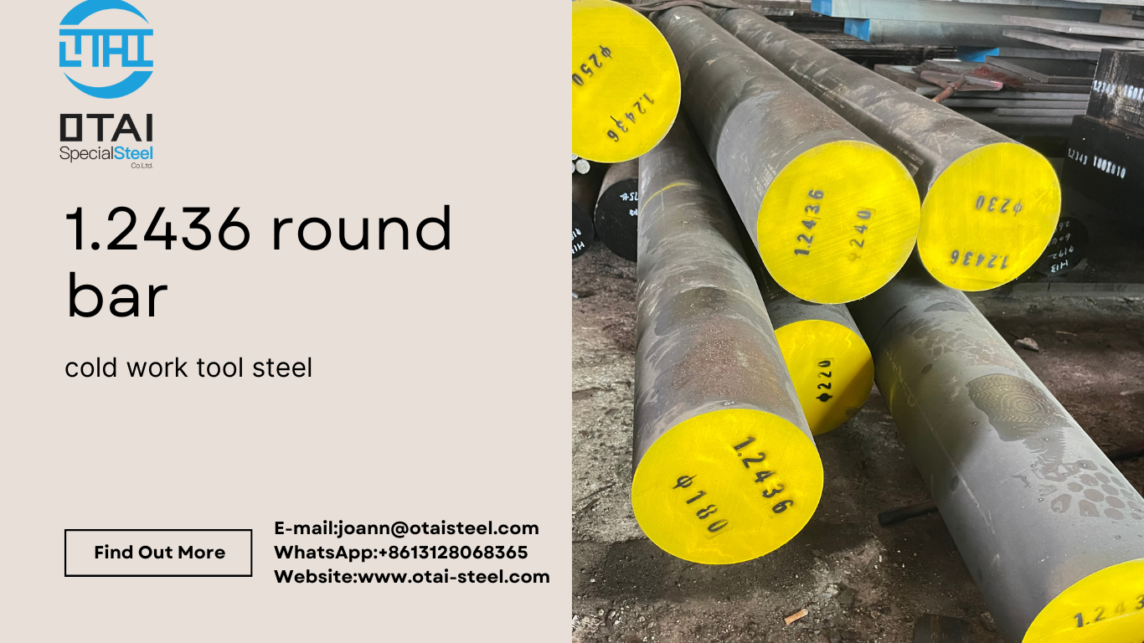
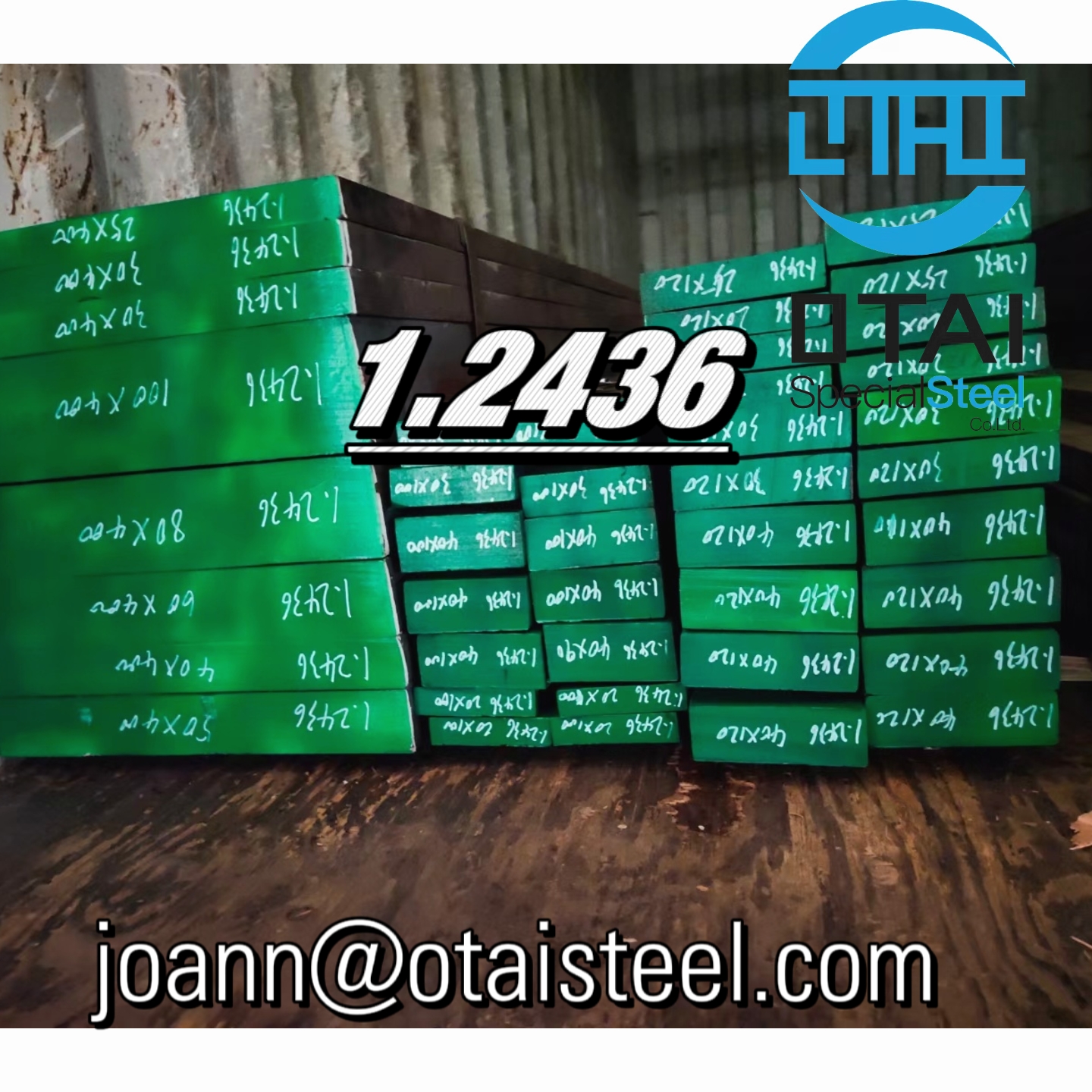
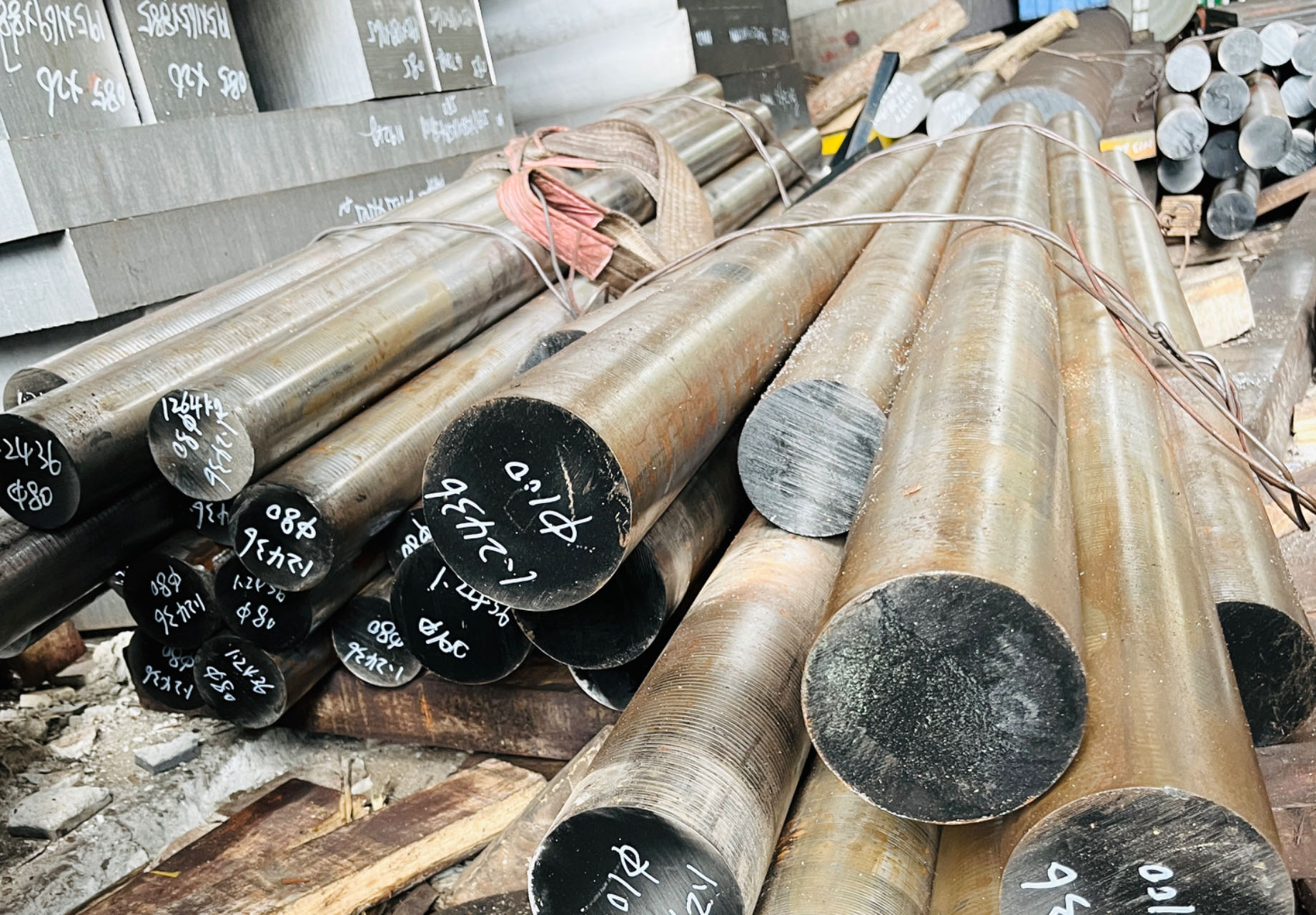
DIN 1.2436 is German DIN standard extra high toughness chromium steel and cold work mould steel. Has extremely high wear resistance and edge retention capabilities. It is a widely used cold work die steel with high strength, good hardenability and good wear resistance, but the weak point is it  poor impact toughness. 1.2436 adds 0.6%-0.8% tungsten compare with 1.2080, so its wear resistance is better than 1.2080 steel. However, compared with 1.2379, because a certain amount of vanadium is added to 1.2379 steel , it toughness performace better than 1.2436. Therefore, 1.2436 s mainly used for cold stamping dies and punches, cold cutting shears, drill bushings, and gauges that bear smaller impact loads and require high wear resistance , drawing dies, impression dies, thread rolling dies, drawing dies and thread rolling dies, etc.

Standard:

DIN 1.2436  belong to German Industrial Standard (DIN) DIN EN ISO 4957 .

 Chemical Composition and Equivalent Steel:

DIN ISO 4957 C Mn P S Si Cr W
1.2436 / X210CrW12 2.00 2.30 0.30 0.60 0.03 0.03 0.10 0.40 11.00 13.00 0.60 0.80
JIS G4404 C Mn P S Si Cr W
SKD2 2.00 2.30 0.30 0.60 0.03 0.03 0.10 0.60 11.00 13.00 0.60 0.80
ASTM A681 C Mn P S Si Cr W
D6 2.00 2.20 0.20 0.40 0.03 0.03 0.20 0.40 11.50 12.50 0.60 0.90


1.2436 flat barDIN 1.2436 Physical Properties:

1. Density:  7.80 g/cm³.
2. Melting Point: A scorching 1426°C (2599°F).
3. Thermal Conductivity: Playing it cool with 24 W/(m·K).
4. Specific Heat: Holding its heat with 0.46 J/g·K.
5. Electrical Resistivity: A light touch at 0.40 µΩ·m.
6. Coefficient of Thermal Expansion: A modest 10.5 x 10^-6/°C (20-100°C).

DIN 1.2436 Mechanical  Properties:

1. Hardness (Annealed):  Max 255 HB (Brinell Hardness).
2. Tensile Strength: A robust 700-800 MPa.
3. Yield Strength: A sturdy 600 MPa.
4. Elongation at Break: A flexible 14%.
5. Reduction in Area: A resilient 45%.
6. Modulus of Elasticity: A firm handshake at 210 GPa.

Applications:

1. Crafting Cold Work Tools: DIN 1.2436 steel takes the lead in creating the backbone of cold work tools—forming dies, blanking, and shearing tools.
2. Mastering Precision Machining:Its rock-hard nature and resistance to wear make it the maestro in precision and accuracy-demanding applications.
3. Tooling the Cutting Edge: Employed in the crafting of cutting tools for diverse materials, thanks to its durability.
4. Stamping and Embossing Star: Industries with an eye for tight tolerances revel in the precision offered by this tool steel.
5. Blades of Industry: Takes center stage in the fabrication of industrial blades for various cutting applications.

Heat Treatment :

Temperature

Cooling

Hardness

Soft annealing

800 – 840 °C

Furnace

250 HB

Stress Relief Annealing

600 – 650°C

Furnace

Hardening

960 – 980°C

oil, pressure gas (N2), air or hot bath 500 – 550°C

See Tempering Diagram

1.2436 round barFAQs about  1.2436 Steel

Q1: What industries commonly use DIN 1.2436?

DIN 1.2436 finds its rhythm in industries such as cold Work Tools ,cutting and drill, thanks to its versatile properties.

Q2: Can DIN 1.2436 heat things up in high-temperature applications?

While DIN 1.2436 dances elegantly in cold work applications, it might not be the star performer in high-temperature scenarios. 1.2379 steel  properties might take the spotlight.

Q3: How does the heat treatment effect the DIN 1.2436’s performance?

The heat treatment ballet elevates the hardness and toughness of DIN 1.2436, letting manufacturers choreograph its properties based on specific application needs.

Q4: Is DIN 1.2436 a cost-effective partner in the long run?

Absolutely! The lasting power and wear resistance of tools born from DIN 1.2436 contribute to a cost-effective symphony over time, reducing the need for constant replacements.

Want to know  more about the D6/1.2436 ( X210CrW12 ) /SKD2 steel details  ?

Pls contact : JoannJoann -Otai specai steel

E-mail:joann@otaisteel.com

WhatsApp:+8613128068365

0 Continue Reading →

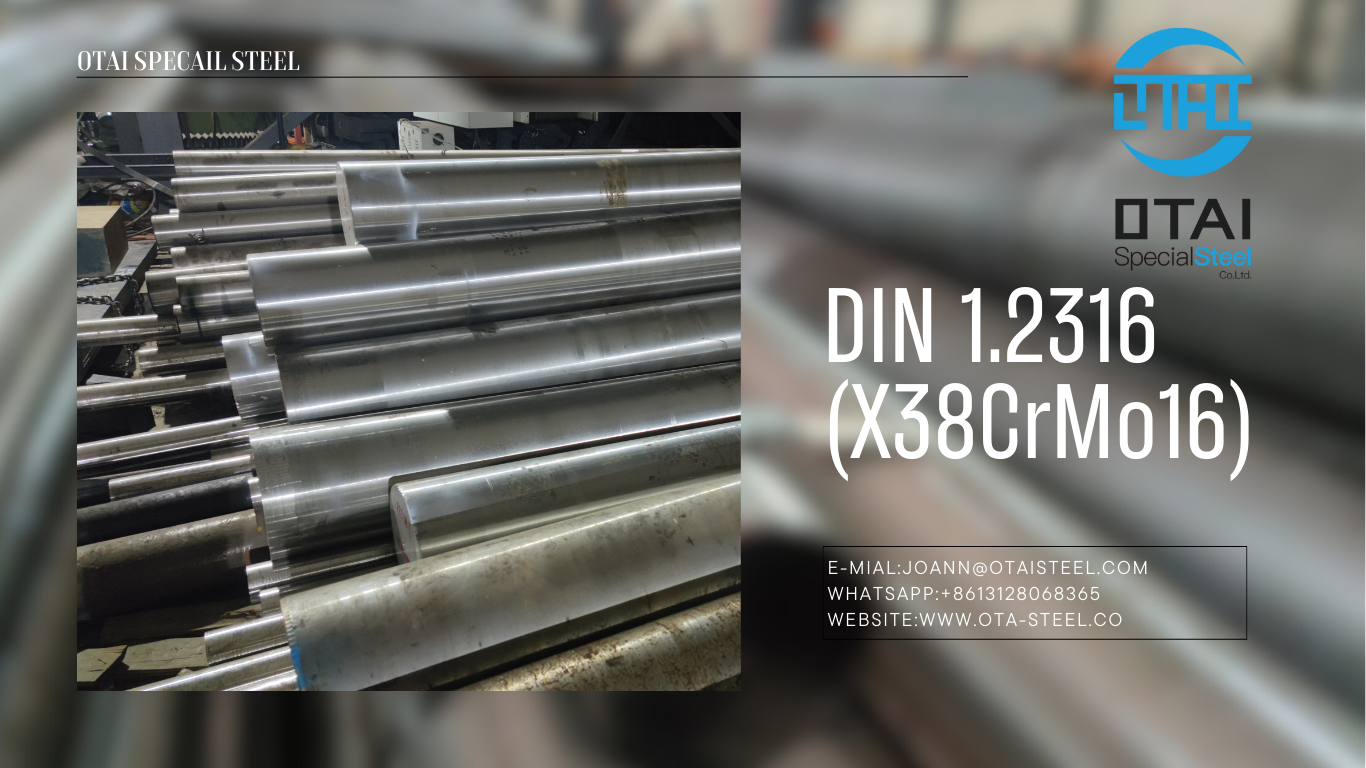
Exploring 1.2316 (X38CrMo16) Steel: A Comprehensive Overview

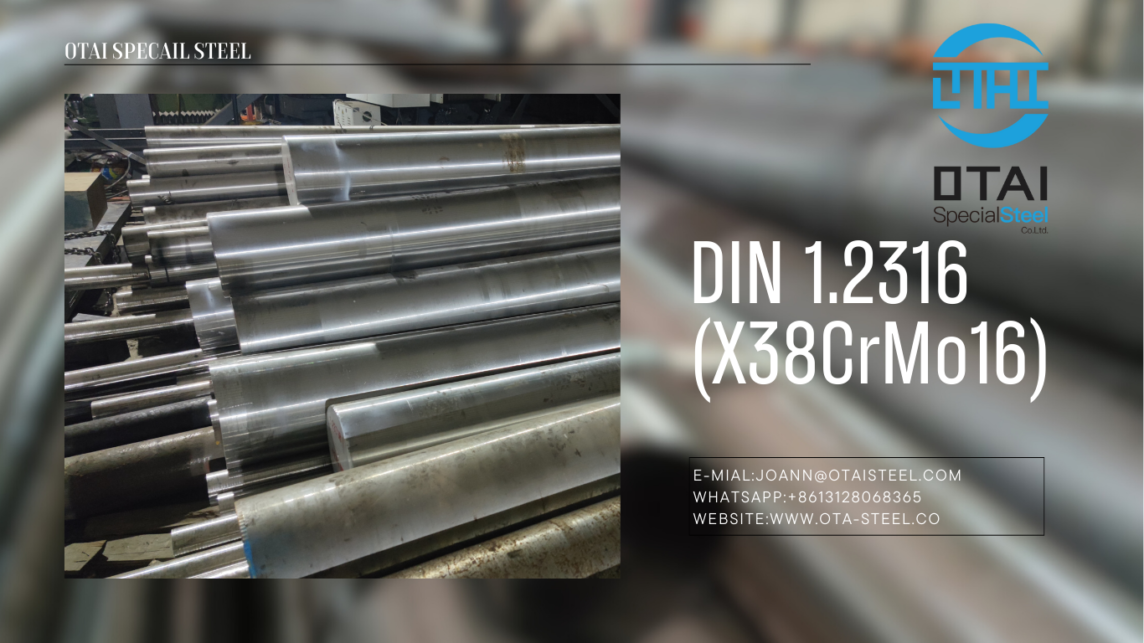
1.2316 (X38CrMo16)  steel is a prehardened mold steel recognized for its superior corrosion resistance, achieved through the addition of chromium and molybdenum. It  widely apply in mold applications, including cores, inserts, and mold cavities, this steel  also use for the production of corrosive materials like PVC.

Standard:

DIN 1.2316 steel belongs  to the DIN standard EN ISO 4957 :2018

1.2316 steel round bar-OTAI 1.2316 Steel  Equivalent  and Chemical Composition
Standard Steel Grade
Chemical composition %
C: Mn: Si: P: S: Cr: Mo: Ni:
EN 10088-3:2014 X39CrMo17-1 – 1.4122
0.33 – 0.45 <1.5 <1.0 <0.04 <0.03 15.5 – 17.5 0.8 – 1.3 <1.0
ISO 4957:2018 X38CrMo16 – 1.2316
0.33 – 0.45 <1.5 <1.0 <0.03 <0.03 15.5 – 17.5 0.8 – 1.3 <1.0
DIN 17350:1980 X36CrMo17 – 1.2316
0.33 – 0.43 <1.0 <1.0 <0.03 <0.030 15.0 – 17.0 1.0 – 1.3 <1.0
NF A35-590 Z38CD16-01
0.33 – 0.45 <1.0 <1.0 <0.04 <0.015 15.5 – 17.5 0.8 – 1.3
NF Z35CD17
0.33 – 0.45 <1.5 <1.0 <0.03 <0.03 15.5 – 17.5 0.8 – 1.3 <1.0
PN 3H17M
0.33 – 0.43 <1.0 <1.0 <0.045 <0.030 15.5 – 17.5 1.0 – 1.3 <1.0


1.2316 Steel Physical Properties:

Thermal conductivity W.m-1.K-1 Thermal expansion Coefficient (10-6.K-1)
20°C 20-100°C 20-200°C 20-300°C 20-400°C Specificheat J/kg.°C
24.3 11 11.1 11.4 11.7 460


1.2316 Steel Mechanical Properties:

1.2316 delivery condition  usually  quenched and tempered to 280 – 325 HB (29 – 33 HRC)

Hardness  Rp 0.2  Yield
Strength
Rm Tensile
strength
 Elongation  Reduction of area  Elastic modulus
HB MPa ksi MPa ksi % Z% GPa ksi
300 855 124 1020 148 13 38 205 29733

DIN 1.2316(X38CrMo16) steeel Heat treatment:

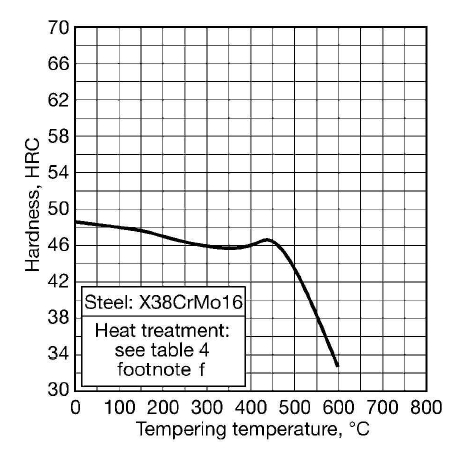
1.2316 steel Hardness -tempering temperature curves-OTAI1.2316 steel l is normally supplied in the quenched and tempered condition with a hardness of approximately 300 HB.
  • Annealing: 760 to 800 °C for about 4 to 5 hours; slow controlled cooling of 10 to 20 °C per hour to about 650 °C; further cooling in air, max. 230 HB
  • Stress Relieving: Soaking is done at temperature 600 – 650°C and then it is furnace cooled. This process is done at approx. 650 °C.
  • Hardening: Heat to 1020 – 1040 °C. Quench in oil at 500 – 550°C. Hardness after quenching: 48 – 52 HRC
  • Tempering: The hardness varies depending on the tempering temperature, ranging from 32 HRC to 49 HRC.

In case of complicated parts, holding time should be determined considering the thicker section of the part.

1.2316 Steel Applications:

-Suitable for manufacturing PVC, POM and other plastic products, or other corrosive plastics and high-gloss plastic molds;

-Thermoplastic plastic injection molds, extrusion molds;

-Thermoplastic blow molds;

-Main components of heavy-duty mold;

-Cold structural parts;

-It often use in the manufacture of TV casings, washing machines, refrigerator inner casings, buckets, etc.

Quality Assurance and Certification:

– Ensuring that the steel aligns with industry standards is crucial. Verify relevant certifications, such as DIN EN ISO 9001 for quality management systems.

Considerations for Buyers:

– Stress the importance of understanding the application’s specific requirements to choose the most suitable steel grade.
– Provide MTCs to check the chemical compositions and propertities if it is meet the material requirement

Conclusion:

1.2316 steel is a versatile mold steel offering prehardened convenience, excellent corrosion resistance, and adaptability to humid environments. Thanks to its mechanical and physical properties and coupled with straightforward heat treatment, make it a preferred choice for various applications in the mold industry.

Want to know more about the details of 1.2316, stock list and price , pls contact :

Joann -Otai specai steelE-mail:joann@otaisteel.com

WhatsApp:+8613128068365

0 Continue Reading →

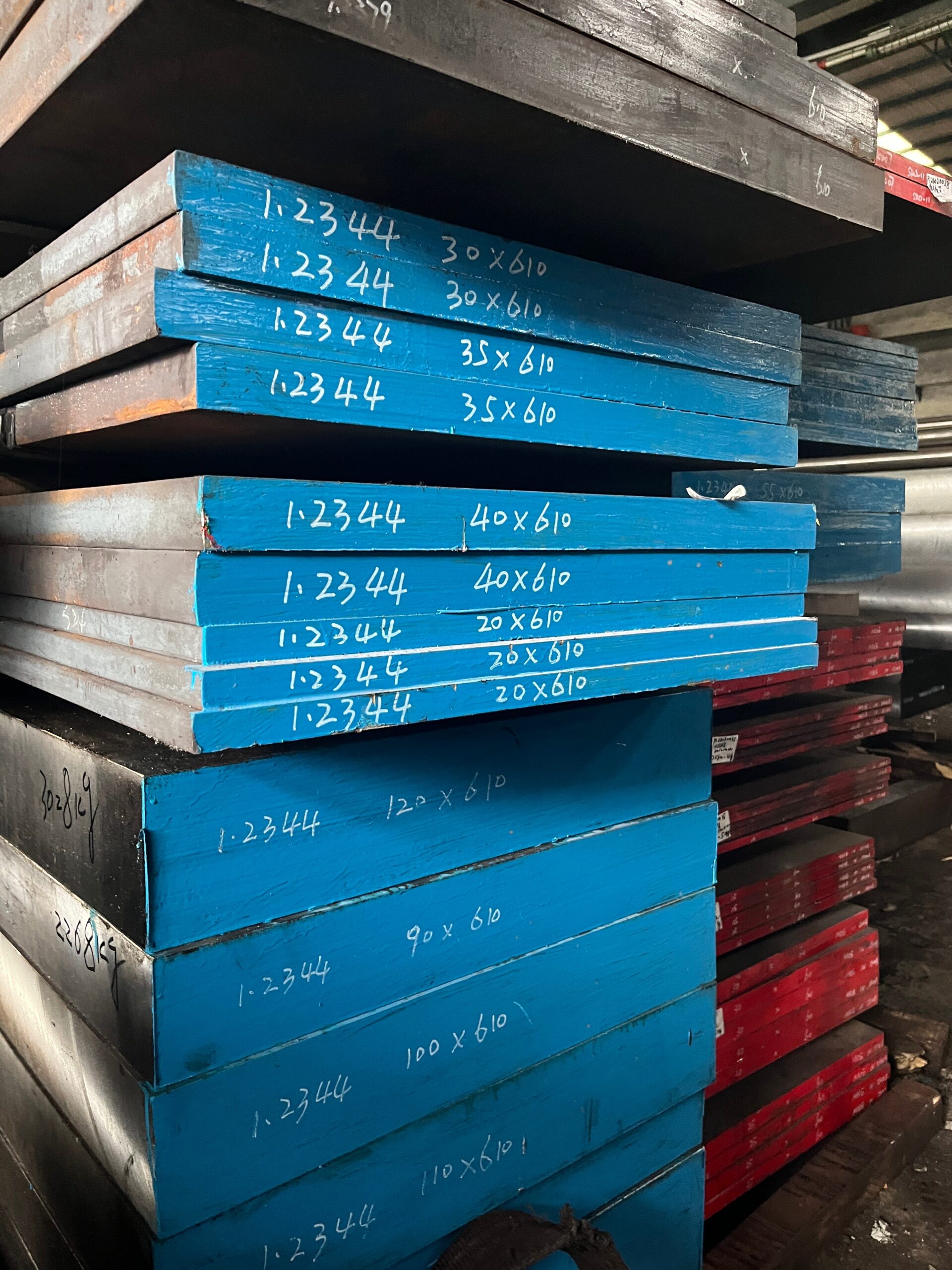
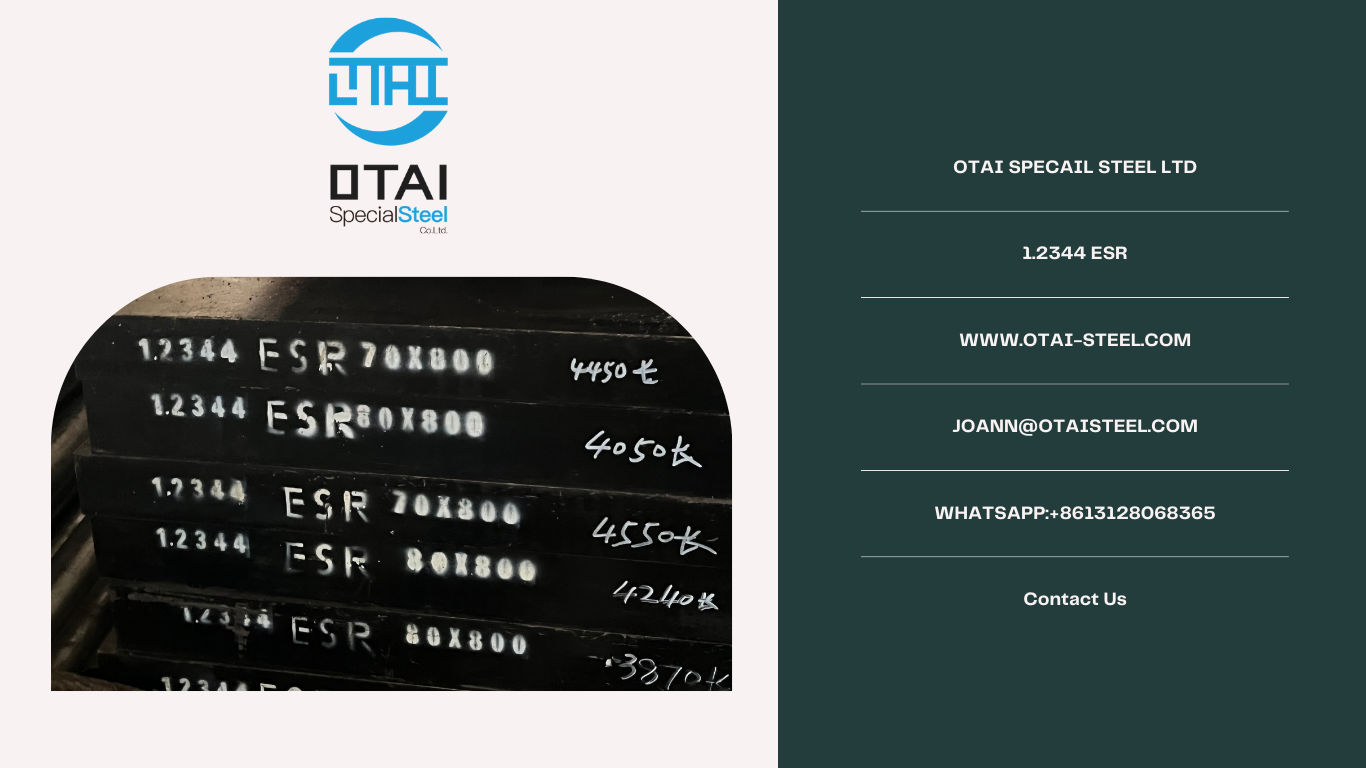
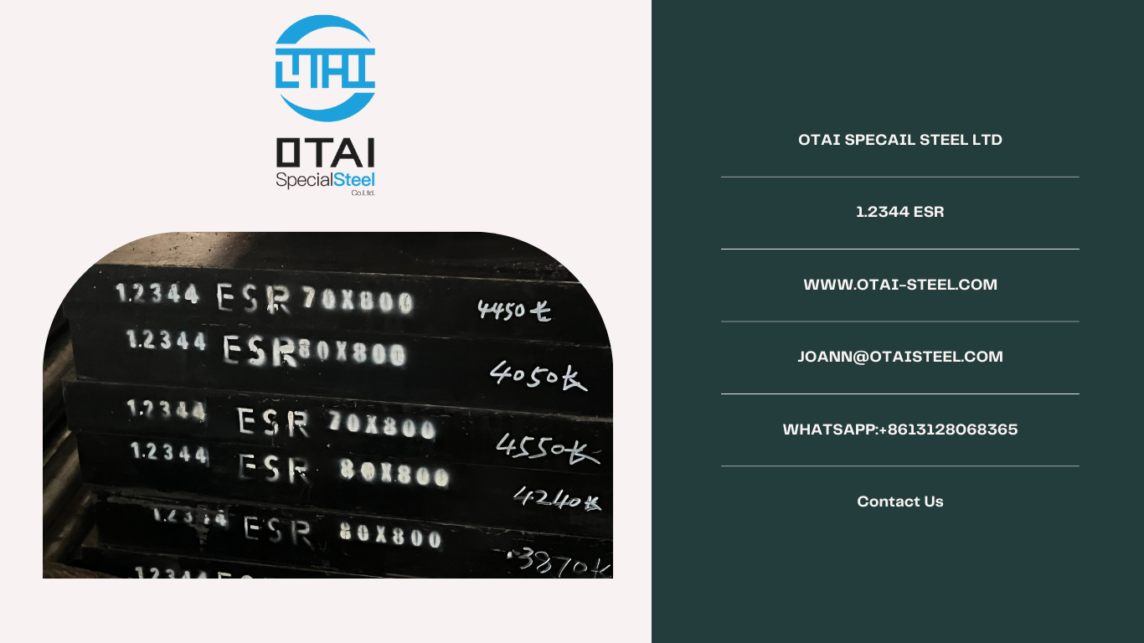
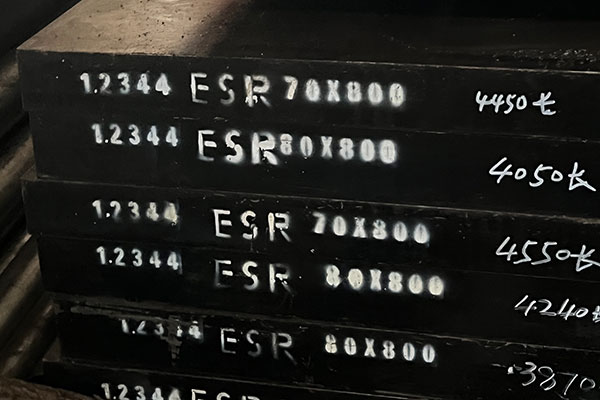
DIN 1.2344 ESR (X40CrMoV5-1) Hot Work Tool Steel

DIN 1.2344 mold steel is also known as H13 steel , for some large size , customers will request DIN1.2344 ESR. It is a commonly used hot work die steel in the world. This steel has good toughness, good thermal strength, thermal fatigue performance and certain wear resistance. DIN 1.2344 is air-cooled hardened steel and has the advantage of small heat treatment deformation. It  usually applied to  in  manufacture die-casting molds for aluminum castings, hot extrusion dies, tools for punching, mandrels, press forging dies, plastic molds, etc. DIN 1.2344 steel also widely used in die-casting molds for aluminum, copper and their alloys.In China, 1.2344 mold steel is equivalent to GB 4Cr5MoSiV1 steel.

DIN 1.2344 ESR form through a steelmaking process, such as EAF+LF+VD, and then through an electroslag remelting (ESR) process. After ESR, the steel is denser and the surface is smoother. After ESR, the steel has uniform material, with below advantages:

A:Good hardenability. B: good cutting processability and polishing performance. C:High toughness and plasticity. D: Good high and low temperature wear resistance. E: High temperature fatigue resistance.  F:Good heat resistance and impact resistance.

DIN1.2344 ESR-steel-plate1.2344 Chemical composition of mold steel and equivalent materials

ASTM A681 C Mn P S Si Cr V Mo
H13 0.32 0.45 0.2 0.6 0.03 0.03 0.8 1.25 4.75 5.5 0.8 1.2 1.1 1.75
DIN ISO 4957 C Mn P S Si Cr V Mo
1.2344 /X40CrMoV5-1 0.35 0.42 0.25 0.5 0.03 0.02 0.8 1.2 4.8 5.5 0.85 1.15 1.1 1.5
JIS G4404 C Mn P S Si Cr V Mo
SKD61 0.35 0.42 0.25 0.5 0.03 0.02 0.8 1.2 4.8 5.5 0.8 1.15 1.0 1.5

1.2344 Heat treatment:

Item Tempeature/℃ Cooling Medium Hardness
Annealing  750~800 ≤20℃/h cool slowly in furnace to 500℃,air cooling ≤235HB
Quenching 1020~1050 Oil  Or Air Or Warm bath 56-58HRC
Termpring 530~600 Air 45-50HRC

Physical properties (average values) at ambient temperature

Modulus of elasticity [103 x N/mm2]: 215Density [g/cm31: 7.78

Thermal conductivity [W/m.K]: 25.0

Electric resistivity [Ohm mm’/m]: 0.52

Specific heat capacity[J/g.k]: 0.46

Thermal conductivity [W/m.K]M

20°C 500°C 600°C
25 28.5 29.3

Density [g/cm3]

20°C 500°C 600°C
7.78 7.64 7.60

Electric resistivity [Ohm mm2/m]

20°C 500°C 600°C
0.52 0.86 0.96

Specific heat capacity[J/g.K]

20°C 500°C 600°C
0.46 0.55 0.59

Coefficient of Linear Thermal Expansion 10-6 0C-1

20-100° 20-200°C 20-300°C 20-400°C 20-500°C 20-600°C 20-700°C 20-800°C
10.7 11.9 12.2 12.5 12.7 13.1 13.5 13.7

DIN 1.2344 Mechanical properties

Properties Metric Imperial
Tensile strength, ultimate (@20°C/68°F, varies with heat treatment) 1200 – 1590 MPa 174000 – 231000 psi
Tensile strength, yield (@20°C/68°F, varies with heat treatment) 1000 – 1380 MPa 145000 – 200000 psi
Reduction of area (@20°C/68°F) 50.00% 50.00%
Modulus of elasticity (@20°C/68°F) 215 GPa 31200 ksi
Poisson’s ratio 0.27-0.30 0.27-0.30

DIN 1.2344 ESR Applications

1.2344 mold steel is widely used in manufacturing various molds and tools such as plastic molds, die-casting molds, hot pressing molds, cold extrusion molds, etc.

1.2344 hot work die steel is mainly used in: hot forging dies with high life requirements; light alloy die-casting dies; molds and mold inserts; hot extrusion dies; hot shear blades; Pilgrim mandrels and calipers; mold components (such as worm gears) , cylinder, nozzle), etc.

DIN 1.2344 ESR Application areas

1. Automobile industry

In the automotive industry, 1.2344 mold steel is widely used in the production of automotive parts. For example, molds for manufacturing automobile engines and transmissions, as well as molds for automobile chassis and bodies, etc. Molds made of 1.2344 mold steel not only have excellent wear resistance and thermal stability, but also can withstand high-intensity impact loads, thereby ensuring the production accuracy and quality of automotive parts.

DIN 1.2344 2. Aerospace industry

In the aerospace industry, 1.2344 mold steel is used in the production of various complex components, such as aircraft engine impellers, turbines, etc., as well as rocket engine guide rudders, nozzles, etc. The excellent characteristics of 1.2344 mold steel ensure the durability and stability of these components in high temperature and high pressure environments, ensuring the safety and operating efficiency of the aircraft.

3. Electronics industry

In the electronics industry, 1.2344 mold steel is widely used in the production of casings, keyboards, displays and other components for mobile phones, computers and other electronic products. Due to the strong hardness and wear resistance of 1.2344 mold steel, it gyarntee the quality and life of these parts .

4. Medical industry

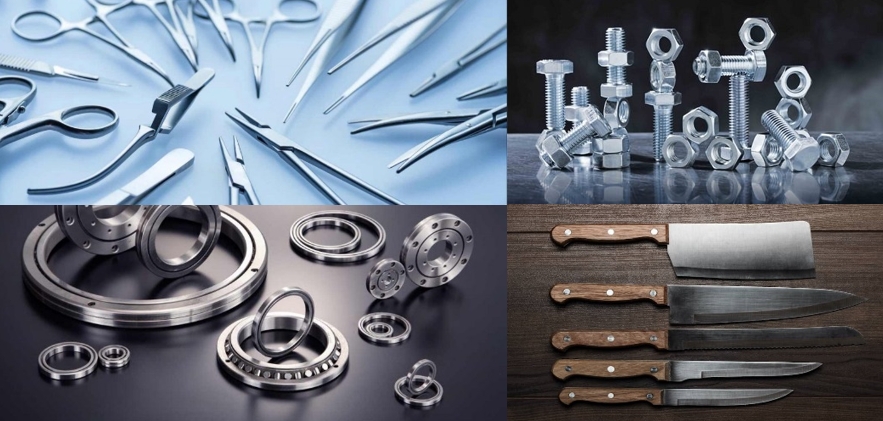
In the medical industry, 1.2344 mold steel is used to produce a variety of medical devices, such as scalpels, orthotics, prosthetics, etc. These medical devices require high strength and high wear resistance, and 1.2344 mold steel can meet these requirements.

1.2344 ESR Mold steel price

To understand the approximate price range of mold steel, you need to consider factors such as imported and domestic choices, required specifications and quantities. In addition, factors such as include transportation distance, processing requirements, and whether tax   will also affect the price. In order to obtain accurate price information, please contact us and we will provide you with a detailed quotation.

Joann -Otai specai steelE-mail:joann@otaisteel.com

WhatsApp:+8613128068365

0 Continue Reading →

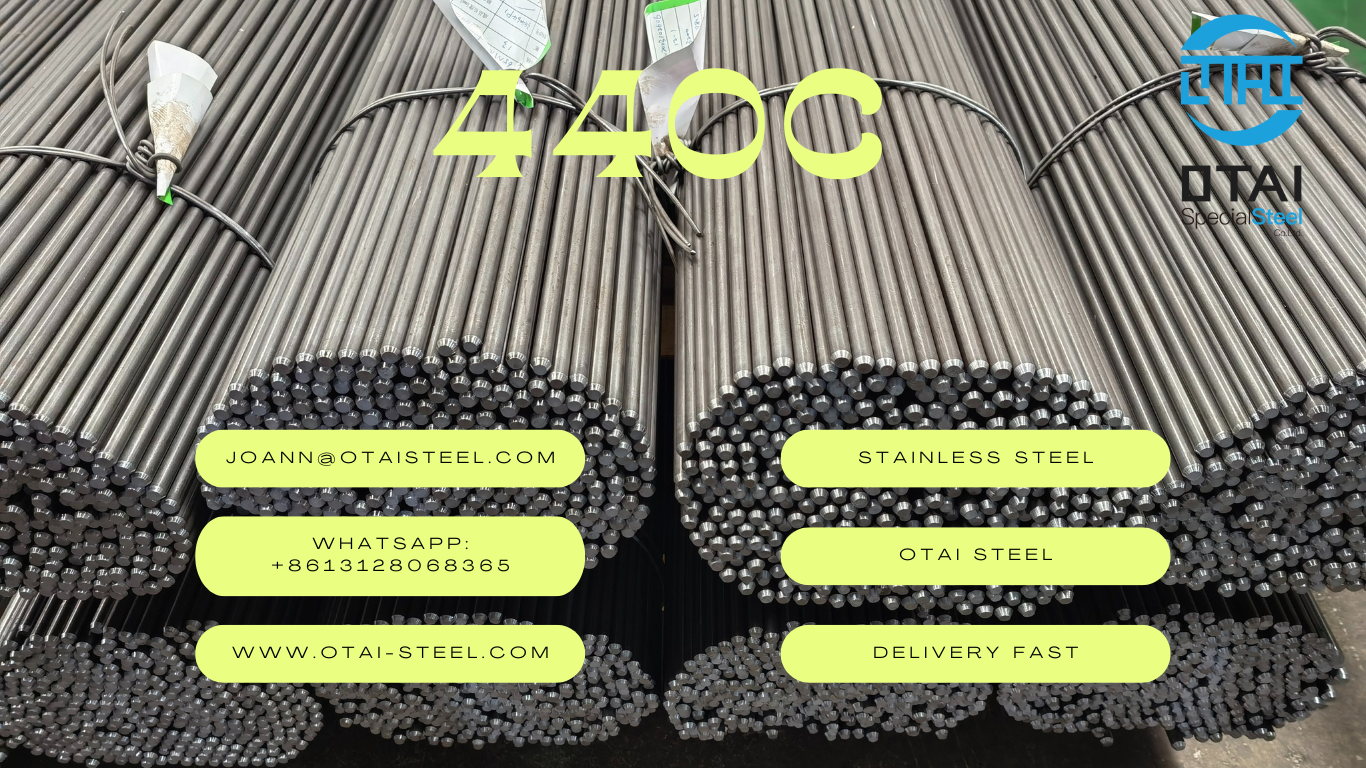
440C Stainless steel

When it comes to premium stainless steel, 440C steals the spotlight. In this comprehensive guide, we’ll explore the intricate details of 440C steel—covering specifications, chemical composition, physical and mechanical properties, applications, steel equivalents. Whether you’re a seasoned buyer or a curious visitor, this guide aims to demystify 440C and empower you with the knowledge needed to make informed decisions.

440C Steel General Properties

440C Stainless Steel, designated as UNS S44000 and DIN 1.4125/X105CrMo17, belongs to the high-alloy martensitic stainless steels with excellent corrosion resistance, particularly due to its high chromium content. It falls under the category of precipitation-hardened steels, combining characteristics of both martensitic and austenitic steels.

Corrosion Resistance

440C demonstrates good resistance to various environments, including the atmosphere, fresh water, foods, alkalies, and mild acids. The highest resistance is achieved in the hardened, tempered, and passivated condition, with a smooth polished surface further enhancing corrosion resistance. In many environments, its corrosion resistance is comparable to grade 304.

 Heat Resistance

440C is not recommended for use in temperatures exceeding the relevant tempering temperature to prevent a reduction in mechanical properties due to over-tempering.

440C Round bar440C Steel Heat Treatment

Annealing:

– Full Anneal: 850-900°C, slow furnace cool to about 600°C, then air cool.
– Sub-critical Annealing: 735-785°C, followed by a slow furnace cool.

Hardening:

– Heat to 1010-1065°C, quench in warm oil or air.
– Immediate tempering at 150-370°C to achieve a range of hardness values.

440C Steel Welding

If welding is necessary, pre-heat at 250°C and follow welding with a full anneal. Grade 420 filler produces a high-hardness weld, while 309 or 310 yields soft welds with higher ductility.

440C Steel Machining

440C is relatively easily machined in the annealed condition, comparable to high-speed steel. However, machining becomes more challenging, potentially impossible, after hardening.

440C Steel Mechanical Properties

Tempering Temperature (°C) Tensile Strength (MPa) Yield Strength 0.2% Proof (MPa) Elongation (% in 50mm) Hardness Rockwell (HRC) Impact Charpy V (J)
Annealed* 758 448 14 269HB max#
204 2030 1900 4 59 9
260 1960 1830 4 57 9
316 1860 1740 4 56 9
371 1790 1660 4 56 9

440C Stainless steel Physical Properties

Grade Density (kg/m3) Elastic Modulus (GPa) Mean Coefficient of Thermal Expansion (mm/m/°C) Thermal Conductivity(W/m.K) Specific Heat Electrical Resistivity (nW.m)
0-100°C 0-200°C 0-600°C at 100°C at 500°C 0-100°C (J/kg.K)
440 C 7650 200 10.1 10.3 11.7 24.2 460 600

440C Stainless steel Equivalent and Chemical Composition


Standard Grade C Mn P S Si Cr Mo
ASTM A276 S44004/440C 0.95-1.20 ≦1.00 ≦0.04 ≦0.03 ≦1.00 16.0-18.0 ≦0.75
EN10088 X105CrMo17/1.4125 0.95-1.20 ≦1.00 ≦0.04 ≦0.03 ≦1.00 16.0-18.0 0.40-0.80
JIS G4303 SUS 440C 0.95-1.20 ≦1.00 ≦0.04 ≦0.03 ≦1.00 16.0-18.0 ≦0.75

Possible Alternative Grades

– 440A/B: Slightly softer and more corrosion-resistant.
– 440F: High machinability with similar hardness and hardenability.
– 420: Lower strength and hardness.
– 416: Higher machinability with lower hardness and strength.

Grade Characteristics

440C exhibits high strength, moderate corrosion resistance, and exceptional hardness and wear resistance, especially after heat treatment. Its elevated carbon content contributes to its outstanding properties, making it suitable for applications like ball bearings and valve parts.

440C application440C Stainless Steel Applications :

– Rolling element bearings
– Valve seats
– High-quality knife blades
– Surgical instruments
– Chisels

Conclusion

In conclusion, 440C stainless steel is not just a material; it’s a solution to your durability and performance needs. Whether you’re in the market for cutlery, aerospace components, or medical instruments, 440C stands as a reliable and versatile choice.

Want to know  more about the 440C  steel details  ?

Pls contact : JoannJoann -Otai specai steel

E-mail:joann@otaisteel.com

WhatsApp:+8613128068365

0 Continue Reading →

D6/1.2436 ( X210CrW12 ) /SKD2 Cold Work Tool Steel

Introduction to 1.2436 DIN Tool Steel:

DIN 1.2436 tool steel is a high-carbon, high-chromium alloy enriched with tungsten, delivering exceptional compressive strength, wear resistance, surface hardness, and stable hardening properties. This versatile steel variant is sought after for its superior performance in various applications, making it a reliable choice across industries.

1.2436 ( X210CrW12 ) Quality Standard:

Our commitment to quality is reflected in our adherence to the BS EN ISO 4957-2000 Tool Steels standard.

1.2436 ( X210CrW12 ) steel equivalent:

Country USA German Japan
Standard ASTM A681 DIN EN ISO 4957 JIS G4404
Grades D6 1.2436 SKD2

Chemical Composition (%):

ASTM A681 C Mn P S Si Cr W
D6 2.00 2.20 0.20 0.40 0.03 0.03 0.20 0.40 11.50 12.50 0.60 0.90
DIN ISO 4957 C Mn P S Si Cr W
1.2436 / X210CrW12 2.00 2.30 0.30 0.60 0.03 0.03 0.10 0.40 11.00 13.00 0.60 0.80
JIS G4404 C Mn P S Si Cr W
SKD2 2.00 2.30 0.30 0.60 0.03 0.03 0.10 0.60 11.00 13.00 0.60 0.80


1.2436 flat bar1.2436 ( X210CrW12 ) Heat Treatment:

Temperature

Cooling

Hardness

Soft annealing

800 – 840 °C

Furnace

250 HB

Stress Relief Annealing

600 – 650°C

Furnace

Hardening

960 – 980°C

oil, pressure gas (N2), air or hot bath 500 – 550°C

See Tempering Diagram

1.2436 ( X210CrW12 ) Material Mechanical Properties

Hardness

58 – 64

HRC

1.2436 Physical Properties

Coefficient of thermal expansion

10,9 – 13,2

1/K * 10-6

Thermal conductivity ( (20°C)

16,7

W/mK

Density

7,85

g/cm3

Applications of 1.2436 Tool Steel:1.2436 round bar

DIN 1.2436 finds its application in a variety of scenarios, including:
– Blanking and shearing tools
– Drawing tools and dies
– Mandrels
– Press tools
– Forming tools
– Shear blades

This tool steel variant is particularly well-suited for applications demanding maximum wear resistance.

Want to know  more about the D6/1.2436 ( X210CrW12 ) /SKD2 steel details  ?

Pls contact : JoannJoann -Otai specai steel

E-mail:joann@otaisteel.com

WhatsApp:+8613128068365

0 Continue Reading →

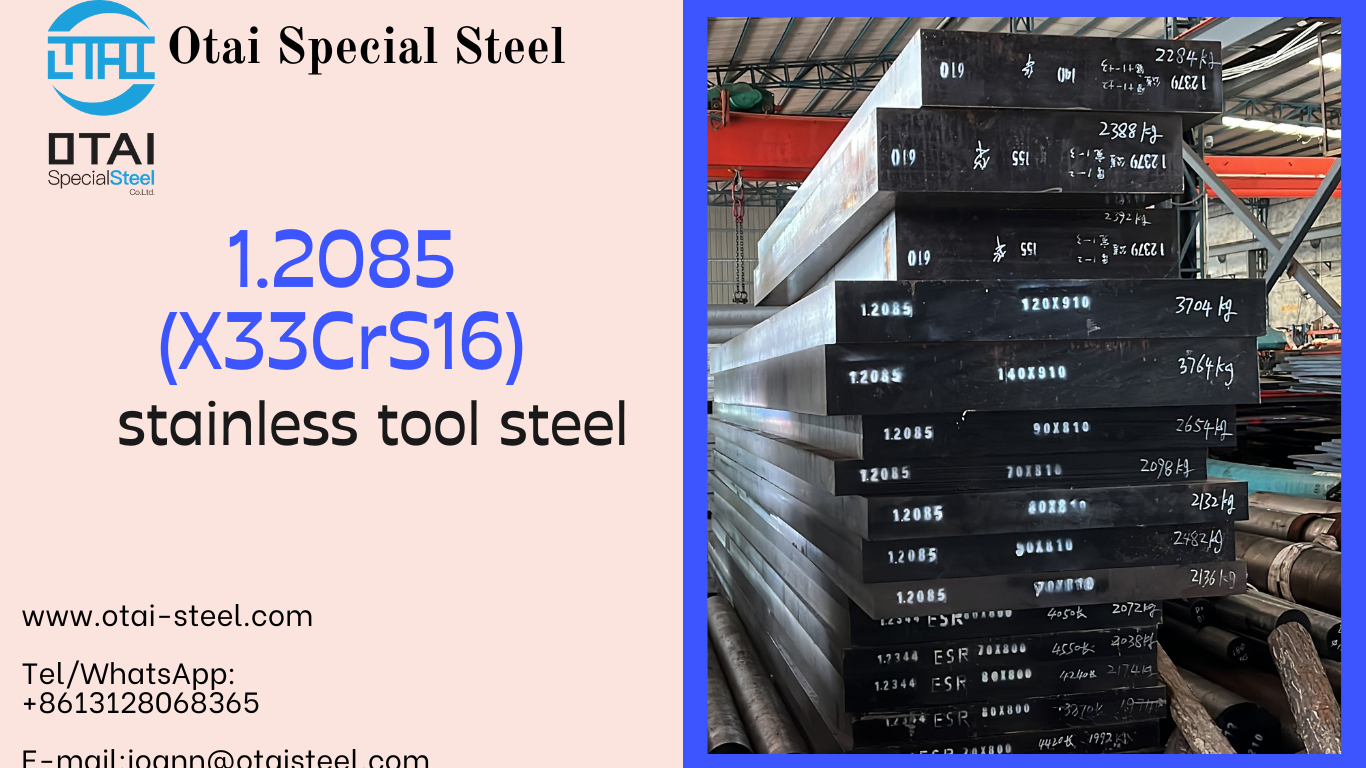
Unveiling the Marvels of 1.2085 (X33CrS16) Material: A Deep Dive

1.2085 (X33CrS16) material emerges as a corrosion-resistant martensitic stainless tool steel, known for its exceptional properties in various industrial applications. Let’s explore the intricacies of this material, covering its composition, hardness, mechanical properties, applications, and pricing.

1.2085 Material Composition and Unique Features

1.2085 (X33CrS16) steel is distinguished by its corrosion resistance and martensitic structure. In its hardened state, polished to mirror brightness, it becomes magnetizable, showcasing its versatility. The sulfur content not only facilitates good machinability but also contributes to its mechanical strength and toughness.

1.2085 Chemical composition:

  C Si Mn S P  Cr Mo Ni
1.2085 0.28-0.38 Max1.00 Max1.40 0.050-0.100 MAX0.030 15.00-17.00 / Max1.00

The interplay of these elements grants 1.2085 its remarkable strength, durability, and corrosion resistance. This chemical harmony contributes to the material’s suitability for various applications.

1.2085 Hardness: A Key Indicator of Performance

1.2085 is delivered hardened and double tempered to 280 – 325 HB (29 – 33 HRC), 1.2085 (X33CrS16) steel stands as a robust material, suitable for applications demanding resilience and durability. This hardness range ensures optimal performance in various working conditions.

1.2085  Properties: Unraveling the Technical Details

Resistant to the corrosion, Martensite steel with the high content of chrome. The steel has good resistance to the wear, good workability and polishability. Delivered quenched and tempered 280 – 325 HB.

PHYSICAL PROPERTIES

Quantity Value Unit
Thermal expansion 16 – 17 e-6/K
Thermal conductivity 16 – 16 W/m.K
Specific heat 500 – 500 J/kg.K
Melting temperature 1370 – 1400 °C
Service temperature 0 – 500 °C
Density 8000 – 8000 kg/m3
Resistivity 0.7 – 0.7 Ohm.mm2/m

Mechanical Properties

Properties Conditions
T (°C) Treatment
Density (×1000 kg/m3) 7.7-8.03 25
Poisson’s Ratio 0.27-0.30 25
Elastic Modulus (GPa) 190-210 25
Tensile Strength (Mpa) 1158 25 oil quenched, fine grained, tempered at 425°C
Yield Strength (Mpa) 1034
Elongation (%) 15
Reduction in Area (%) 53
Hardness (HB) 335 25 oil quenched, fine grained, tempered at 425°C

Applications Across Industries
1.2085 (X33CrS16) steel finds its stronghold in the realm of hot-forming molds. Widely utilized in extrusion tools, forging molds, aluminum injection molds, hot cutting blades, and plastic molds, its high impact resistance makes it a preferred choice for thick sheet cutting molds. Its adaptability extends to areas like the white goods and electronics industry, as well as medical and food applications.

Navigating the Price Landscape

Understanding the cost of 1.2085 (X33CrS16) steel involves considering factors such as product section, dimensions, and surface quality. For current and specific pricing, the “Proceed to Online Sales” button on www.saglammetal.com provides a gateway to accessing this crucial information.

1.2085 Material Industries and Applications

1.2085 (X33CrS16) steel seamlessly integrates into industries like white goods, electronics, medical, and the food industry. Its application spectrum spans plastic injection molding and serves as a reliable material for holder components, showcasing its adaptability across diverse sectors.

In conclusion

1.2085 (X33CrS16) (HC16S) steel is more than just a material—it’s a solution. Its corrosion resistance, mechanical strength, and versatility position it as a cornerstone in various industries, meeting the demands of precision and reliability.

1.2085 Material FAQs

1. **Is 1.2085 (X33CrS16) steel suitable for humid environments?**
– Yes, the sulfur content in 1.2085 steel contributes to its machinability, making it suitable for working in wet or humid conditions.

2. **What sets 1.2085 (X33CrS16) apart in hot-forming molds?**
– Its high impact resistance and excellent dimensional stability during heat treatment make it an ideal choice for hot-forming molds.

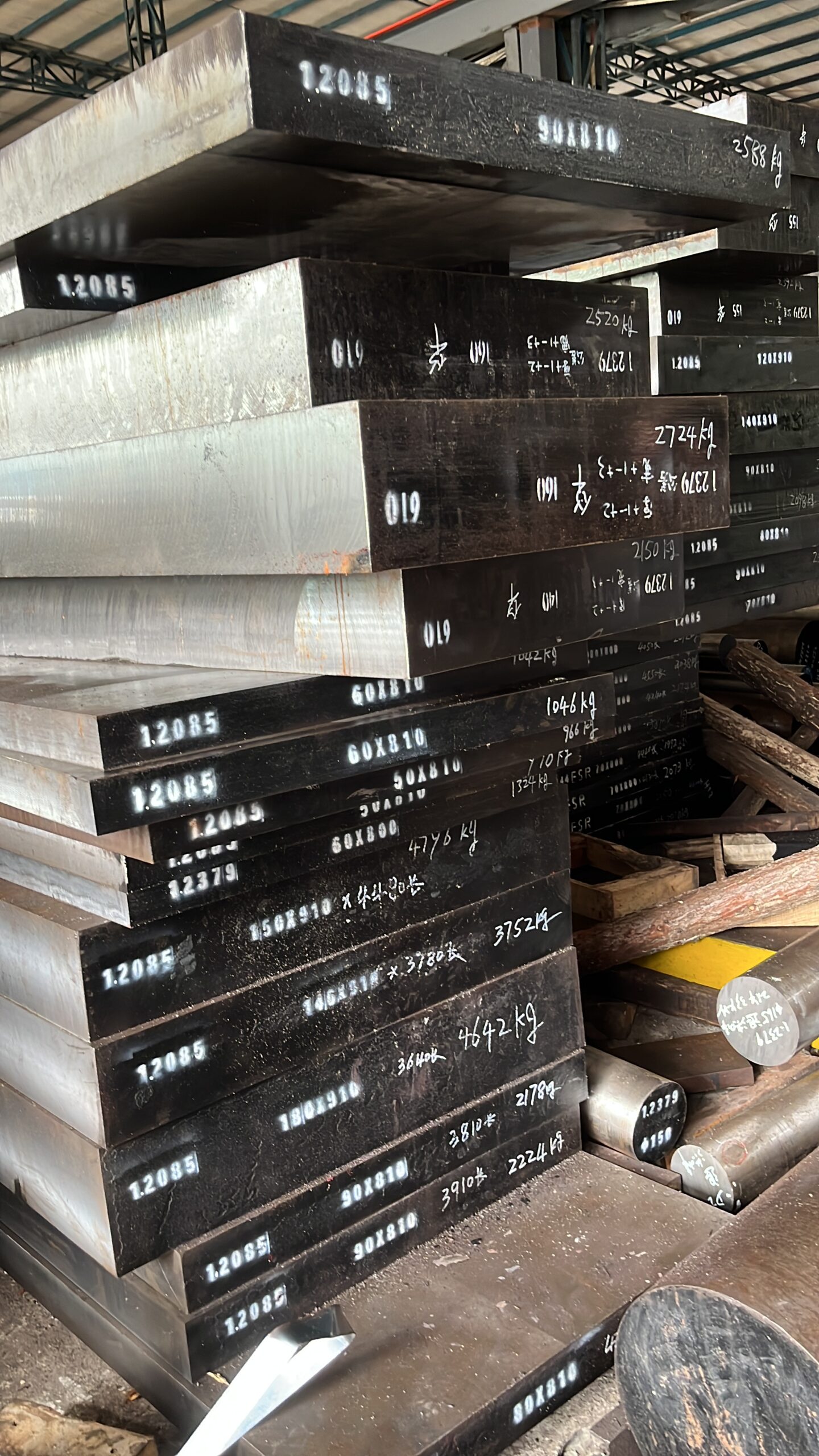
3. **How does the pricing of 1.2085 (X33CrS16) vary?**1.2085 flat bar
– Pricing considerations include product section, dimensions, and surface quality, and can be explored further on the www.saglammetal.com website.

4. **Can 1.2085 (X33CrS16) steel be used in the medical industry?**
– Absolutely, its corrosion resistance and mechanical properties make it suitable for applications in the medical industry.

5. **Is 1.2085 (X33CrS16) steel cost-effective for plastic injection molding?**
– Yes, its good machinability, mechanical strength, and toughness make it a cost-effective choice for plastic injection molding applications.

Want to know  more about the 1.2085 steel details and 1.2085 steel stock list ?

Pls contact : Joann

E-mail:joann@otaisteel.com

WhatsApp:+8613128068365

0 Continue Reading →


Recent Comments by Joann

    No comments by Joann