When you choose a tool steel for precision work, are you tired of materials that warp during heat treatment? Do you need a balance between wear resistance and toughness—without breaking the bank? If so, let’s talk about A2 steel.
At Dongguan Otai Special Steel, we see A2 as the “Swiss Army knife” of cold-work tool steels. It is not the absolute hardest, nor the absolute toughest. Instead, it sits right in the sweet spot.
Below, I will walk you through everything you need to know—from chemistry to cost—so you can decide if A2 is the right fit for your next project.
What Exactly Is A2 Steel? (Standards & Equivalents)
A2 is a medium-alloy, air-hardening tool steel. The magic word here is air. Unlike oil-hardening steels (like O1), A2 hardens simply by cooling in still or circulating air. This dramatically reduces the risk of cracking or distortion.
You will find A2 under several names across the globe. Do not let the different labels confuse you—they are effectively the same material.
| Standard | Grade Name |
|---|---|
| AISI / ASTM (USA) | A2 |
| DIN / W-Nr (Germany) | 1.2363 |
| BS (UK) | BD2 |
| JIS (Japan) | SKD12 |
| GB (China) | Cr5Mo1V |
Chemical Composition
A2’s performance comes from a precise recipe of elements. Let me break it down like a chef explaining a signature dish:
| ASTM A681 | C | Mn | P | S | Si | Cr | V | Mo | ||||||
| A2/T30102 | 0.95 | 1.05 | 0.40 | 1.00 | 0.03 | 0.03 | 0.10 | 0.50 | 4.75 | 5.50 | 0.15 | 0.50 | 0.90 | 1.40 |
| DIN ISO 4957 | C | Mn | P | S | Si | Cr | V | Mo | ||||||
| 1.2363/X100CrMoV5 | 0.95 | 1.05 | 0.40 | 0.80 | 0.03 | 0.03 | 0.10 | 0.40 | 4.80 | 5.50 | 0.15 | 0.35 | 0.90 | 1.20 |
| JIS G4404 | C | Mn | P | S | Si | Cr | V | Mo | ||||||
| SKD12 | 0.95 | 1.05 | 0.40 | 0.80 | 0.03 | 0.03 | 0.10 | 0.40 | 4.80 | 5.50 | 0.15 | 0.35 | 0.90 | 1.20 |
| BS 4659 | C | Mn | P | S | Si | Cr | V | Mo | ||||||
| BA2 | 0.95 | 1.05 | 0.30 | 0.70 | 0.035 | 0.035 | . . . | 0.40 | 4.75 | 5.25 | 0.15 | 0.40 | 0.90 | 1.10 |
The key takeaway: The low vanadium and moderate chromium mean A2 is much easier to grind and machine than D2, yet it resists softening far better than O1.
Mechanical Properties
After proper heat treatment (typically 940-980°C / 1725-1800°F air quench, followed by double tempering), here is what you can expect:
| Temperature | 68°F | 375°F | 750°F |
| (20°C) | (200°C) | (400°C) | |
| Density | |||
| lbs/in3 | 0.279 | 0.277 | 0.275 |
| kg/m3 | 7 750 | 7 700 | 7 650 |
| Modulus of elasticity | |||
| psi | 27.5 x 10⁶ | 26.9 x 10⁶ | 24.6 x 10⁶ |
| N/mm2 | 190 000 | 185 000 | 170 000 |
| Coefficient of thermal expansion | |||
| per °F from 68°F | – | 6.5 x 10⁻⁶ | – |
| per °C from 20°C | – | 11.6 x 10⁻⁶ | – |
- Mechanical Properties of A2 Steels
| Properties | Metric | Imperial |
| Hardness, Rockwell C (as air-hardened (63-65 HRC average), 60-62 HRC at 205°C, 59-61 HRC at 260°C, 58-60 HRC at 315°C, 57-59 HRC at 370°C and 425°C and 480°C, 56-58 HRC at 540°C, 50-52 HRC at 595°C, 42-44 HRC at 650°C) | 64 | 64 |
| Bulk modulus (typical for steels) | 140 GPa | 20300 ksi |
| Machinability (based on carbon tool steel) | 65% | 65% |
| Shear modulus | 78.0 GPa | 11300 ksi |
| Poisson’s ratio | 0.27-0.30 | 0.27-0.30 |
| Elastic modulus | 190-210 GPa | 27557-30457 ksi |
 A2 Steel Applications
Because A2 is so versatile, you will find it across many industries. If your tool needs a sharp edge, withstands impact, and cannot warp during heat treatment, A2 is likely the answer.
-
Punches & Dies: Medium-volume stamping, forming, and trimming.
-
Shear Blades & Slitters: Cutting thin sheets (up to 3mm mild steel).
-
Plastic Molds: Short to medium production runs (especially with abrasive fillers like glass fiber).
-
Woodworking Knives: Planer and chipper knives.
-
Cold Forming Rolls: Where wear and compressive strength matter.
Available Sizes & Forms (What Otai Keeps in Stock)
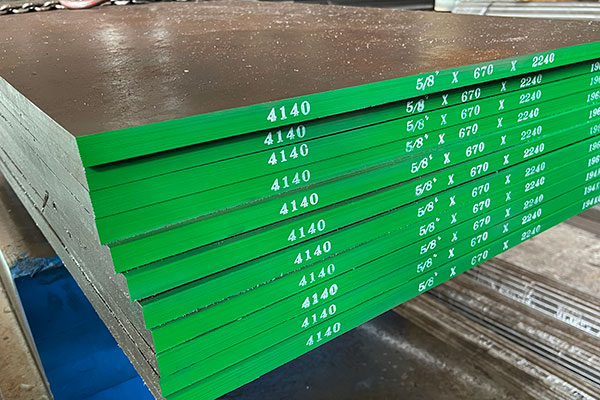
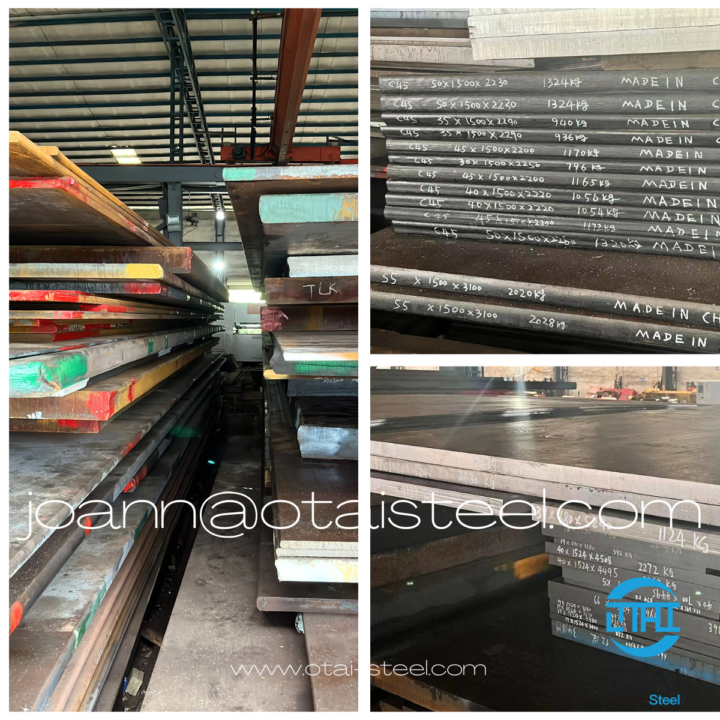
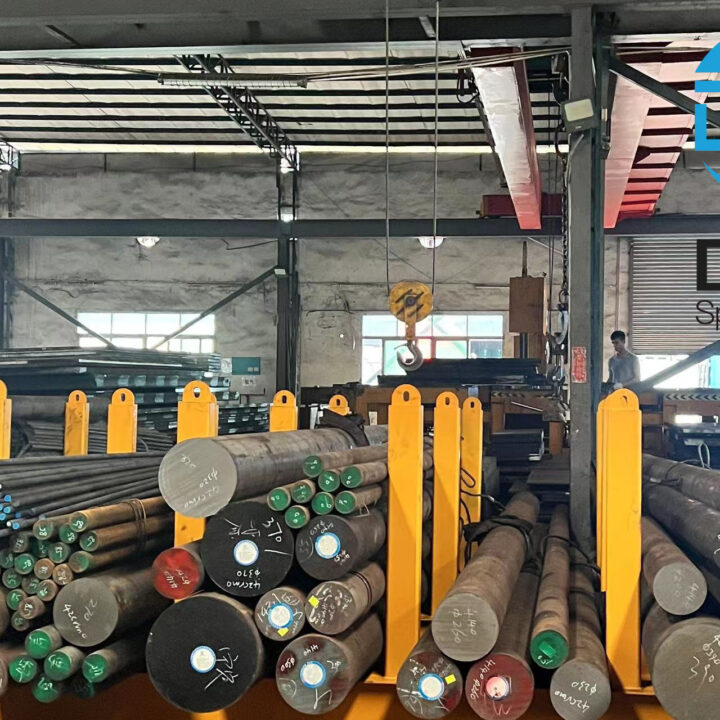
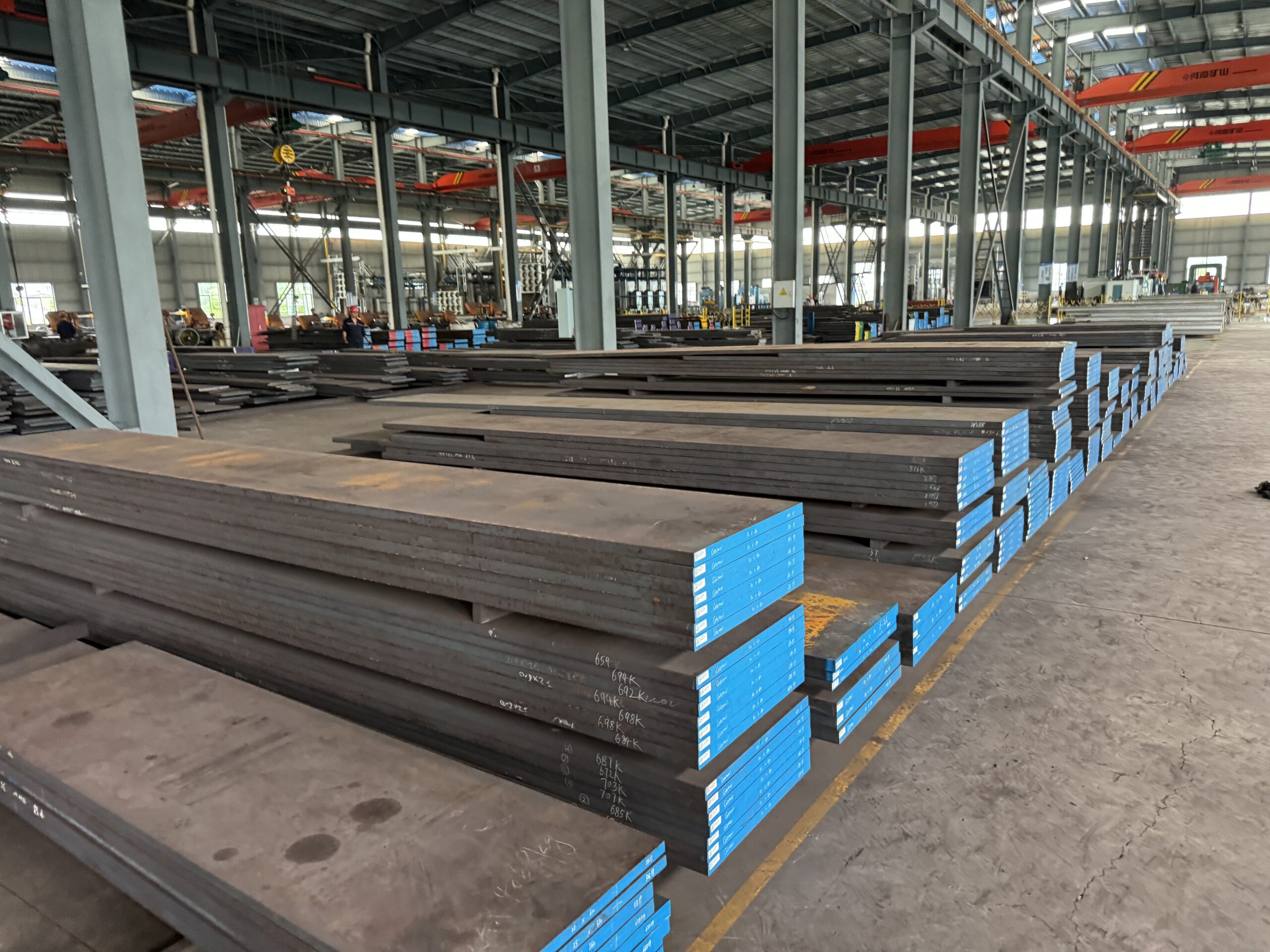
We know that waiting for material kills your deadlines. That is why we maintain a broad inventory of genuine A2 steel, sourced from approved mills.
| Form | Thickness / Diameter | Width / Length | Surface Condition |
|---|---|---|---|
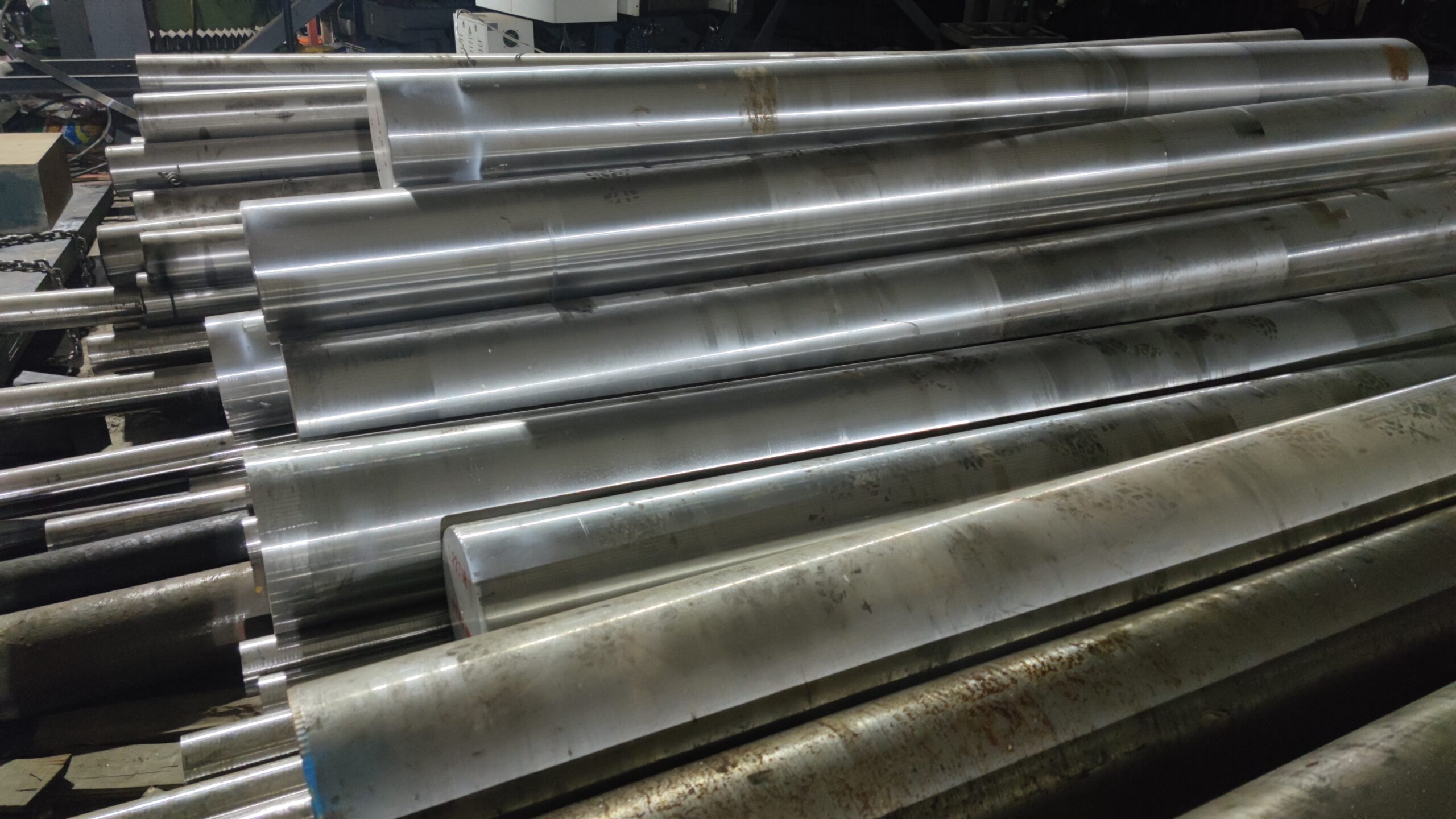
| Round Bar | 20mm – 300mm | Random max 5.8m | Black, turned, or ground |
| Flat Bar / Plate | 20mm – 70mm | Up to 610mm width | Mill surface or black surface |
Need a special size? Just ask. We offer precision cutting, grinding, and even heat treatment support.
Price Considerations
How much does A2 cost? It depends on size, quantity, surface finish, and current alloy markets. However, I can give you a reliable comparison:
-
A2 vs. O1: A2 is roughly 15-25% more expensive than O1. You pay for the air-hardening benefit.
-
A2 vs. D2: A2 is typically 10-20% cheaper than D2 because it has less vanadium and chromium.
-
A2 vs. S7 (toughness grade): A2 is similar or slightly lower in cost.
Pro tip: Do not just compare price per kg. Compare cost per part produced. A2’s dimensional stability means less post-heat-treatment grinding. That alone often saves you money.
Why Buy A2 Steel from Dongguan Otai Special Steel?
We are not a middleman. We are a direct supplier with over 15 years of experience. When you email us for a quote, a real person checks stock, confirms mill certificates, and offers advice.
-
Certified chemistry: Each batch comes with a full EN 10204 3.1 test report.
-
Fast lead time: Standard sizes ship within 3-5 days.
-
Stable quality : Stable steel source and accpet inspection from third party
Final Thoughts: Is A2 Right for You?
Let me end with a simple question: Do you need a tool steel that hardens with minimal movement, wears longer than carbon steel, and won’t shatter on impact?
If you answered “yes,” then A2 is your material.
And if you are still unsure? That is fine too. Contact our team with your application details. We will be honest—whether that means recommending A2, D2, or another grade entirely.
Ready to get a quote or request a data sheet?