Have you ever tried to bend a steel bar that simply refuses to move? That is the kind of resistance we are talking about with DIN 1.2767. In the world of tool steels, this material is not just another player on the bench—it is the heavyweight champion of toughness and strength.
So, what exactly is DIN 1.2767 steel ? In simple terms, it is a nickel-chromium-molybdenum alloyed steel. It is often referred to by its common alias: 45NiCrMo16. Think of it as the steel equivalent of a reinforced concrete beam—strong on its own, but with a hidden structure that makes it nearly unbreakable under impact.
Standard and Equivalents
| Standard | Grade Name |
|---|---|
| DIN (Germany) | 1.2767 |
| AISI (USA) | 6F7 (similar, but not identical) |
| JIS (Japan) | SKT 5 |
| Other Common Name | 45NiCrMo16/ X45NiCrMo4 |
A quick note: while 1.2767 behaves similarly to AISI 6F7, we always recommend verifying your specific application requirements. Let’s just say they are cousins, not twins.
Chemical Composition (wt%)
Below is the typical chemical composition range for DIN 1.2767 (45NiCrMo16) as per DIN ISO 4957 standard. Then, we will place it side-by-side with two common comparable grades: AISI 6F7 and JIS SKT5.
| Element | DIN 1.2767 (45NiCrMo16) | AISI 6F7 | JIS SKT5 |
|---|---|---|---|
| Carbon (C) | 0.40–0.50% | 0.45–0.55% | 0.35–0.45% |
| Silicon (Si) | 0.10–0.40% | 0.20–0.50% | 0.10–0.40% |
| Manganese (Mn) | 0.20–0.50% | 0.50–0.90% | 0.30–0.60% |
| Chromium (Cr) | 1.20–1.50% | 1.20–1.50% | 1.00–1.30% |
| Molybdenum (Mo) | 0.15–0.35% | 0.25–0.35% | 0.15–0.30% |
| Nickel (Ni) | 3.80–4.30% | 1.30–1.80% | 3.50–4.00% |
| Vanadium (V) | — | 0.80–1.10% | — |
Why does this matter? The high nickel content is the secret sauce. It gives the steel extraordinary ductility—imagine stretching a rubber band versus snapping a twig. 1.2767 bends before it breaks.
Mechanical Properties (Heat Treated)
| Condition | Tensile Strength (MPa) | Yield Strength (MPa) | Elongation (%) | Hardness (HRC) |
|---|---|---|---|---|
| Soft Annealed | ~800 | ~550 | ~15 | Max 285 HB (~22 HRC) |
| Hardened & Tempered | 1200–1420 | 980–1180 | 7–10 | Min 52 HRC (typical) |
Technical Properties Worth Knowing
-
High hardenability: Air or oil quenching works beautifully. No need for water quenching, which reduces distortion.
-
Excellent polishability: Perfect for plastic mold cavities that need a mirror finish.
-
Good wear resistance: Not in the D2 or M2 class, but more than enough for high-impact applications.
Typical Application
Where would you actually use DIN 1.2767 steel ? Imagine high-stress tools like:
-
Injection molding tooling for abrasive plastics (e.g., glass fiber reinforced)
-
Shearing blades
-
Master molds and dies
-
Extrusion tools
-
Calendering rolls
In other words, if your tool takes repeated heavy punches, DIN 1.2767 steel is your ring. It is also widely used in automotive stamping dies and food processing machinery where both strength and corrosion resistance (from nickel) matter.
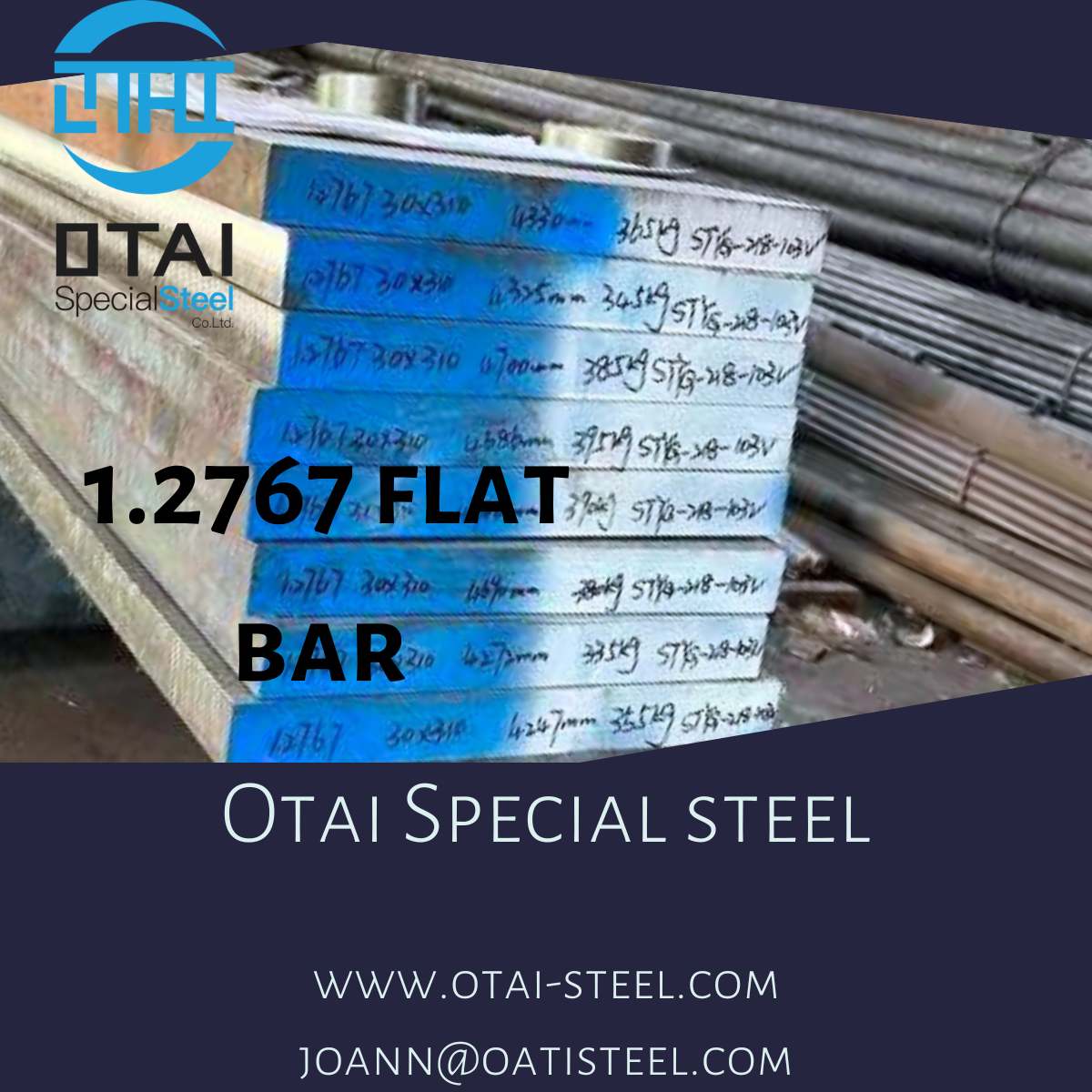
Available Sizes from Otai Special Steel
We supply 1.2767 in the following forms (subject to stock):
-
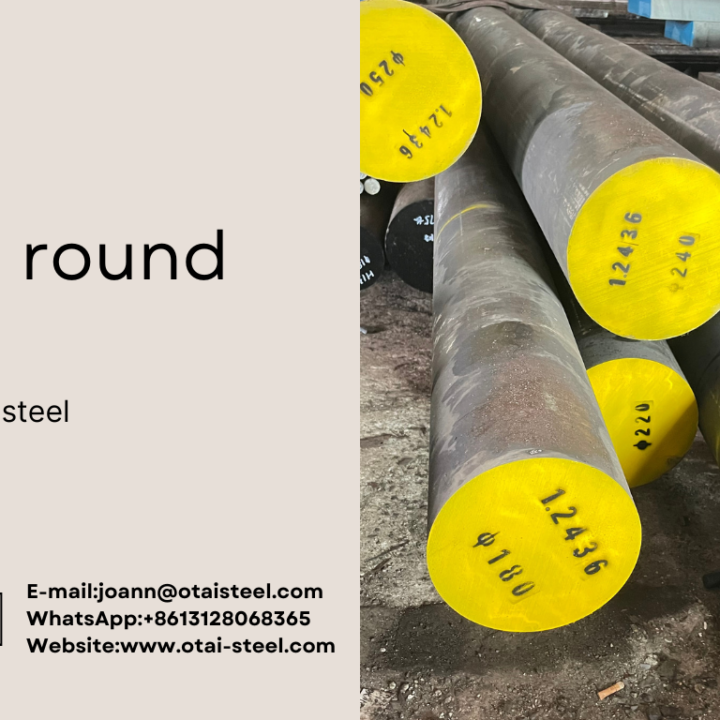
Rounds: 8mm – 800mm diameter
-
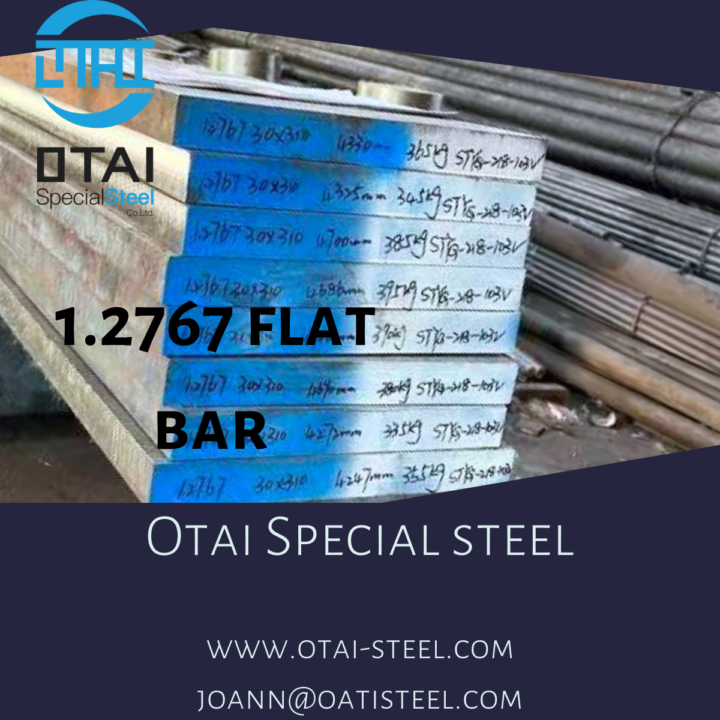
Flats / Blocks: Thickness 20mm – 500mm, Width up to 800mm
-
Plates: Cut-to-size service available
All material is supplied in the soft annealed condition unless otherwise requested. Need pre-cutting, grinding, or heat treatment? Just ask.
Price Consideration
Is 1.2767 expensive? That depends on your benchmark. Compared to standard mold steel like P20, yes—it costs more. Compared to high-speed steel like M2, it is very competitive. Think of it as an investment in fewer tool failures and less downtime. We price per kilogram, with discounts for full mill batches. Contact us for a live quote based on your exact dimensions.
Why Choose Otai?
Because we don’t just sell steel. We help you match the right steel to your problem. Have a tool that keeps cracking? That is a conversation worth having.
Ready to upgrade your tooling’s backbone? Get in touch today.