Have you ever watched a stainless steel kitchen knife resist rust after hundreds of washes? That’s the kind of reliability we build into 1.2083 steel. At Dongguan Otai Special Steel, we see this material as the bodyguard of the plastics industry—tough, clean, and ready for harsh conditions.
Let’s cut to the chase. DIN 1.2083 is a martensitic stainless mold steel, widely known as the go-to choice for processing corrosive plastics. But what exactly makes it so special? Think of it as the gym trainer of steel grades: high hardness, good wear resistance, and outstanding resistance to acidic byproducts.
In simple terms,DIN 1.2083 is the German DIN standard ISO EN 4957 steel grade. It is a stainless and mold steel . Globally, you might hear it called by different names:
| Standard | Equivalent Grade |
|---|---|
| DIN (ISO EN 4957) | 1.2083 |
| AISI (ASTM A681) | 420 |
| JIS (Japan) | SUS420J2 |
| GB (China) | 4Cr13 |
| EN (Europe) | X42Cr13 |
Chemical Composition of 1.2083 steel and it’s equivalent grade
Why does it fight rust so well? Let’s look at its DNA—the chemical composition. Every element plays a role, like musicians in a band.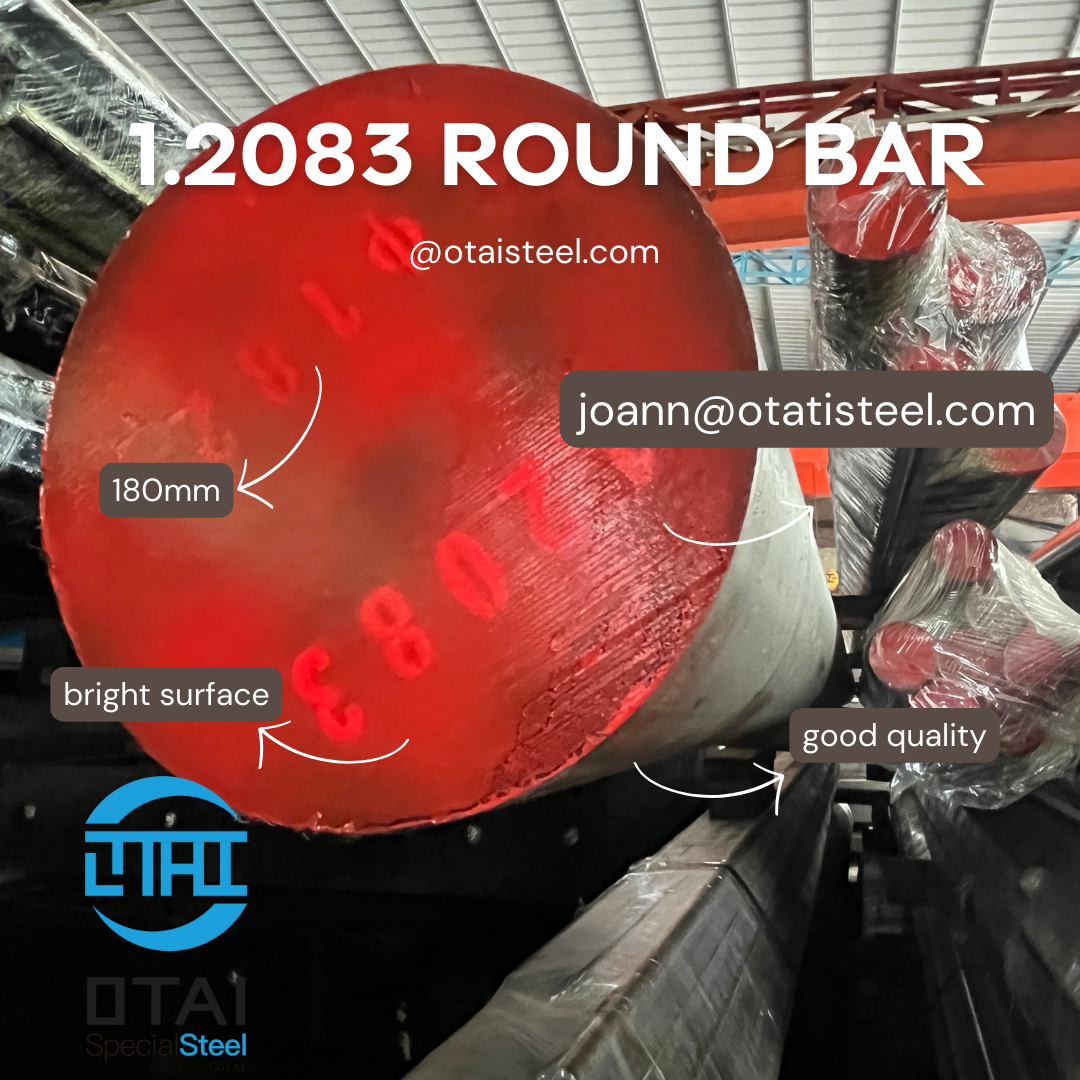
| Element | 1.2083 (DIN) | AISI 420 (USA) | SUS420J2 (Japan) | 4Cr13 (China) |
|---|---|---|---|---|
| Carbon (C) | 0.38 – 0.42 | 0.36 – 0.42 | 0.36 – 0.42 | 0.36 – 0.45 |
| Chromium (Cr) | 12.0 – 14.0 | 12.0 – 14.0 | 12.0 – 14.0 | 12.0 – 14.0 |
| Manganese (Mn) | ≤ 1.00 | ≤ 1.00 | ≤ 1.00 | ≤ 0.80 |
| Silicon (Si) | ≤ 1.00 | ≤ 1.00 | ≤ 1.00 | ≤ 0.60 |
| Phosphorus (P) | ≤ 0.03 | ≤ 0.04 | ≤ 0.04 | ≤ 0.03 |
| Sulfur (S) | ≤ 0.03 | ≤ 0.03 | ≤ 0.03 | ≤ 0.03 |
Mechanical Properties (How It Behaves Under Load)
| Property | Value (Annealed) | Value (Hardened & Tempered) |
|---|---|---|
| Hardness | 210 – 245 HB | 48 – 52 HRC |
| Tensile Strength, Rm | ~ 750 – 850 MPa | ~ 1800 – 2100 MPa |
| Yield Strength, Rp0.2 | ~ 450 – 550 MPa | ~ 1400 – 1700 MPa |
| Elongation at Break | ~ 12 – 15% | ~ 2 – 4% |
| Impact Toughness (KV) | ~ 20 – 25 J | ~ 8 – 12 J |
| Young’s Modulus (Elasticity) | 215 GPa (both conditions) | 215 GPa (both conditions) |
Here’s the trade-off: When you harden DIN 1.2083 , it becomes incredibly strong—like turning soft clay into ceramic tile. But you lose ductility. That’s perfectly fine for molds. Molds don’t bend; they resist wear and pressure.
Physical Properties (The Hidden Constants)
These numbers rarely change with heat treatment. They are the steel’s fingerprint—essential if you’re simulating cooling rates, ejection pin friction, or cycle times.
| Physical Property | Value | Why It Matters to You |
|---|---|---|
| Density | 7.70 – 7.75 g/cm³ | Weight calculation for large mold bases. A 100 kg block? Now you know exactly. |
| Thermal Conductivity | ~ 24 W/(m·K) at 20°C | Lower than carbon mold steel. Means slower cooling in the mold. Plan your cycle time accordingly. |
| Specific Heat Capacity | ~ 460 J/(kg·K) | How much energy it takes to heat the mold. Important for preheating calculations. |
| Electrical Resistivity | ~ 0.55 µΩ·m | Not for electrical parts—but useful for EDM (electrical discharge machining) planning. |
| Coefficient of Thermal Expansion | ~ 10.5 × 10⁻⁶ /K (20–200°C) | The steel grows when hot. Account for this in tight ejection systems. |
| Magnetic Properties | Ferromagnetic (magnetic) | Yes, it sticks to a magnet. That helps with handling and clamping. |
Where Should You Use DIN 1.2083 ? (Applications)
Here’s where this steel truly shines. It’s not for heavy-impact parts like a hammer—but for precision, wet, or acidic environments? Absolutely.
-
Molds for corrosive plastics – PVC, POM, and flame-retardant materials (they release aggressive gases).
-
Medical equipment molds – Because hygiene and rust-resistance are non-negotiable.
-
Food-contact molds – Think yogurt cups, bottle caps, and kitchenware.
-
Injection nozzles and extrusion screws – Where wear meets acid.
-
Optical lens molds – Thanks to its superior polishability.
Still wondering: Can I use standard tool steel here instead? You could… but expect rust spots within weeks. That’s like using a paper umbrella in a typhoon.
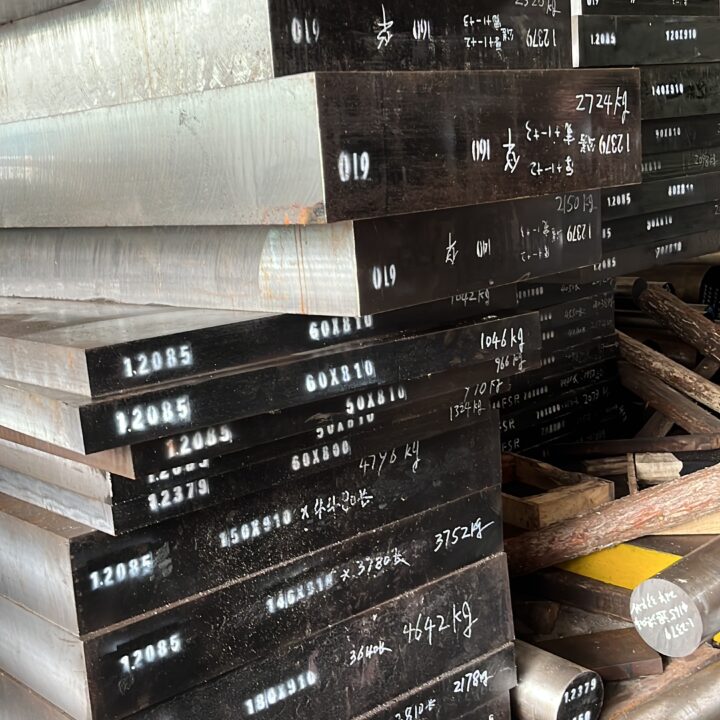
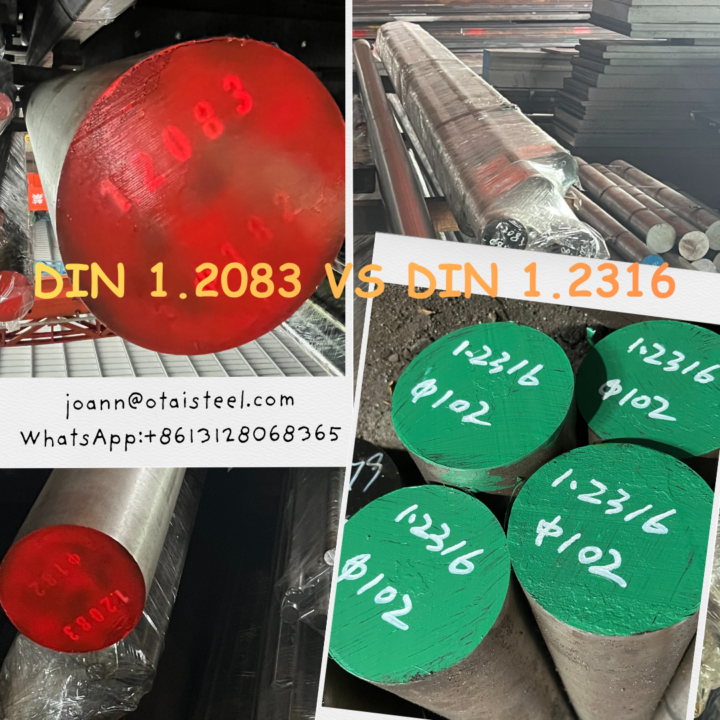
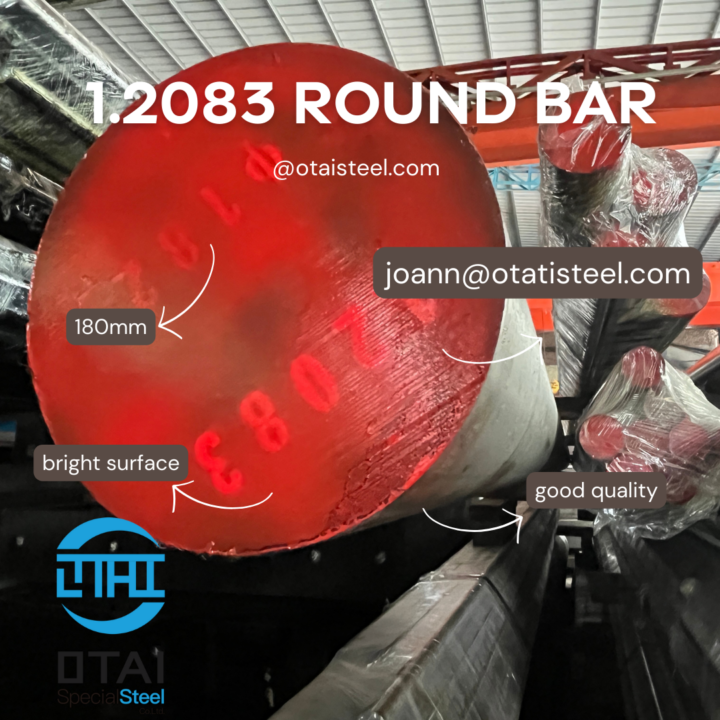
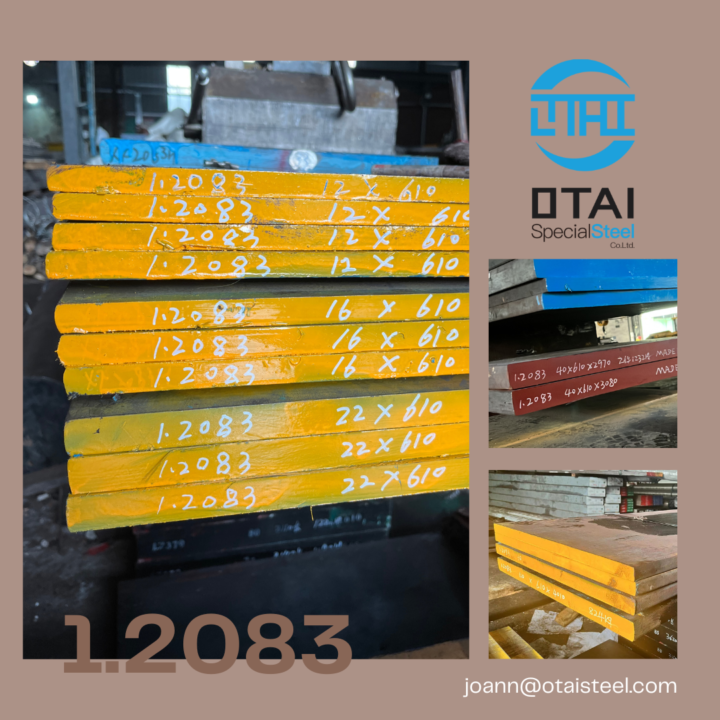
DIN 1.2083 Available Sizes from Otai Special Steel
We stock 1.2083 in multiple forms to save you time on machining:
| Form | Size Range |
|---|---|
| Round bars | Diameter 10 mm – 600 mm |
| Flat bars | Thickness 20 mm – 300 mm × Width up to 810 mm |
| Plates | 20 mm – 200 mm thick × 200 mm – 810 mm wide |
| Blocks | Custom-cut to your CAD dimensions |
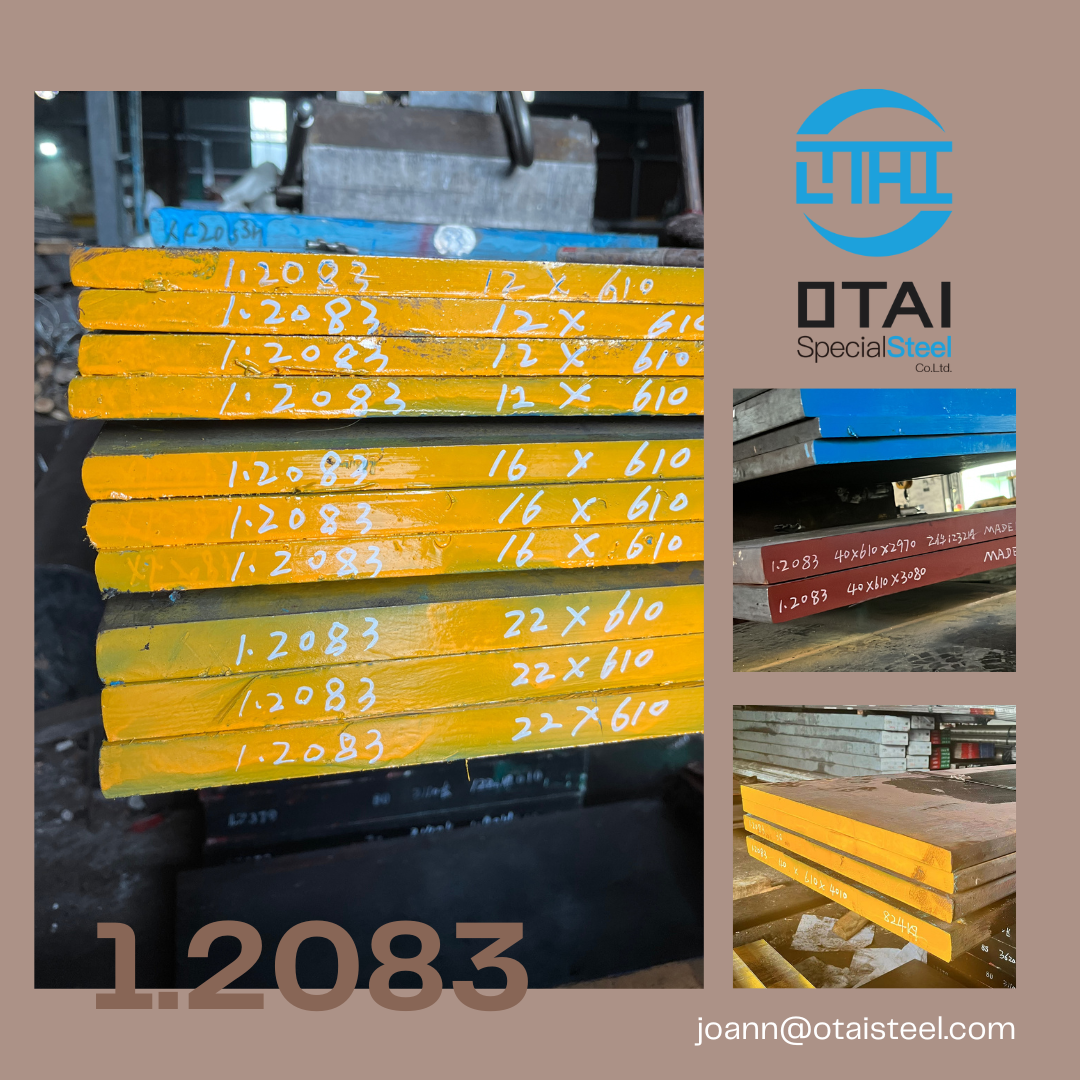
Need a specific length? We cut to order—no waste, no waiting.
Price & Cost Considerations
Let’s talk money honestly. 1.2083 is mid-priced in the mold steel family. It costs more than regular mould steel (like 1.2311) but significantly less than high-performance powder metallurgy steels (like 1.2083 VICTORY ESR).
-
Budget range: ~1.8–3.5 USD per kg, depending on size, quantity, and heat treatment.
-
Value tip: For large molds, we recommend ESR (Electro Slag Remelting) grade—higher cost but fewer inclusions and better mirror polish.
Think of it this way: Standard 1.2083 is a reliable sedan. ESR version is a luxury sports car. Both drive; one just handles corners better.
Why Buy DIN 1.2083 from Dongguan Otai Special Steel?
Because we don’t just sell steel—we solve problems. Every batch comes with a mill certificate. We offer cutting, heat treatment (pre-hardening to 280-320 HB or full hard to 50 HRC), and delivery worldwide from our Dongguan warehouse.
One final question: Is your current mold failing due to rust or poor polish? Then why keep patching the problem when 1.2083 can erase it?
Ready to upgrade? Contact Otai Special Steel today—we’ll help you choose the right size, condition, and price for your next precision mold project.