What Exactly Is O1 Steel?
Let’s start with a simple truth: O1 steel is not a mystery. It is a low-alloy, cold-work tool steel that must be oil-quenched during heat treatment. That is why many engineers simply call it “oil-hardening steel.”
Think of it this way: If water-hardening steels are like racing bikes—fast but brittle—then O1 is like a luxury sedan. Smooth, predictable, and forgiving.
Tools and dies made from O1 flat bars or round bars deliver good wear resistance and strong abrasive qualities. Why? Because the tungsten and higher chromium content work together like a shield against friction. In addition, ASTM A681 O1 tool steel offers deep hardening properties, a fine grain structure, and unusual toughness for its class.
Here is a rhetorical question for you: *Would you trust a brittle die to run a 10,000-part production run?* Probably not. That is exactly why machinists and toolmakers choose O1.
At Dongguan Otai Special Steel, we are not just another supplier. We are a better choice—offering reliable quality, responsive sales service, and full traceability. Our AISI O1 tool steel is available in decarb-free rounds, flats, squares, ground flat stock, and drill rod. Need a custom size? We deliver.
1. Supply Range of AISI O1 Tool Steel (What We Actually Stock)
No more searching for sizes that do not exist. Here is our real inventory: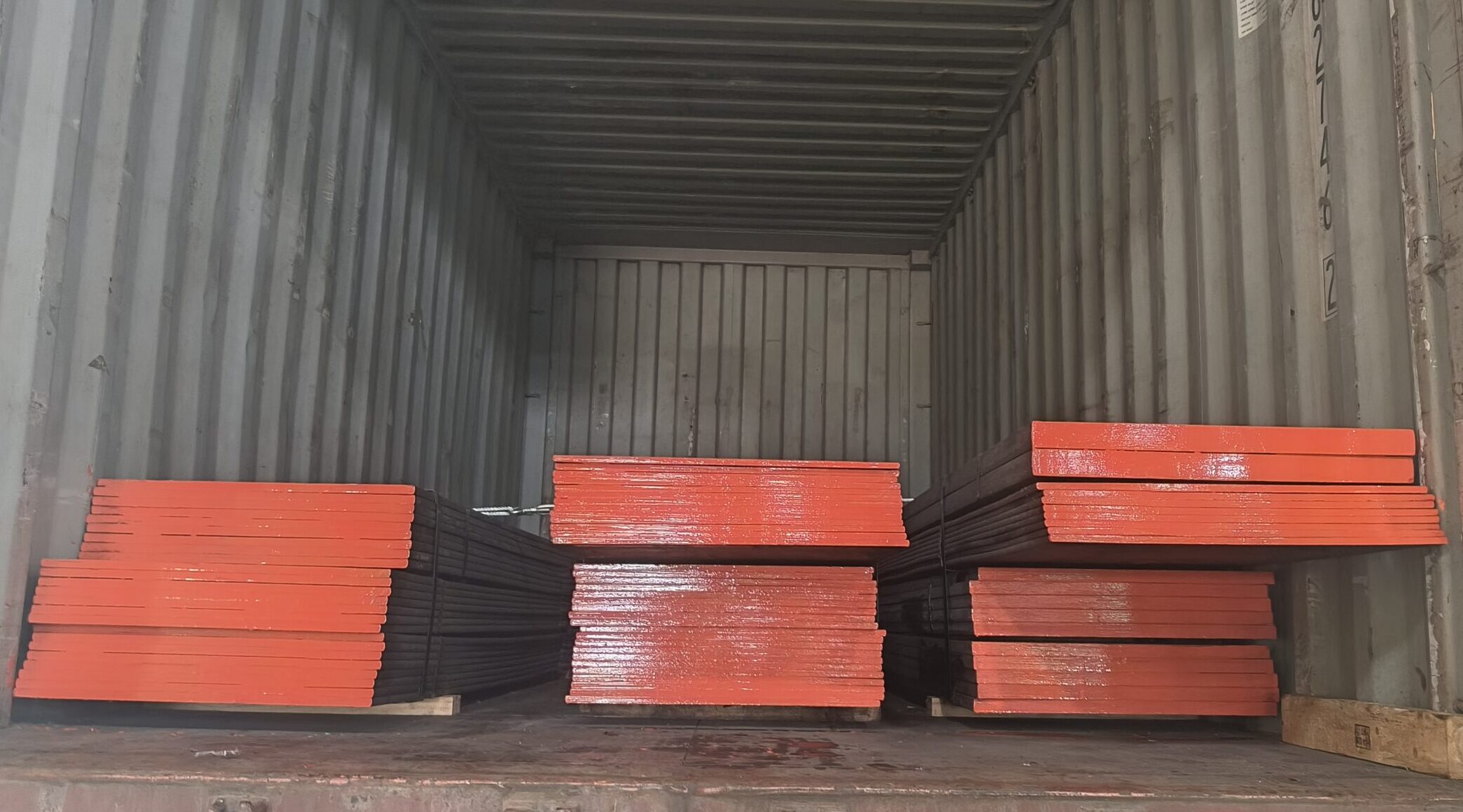
| Form | Size Range |
|---|---|
| Round Bar | Diameter 8mm – 350mm |
| Plate / Flat Bar | Thickness 8mm – 300mm x Width 200mm – 800mm |
| Custom Sizes | As per your drawing |
| Surface Finish | Black, rough machined, turned, or precision ground |
Need something outside this range? Just ask. We cut, grind, and ship globally.
2. Relevant Steel Specifications of AISI O1 Tool Steel
You may see different names on different blueprints. Do not let that confuse you. Here are the direct equivalents we supply at Otai:
| Country | Standard | Grade |
|---|---|---|
| USA | ASTM A681 | O1 |
| Germany | DIN EN ISO 4957 | 1.2510 / 100MnCrW4 |
| Japan | JIS G4404 | SKS3 |
So, if your customer asks for 1.2510 or SKS3, relax. You have found the right material.
3. Chemical Composition & Equivalents (The Honest Recipe)
Why does O1 perform so consistently? Because its chemistry is balanced like a good recipe. Let me show you the numbers we certify:
| Standard | C | Mn | Si | Cr | V | W |
|---|---|---|---|---|---|---|
| ASTM A681 O1 | 0.85-1.00 | 1.00-1.40 | 0.10-0.50 | 0.40-0.70 | Max 0.30 | 0.40-0.60 |
| DIN 1.2510 | 0.90-1.05 | 1.00-1.20 | 0.15-0.35 | 0.50-0.70 | 0.05-0.15 | 0.50-0.70 |
| JIS SKS3 | 0.90-1.00 | 0.90-1.20 | Max 0.35 | 0.50-1.00 | — | 0.50-1.00 |
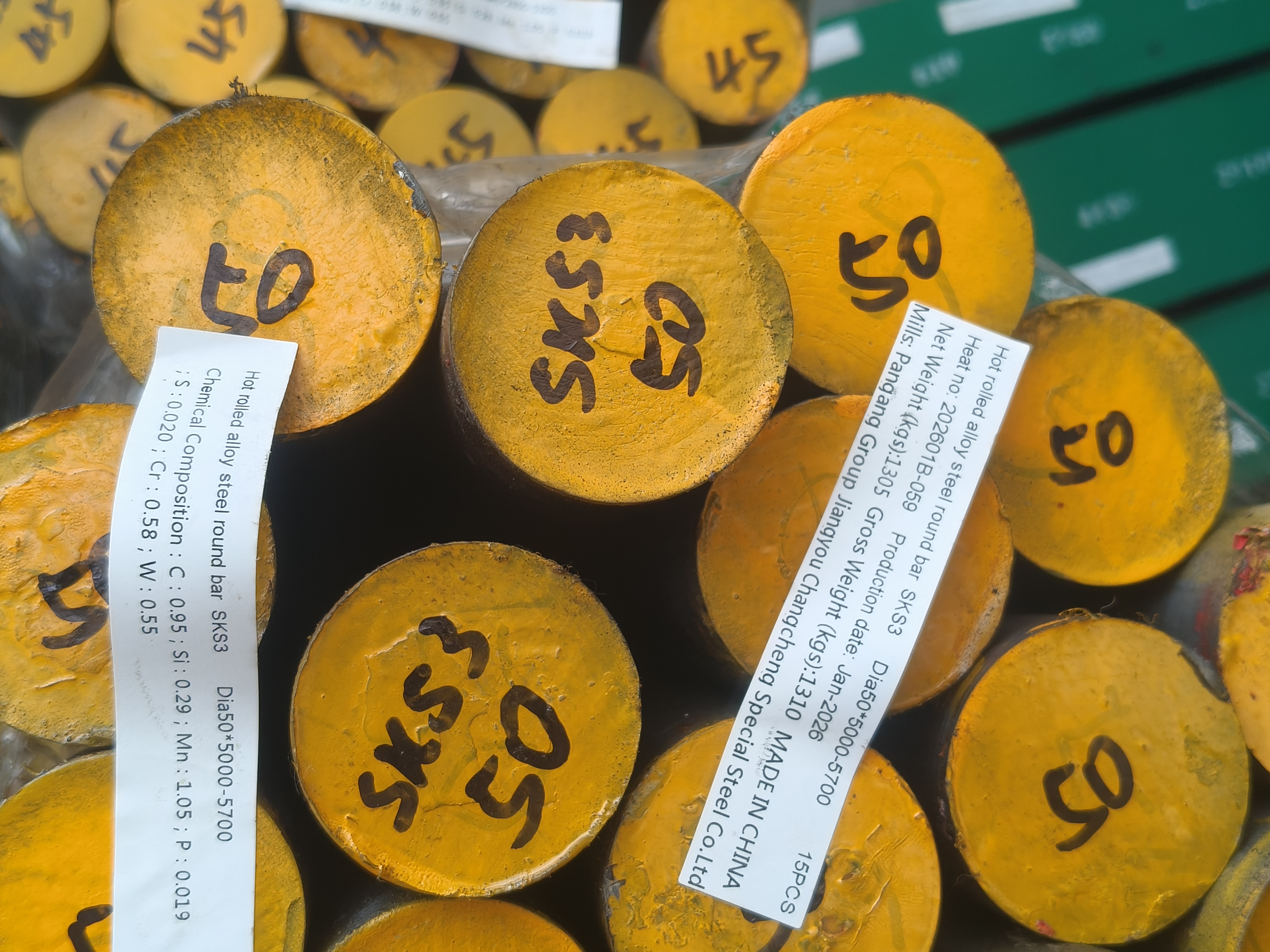
Notice the tungsten (W) and chromium (Cr)? Those are your wear-resistant heroes. They give O1 its edge-holding ability without making it impossible to machine.
4. Mechanical Properties (What You Really Care About)
Let’s skip the fluff. Here is how O1 performs under real shop conditions:
| Property | Metric | Imperial |
|---|---|---|
| Hardness, Brinell (soft annealed) | 190 HB | 190 HB |
| Hardness Rockwell C (tempered 300-1200°F) | 34 – 64 HRC | 34 – 64 HRC |
| Elastic modulus (hardened to 62 HRC) | 193 GPa | 28,000 ksi |
| Compressive yield strength @ 60 HRC | 2150 MPa | 312,000 psi |
Have you ever calculated how much downtime a broken punch costs you? A higher compressive strength means fewer surprises.
5. Physical & Thermal Properties
| Property | Metric | Imperial |
|---|---|---|
| Density (hardened to 62 HRC) | 7.81 g/cm³ | 0.282 lb/in³ |
| Melting point | 1421°C | 2590°F |
| Thermal expansion (20-260°C) | 10.6 x 10⁻⁶/°C | — |
These numbers matter when you are designing dies that run hot or cold. O1 stays stable.
6. Forging – Do It Right, or Pay Twice
Heat O1 slowly and uniformly. Forging temperature: 980-1000°C. Do not forge below 800°C. After forging, cool slowly in lime, dry ashes, or a furnace. Then—and this is critical—always anneal before re-hardening.
Think of it like baking bread: Skip the resting step, and the texture fails. Same logic applies here.
7. Heat Treatment – The Heart of O1 Steel Performance
Anneal (Softening)
Heat slowly (max 222°C per hour) to 802-816°C. Hold 1 hour per 25mm thickness (2 hours minimum). Cool slowly with the furnace at max 28°C per hour down to 538°C, then air cool. Result: max 212 HB.
Hardening (Making It Strong)
-
Preheat: 1100-1200°F
-
Austenitize: 1475-1500°F. Soak 30 minutes per inch of thickness.
-
Quench: In warm oil. Cool until 125-150°F (or until you can hold it in a bare hand).
-
Temper immediately. Yes, immediately. Do not wait.
Tempering
Single temper is usually enough. But double tempering? Sometimes better. Soak 2 hours per inch of thickness each time. Air cool between tempers. Normal range: 300-450°F.
Stress Relief After Grinding or EDM
Use a temperature 25-50°F lower than your last tempering temperature. This small step prevents cracking. Ignore it at your own risk.
8. Applications – Where Does O1 Actually Shine?
O1 is designed for short to medium run tooling at ambient temperatures. Think of it as the reliable employee who never complains.
Typical applications include:
-
Blanking dies
-
Forming dies
-
Trim dies
-
Gauges
-
Slitting cutters
-
Punches
-
Bolster dies
-
Knock-out pins
-
Thread roll dies
-
Bending dies
-
Plastic mold dies (short runs)
-
Shims, cams, machine ways
-
Jigs and cutter templates
-
Swaging dies
*Can you use O1 for high-speed stamping of abrasive materials?* Probably not—that is D2 or M2 territory. But for everyday precision tooling? O1 is your answer.
9. Why Otai Is a Better Choice
You have many options for buying tool steel. I will give you three reasons to choose us:
-
Reliable quality. Every batch comes with a mill test certificate. No guessing.
-
Real stock. Not a virtual inventory. We hold actual rounds, flats, plates, and ground stock.
-
Sales service that responds. Ask a question. Get an answer. Simple.
We also offer promotions and O1 tool steel for sale regularly. Want to know the current price? Just leave a comment below or send us an enquiry.
Final Word – Let’s Talk
O1 steel is not glamorous. It does not have the highest wear resistance or the longest tool life of all steels. But it offers something better: predictability, ease of heat treatment, and forgiving machining.
If you are building short-run tooling, jigs, or punches, O1 will save you time and frustration.
So, here is my final question: *Why struggle with complicated air-hardening steels or brittle water-hardening grades when O1 sits right in the sweet spot?*
Request your quote today. Tell us your size, quantity, and delivery port. We will respond within 4 hours.
Dongguan Otai Special Steel – Your precision starts with our material.