Skip to Content

About: Joann

Recent Posts by Joann

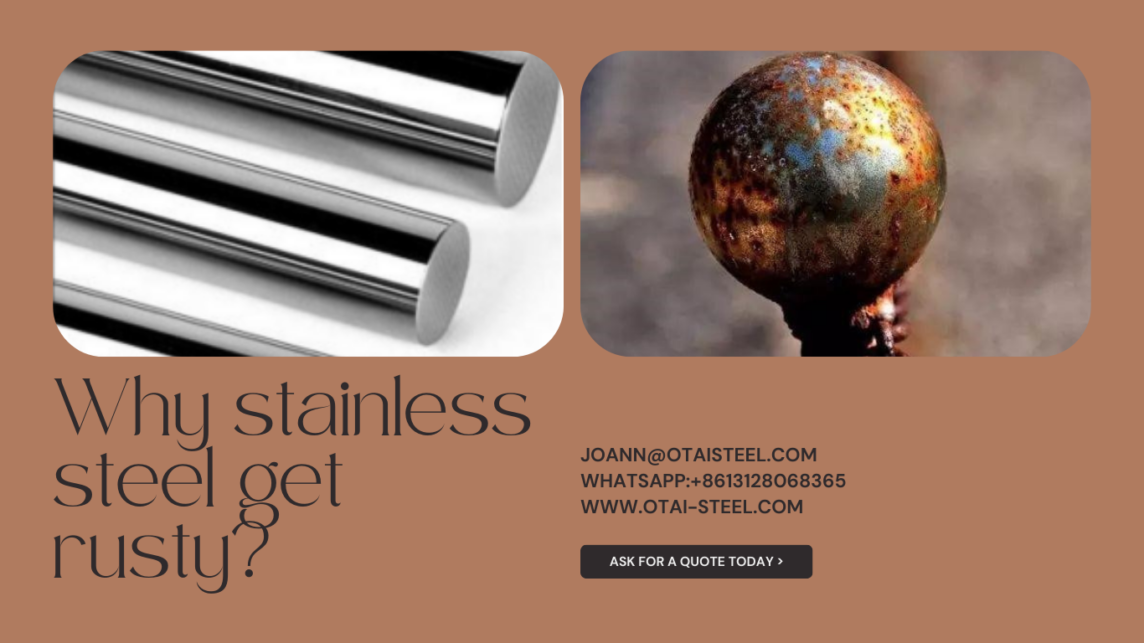
Re-understand stainless steel – Can stainless steel also rust?

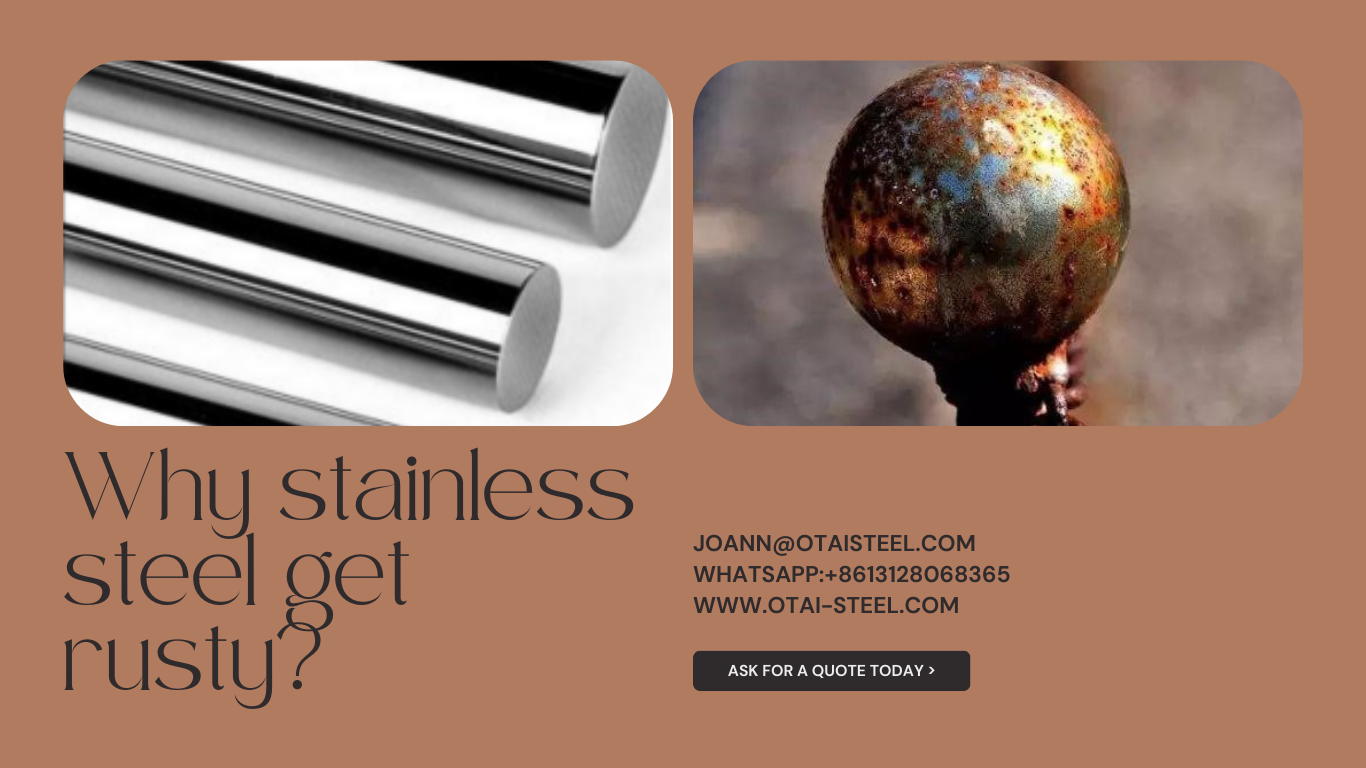
Will stainless steel rust? At first glance, it seems to be a false proposition.  But stainless steel rust is everywhere in life, such as the picture below!
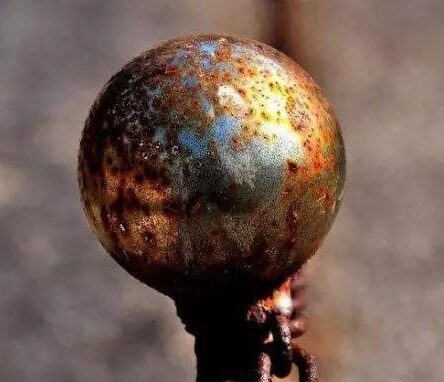
Stainless steel rust
Why does iron rust?

When iron is exposed to the air, it reacts chemically with oxygen and moisture to produce various iron oxides, which is manifested as “rust”!

What is stainless steel?

Different from normal steels , stainless steel is a type of steel that has the ability to resist atmospheric oxidation and also has the ability to resist corrosion in media containing acids, alkalis, and salts!

Introduction to stainless steel

In layman’s terms, stainless steel is steel that does not rust easily. In fact, some stainless steel has both rust resistance and acid resistance (corrosion resistance). The rustlessness and corrosion resistance of stainless steel are due to the formation of a chromium-rich oxide film (passivation film) on its surface. This film isolates the metal from the external medium, prevents the metal from being further corroded, and has the ability to repair itself. , if once damaged, the chromium in the steel will regenerate a passivation film with the oxygen in the medium to continue to play a protective role.

The decisive factor in the stainlessness of stainless steel is the chromium content. It is reported that the standards of European and American countries stipulate that the minimum chromium content cannot be less than 10.5%, Japan’s stipulation is 11%, and China’s is 12%.

Stainless steel classification

There are five basic types of stainless steel: austenitic, ferritic, martensite, duplex stainless steel, and precipitation hardening stainless steel.304 round bar
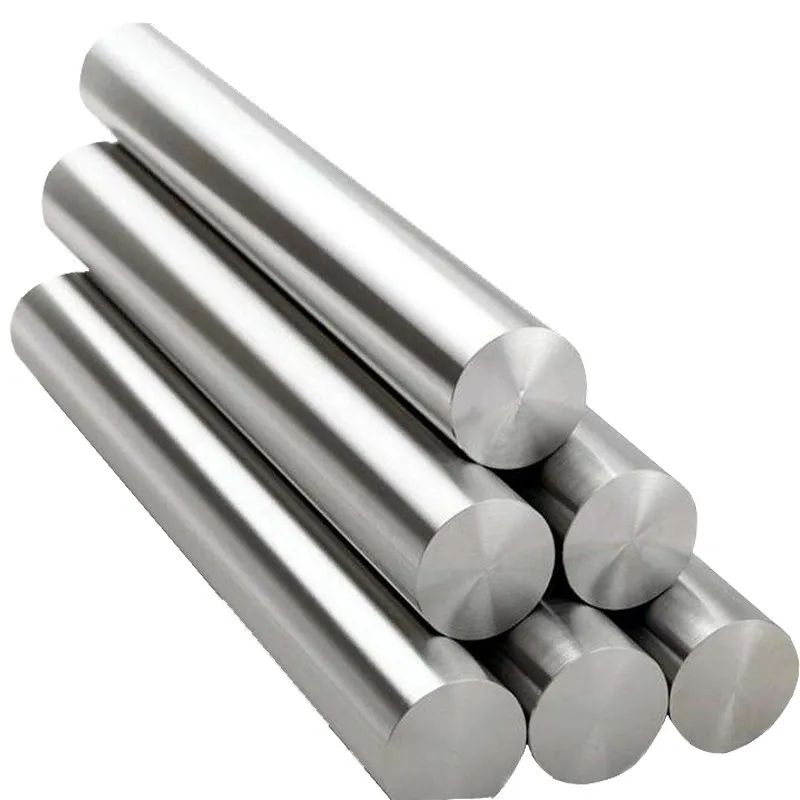
There are five basic types of stainless steel: austenitic, ferritic, martensite, duplex stainless steel, and precipitation hardening stainless steel.

(1) Austenitic stainless steel is non-magnetic. The typical steel type is added with 18% chromium and contains a certain amount of nickel to increase corrosion resistance. They are widely used steel types.

(2) Ferrite is magnetic and its main content is chromium, with a proportion of 17%. This material has good oxidation resistance.

(3) Martensitic stainless steel is also magnetic. The chromium content is usually 13% and contains an appropriate proportion of carbon.

(4) Duplex stainless steel has a mixed structure of ferrite and austenite. The chromium content is between 18% and 28%, and the nickel content is between 4.5% and 8%. They have great resistance to chloride corrosion. Good results.

(5) The conventional chromium content of precipitated stainless steel is 17, with a certain amount of nickel, copper and niobium added, which can be hardened through precipitation and aging.

According to the metallographic structure, it can be divided into:

  1.  Ferritic stainless steel (400 series), which is chromium stainless steel, the main representatives are 420, 440, etc.;
  2. Austenitic stainless steel (300 series), chromium-nickel stainless steel, the main representatives are 304, 316, 321, etc.;
  3. Martensite Stainless steel (200 series), chromium-manganese stainless steel, high carbon content, the main representatives are 1Gr13, etc.

Why stainless steel resists rust

Elements such as nickel and nickel are added to the surface of stainless steel to form an extremely thin, strong, fine, and stable chromium-rich oxide film (protective film), which prevents oxygen atoms from continuing to penetrate and oxidize, thereby gaining the ability to resist rust.

Why does stainless steel also rust?

Stainless steel will rust when the dense oxide protective layer is destroyed.

Under what conditions will the protective film be damaged?

  • Bleaching powder
  • Mechanical wear
  • Water

Application areas of stainless steel

There are many types of stainless steel, with different properties and different use environments.

301—Good ductility, used for molded products. It can also be hardened by mechanical processing with good weldability. Furthermore,wear resistance and fatigue strength are better than 304 stainless steel.

302—The corrosion resistance is the same as that of 304, but its strength is better due to its relatively higher carbon content. Often used in the food industry

316—Compare with 304, the 316  most widely used steel type, mainly used in the food industry and surgical equipment, the addition of molybdenum gives it a special structure that resists corrosion. Because it has better resistance to chloride corrosion than 304, it is also used as “marine steel”. SS316 is usually used in nuclear fuel recovery devices.

420—”Cutting grade” martensitic steel, similar to Brinell high chromium steel, the earliest stainless steel. Also used in surgical knives, which can be made very shiny.

430—ferritic stainless steel, for decorative purposes, such as automotive accessories. Good formability, but poor temperature resistance and corrosion resistance.

440—High-strength cutting tool steel with slightly higher carbon content. After appropriate heat treatment, it can obtain higher yield strength and its hardness can reach 58HRC, which is among the hardest stainless steels. The most common application example is “razor blades”. There are three commonly used models: 440A, 440B, 440C, and 440F (easy-to-process type).
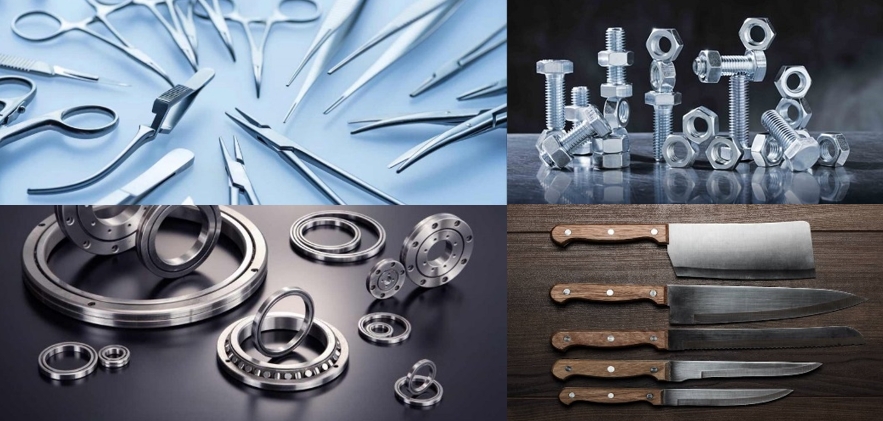
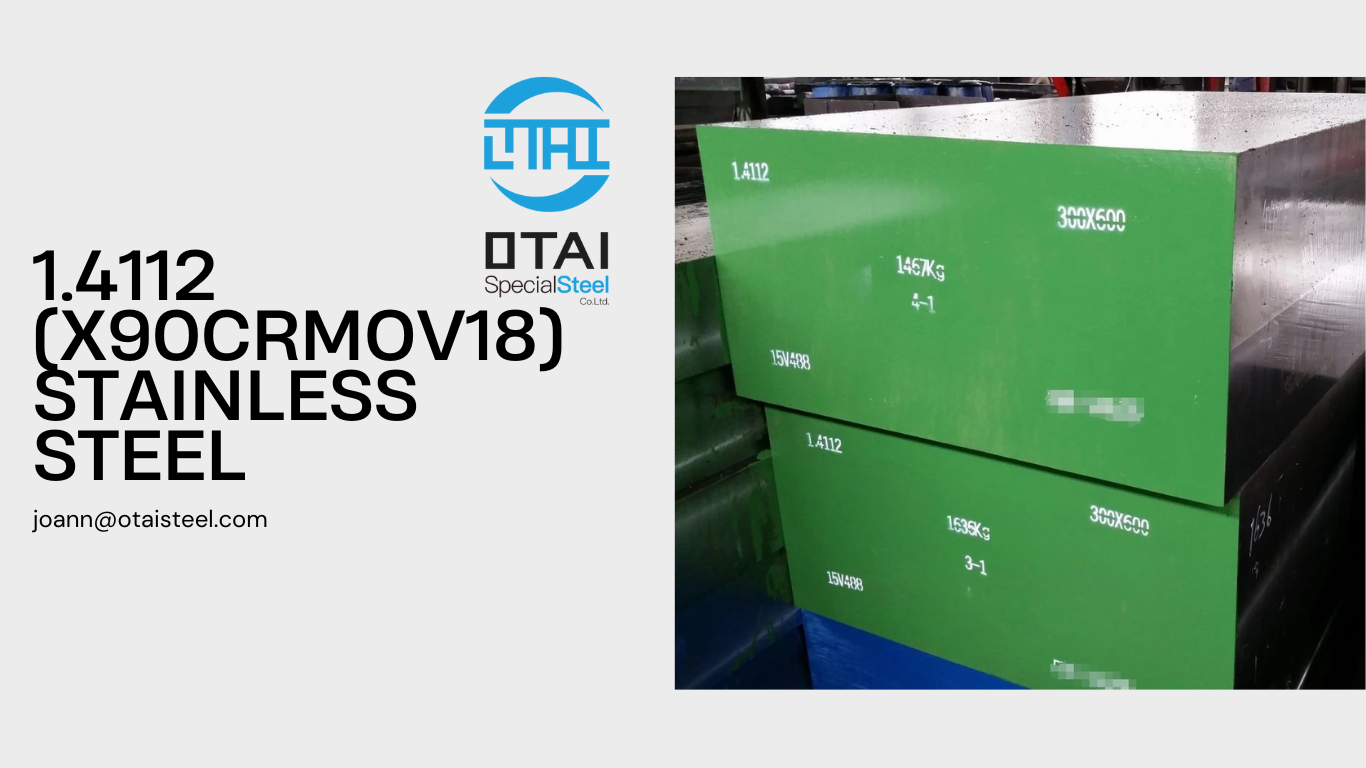
1.4112 stainless steel application

In addition to 300 series and 400 series, there are also 500 series – heat-resistant chromium alloy steel, 600 series – martensitic precipitation hardening stainless steel

Stainless steel materials may rust due to the following reasons:

 There are chloride ions in the use environment

Chloride ions exist widely, such as table salt/sweat stains/sea water/sea breeze/soil, etc. Stainless steel corrodes very quickly in the presence of chloride ions, even more than ordinary low carbon steel. Therefore, there are requirements for the environment in which stainless steel is used, and it needs to be wiped frequently to remove dust and keep it clean and dry. (This would give him an “inappropriate use” rating.)

Without solid solution treatment

The alloy elements are not dissolved into the matrix, resulting in a low alloy content in the matrix structure and poor corrosion resistance.

Natural intergranular corrosion

This titanium- and niobium-free material is prone to intergranular corrosion.

The most common ways to destroy the passive film of stainless steel in daily life are as follows:

1. Dust containing other metal elements or attachments of heterogeneous metal particles accumulate on the surface of stainless steel. In humid air, the condensed water between the attachments and stainless steel connects the two into a micro-battery, triggering an electrochemical reaction. , the protective film is damaged, which is called electrochemical corrosion.

2. Organic juice (such as vegetables, noodle soup, etc.) adheres to the surface of stainless steel. In the presence of water and oxygen, it forms organic acid. For a long time, the organic acid corrodes the metal surface.

3. The surface of stainless steel contains acid, alkali, and salt substances (such as alkaline water and lime water splash on the wall decoration), causing local corrosion.

4. In polluted air (such as an atmosphere containing a large amount of sulfides, carbon oxides, and nitrogen oxides), when encountering condensed water, sulfuric acid, nitric acid, and acetic acid liquid points will form, causing chemical corrosion.

To ensure that metal surfaces are permanently bright and free from rust, here are some suggestions:

1. The surface of decorative stainless steel must be cleaned and scrubbed frequently to remove attachments and eliminate external factors that cause modification.

2. 316 stainless steel should be used in seaside areas. 316 material can resist seawater corrosion.

3. The chemical composition of some stainless steel pipes on the market cannot meet the corresponding national standards and cannot meet the 304 material requirements. Therefore, it will also cause rust, which requires users to carefully choose products from reputable manufacturers.

So stainless steel is not that it will not rust, but it is not easy to rust!

If  you want to know more information about stainless steel ,please do not hesitate contact us.

0 Continue Reading →

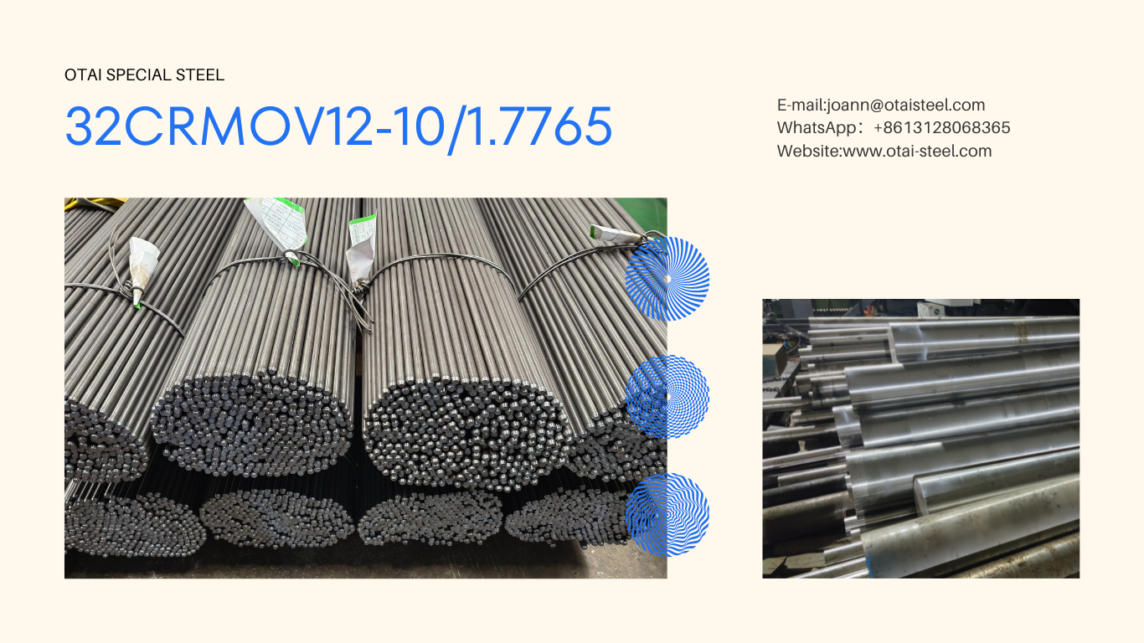
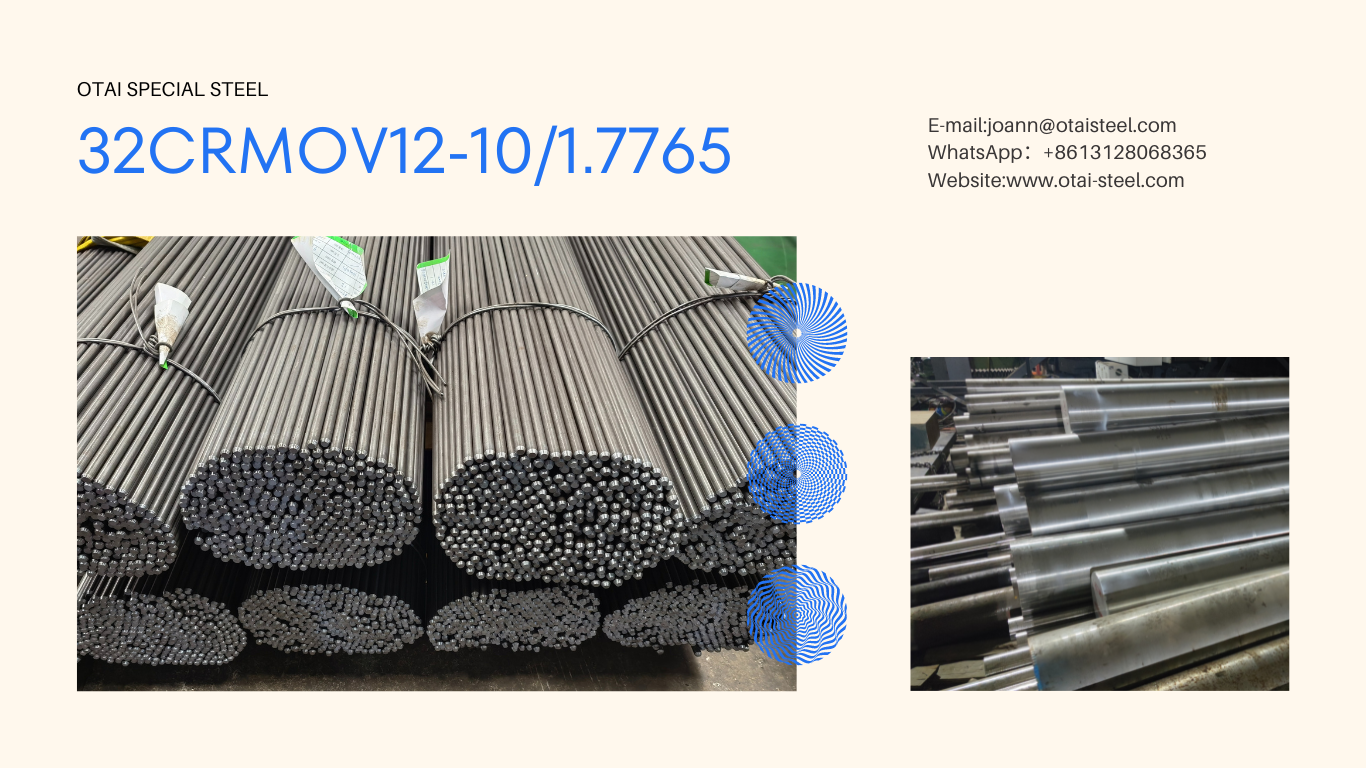
32CrMoV12-10/1.7765 alloy steel

In modern industry, 32CrMoV12-10 steel belong to alloy steel , which play a crucial role because they have high strength, good heat treatment properties and excellent corrosion resistance. 32CrMoV12-10 also know as 1.7765  which under the DIN standard , it is a high-quality material that works under high load and high temperature conditions. It plays a decisive role in industrial operations.

Chemical composition about 32CrMoV12-10 steel

C Si Mn S P  Cr Mo  Ni  V
32CrMoV12-10 0.30-0.35 Max 0.35 Max 0.60 Max 0.025 Max 0.01 2.80-3.20 0.80-1.20 / 0.25-0.35

32CrMoV12-10 container  proper pencent  Chromium , it improved its corrosion resistance and extended service life.

32CrMoV12-10 steel delivery condition

As usual ,32CrMoV12-10 steel delivery as QT condition

Mechanical properties

Grade
Condition
Yield strength min
[MPa]
Tensile strength
[MPa]
Elongation A
5
[%]
Reduction of area Z
min
[%]
Hardness[HRC]
32CrMoV12-10
QT
Min 800
Min 940
Min13%
70
Min26HRC

32CrNiMoV12-10 round barHeat treatment about 32CrMoV12-10

Forging

– Slowly heat 32CrMoV12-10 steel material to 1100-850°C. Due to the relatively high thermal strength of this steel, the initial hammer blow should be light.

Annealing

– Annealing temperature:Heat to approx. 720°C, cool slowly.

– Hardness :Maximum  224 HB

Quenching:

-Quenching temperature: 860-890℃
-Medium: oil, water or air
-Hardness: 53-58 HRC

Tempering:

– Tempering temperature: 540-680℃
– Hardness: ≤45 HRC
– Tempering time: Depends on specific materials and requirements

Application area

32CrMoV12-10 is often used to manufacture equipment and parts that operate under high load and high temperature, such as automobile engine connecting rods, mechanical tool blades, pneumatic tools, molds, and weapon manufacturing, such as gun barrels, etc.

Advantages and features of 32CrMoV12-10

  • High strength: 32CrMoV12-10 has excellent tensile strength and yield strength, and is suitable for working environments that bear large loads and pressures.
  • Good heat treatment performance: This alloy steel can adjust the hardness and toughness of the material through quenching and tempering processes to adapt to different usage requirements.
  • Excellent corrosion resistance: 32CrMoV12-10 adds an appropriate amount of chromium to improve its corrosion resistance and extend its service life.

If you want to know more about the 32CrMoV12-10 or want to get a quotation , please do not hesitate contact us .

0 Continue Reading →

What are the main effects of Chromium(Cr) in steel?

Cr in steel is one of the main composition  composing steel, and its content directly affects the corrosion resistance and hardenability of steel. What are the main effects of Cr in steel? Last artical we talked about the relationship between Nickel(Ni) and steel. This article details the properties, microstructure, and application of Cr on steel.

Chromium(Cr) on the microstructure and heat treatment of steel

  • Chromium and iron can form a continuous solid solution and reduce the austenite phase area. Chromium forms various carbides with carbon, and its affinity with carbon is greater than iron and manganese but lower than tungsten, molybdenum, etc.
  • Chromium can reduce the concentration of carbon in pearlite and the ultimate solubility of carbon in austenite.
  • Slow down the decomposition rate of austenite and significantly improve the hardenability of steel, but also increase the temper brittleness tendency of steel.

The influence of chromium(Cr) on the mechanical properties of steel

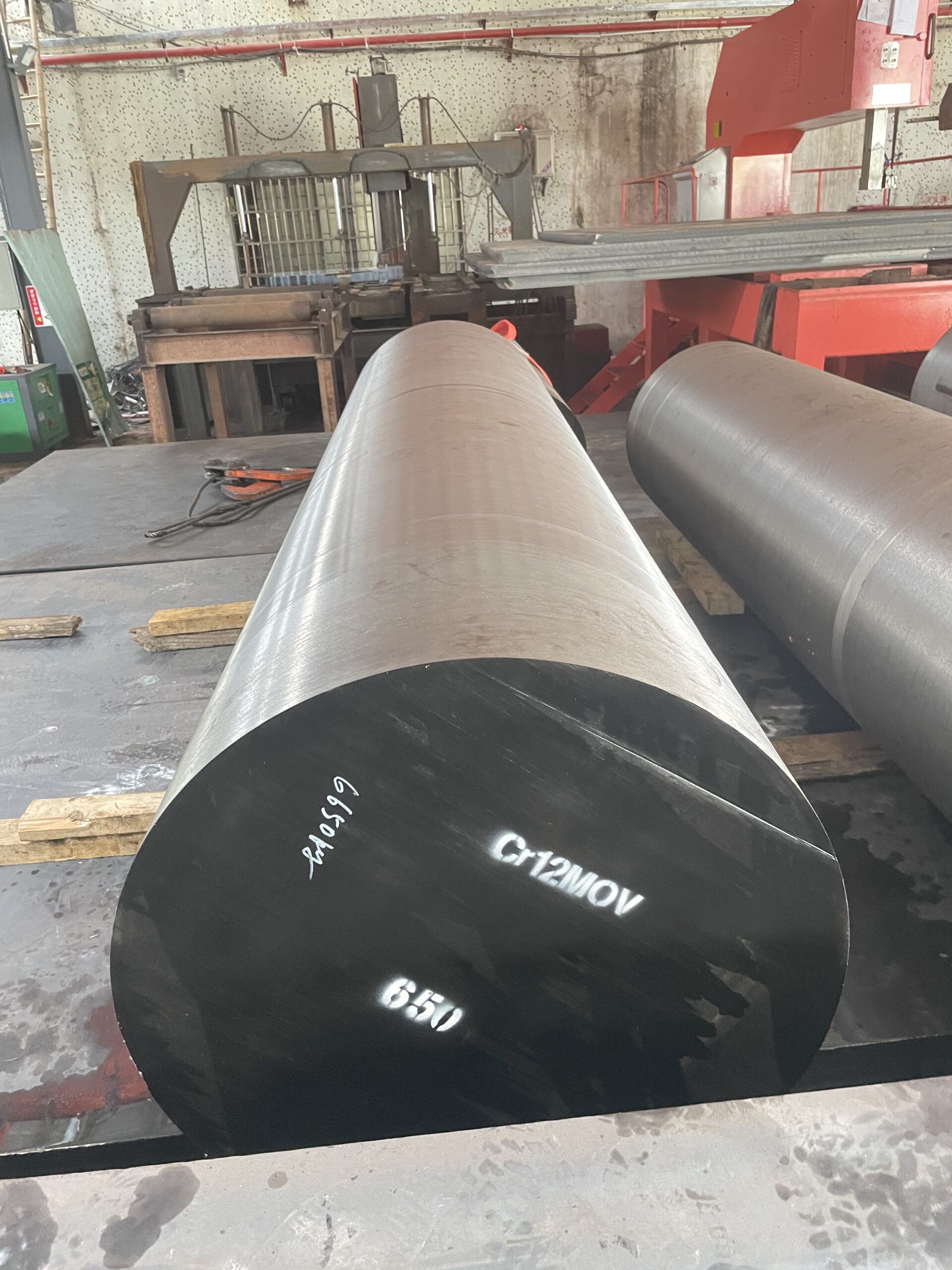
  • Cr12MoV round barImprove the strength and hardness of steel. Chromium can improve the strength and hardness of carbon steel in its rolling state, and reduce the elongation and area shrinkage. When the chromium content more than  15%, the strength and hardness will decrease, and the elongation and area reduction will increase accordingly. Parts containing chromium steel can easily obtain higher surface processing quality after grinding.
  • Chromium can increase the hardenability of steel and have a secondary hardening effect, which can improve the hardness and wear resistance of carbon steel without making the steel brittle. When the content more than 12%, the steel has good high-temperature oxidation resistance and oxidation corrosion resistance, and also increases the thermal strength of the steel, such as Cr12MoV. Chromium is the main alloying element of stainless steel, acid-resistant steel and heat-resistant steel.
  • Significantly increase the ductile-brittle transition temperature of steel.
  • The impact toughness drops sharply when the chromium content is high.

The influence of chromium(Cr) on the physical, chemical and process properties of steel

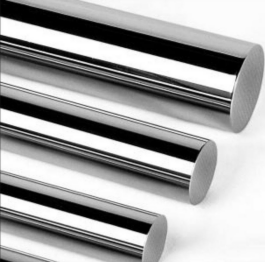
  • Improve the wear resistance of steel and easily obtain lower surface roughness values. The electroplating industry widely uses chromium plating technology to improve the wear resistance and aesthetics of products, as shown in the figure below.Surface chrome plated round rod
  • Reduce the conductivity and temperature coefficient of resistance of steel.
  • Improve the coercive force and residual magnetic induction of steel, and are widely used in the manufacture of permanent magnet steel tools.
  • Chromium forms a passivation film on the surface of steel, which significantly improves the corrosion resistance of steel; but when carbides containing chromium precipitate, the corrosion resistance of steel decreases.
  •  Improve the oxidation resistance of steel.
  • Dendritic segregation is easy to form in chromium steel, which reduces the plasticity of the steel.
  • Since chromium reduces the thermal conductivity of steel, one must slowly heat it during hot processing and slowly cool it after forging and rolling.

Application of Chromium(Cr) in Steel

  • Chromium is mainly used in alloy structural steel to improve hardenability, and chromium-containing carbides can be formed on the carburized surface to improve its wear resistance.
  •  Chromium and other elements are used in spring steel to improve the overall performance of the steel.
  • The use of chromium in bearing steel improves wear resistance and has the advantages of small surface roughness after grinding.
  • In tool steel and high-speed steel, it mainly use chromium to improve wear resistance, and it has certain advantages such as tempering resistance and toughness.
  • Chromium often applicate in combination with manganese, nitrogen, and nickel in stainless steel and heat-resistant steel. When austenitic steel needs to form, there must be a certain ratio between chromium that stabilizes ferrite and manganese and nickel that stabilize austenite. Such as Cr18Ni9, etc.

Want to know more about information about the Cr in steel ? Please contact :

0 Continue Reading →

The good relationship between Nickel(Ni) and Steel

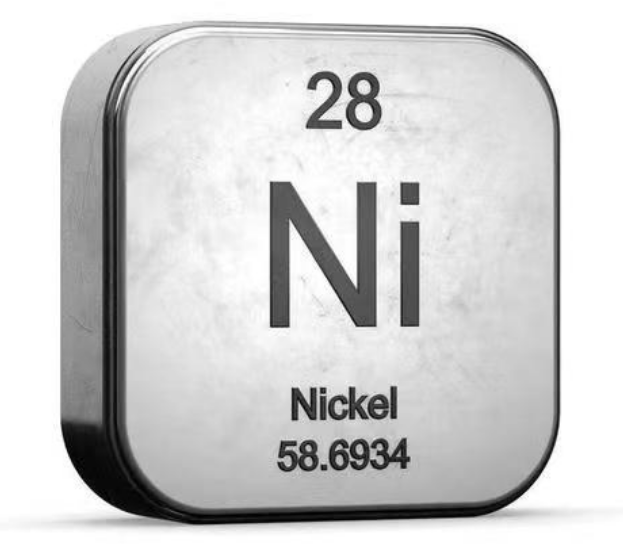
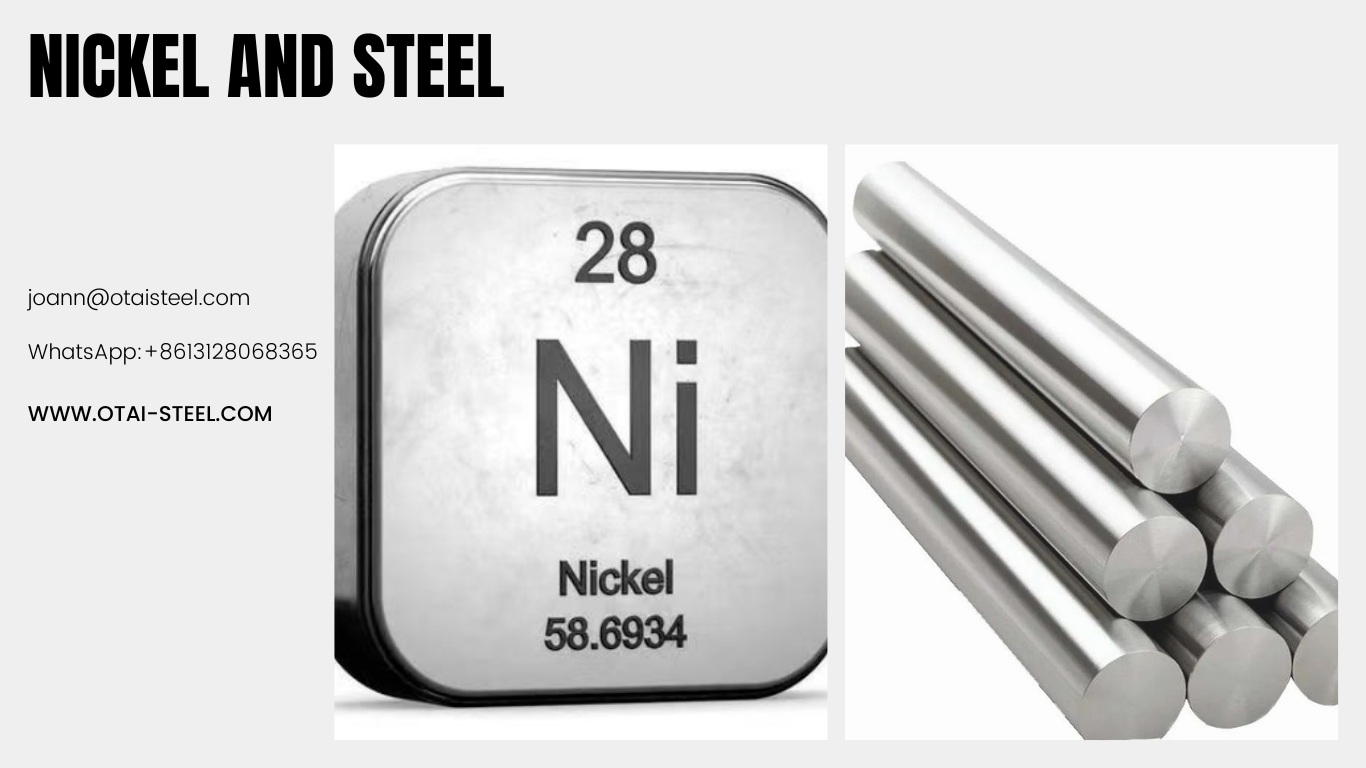
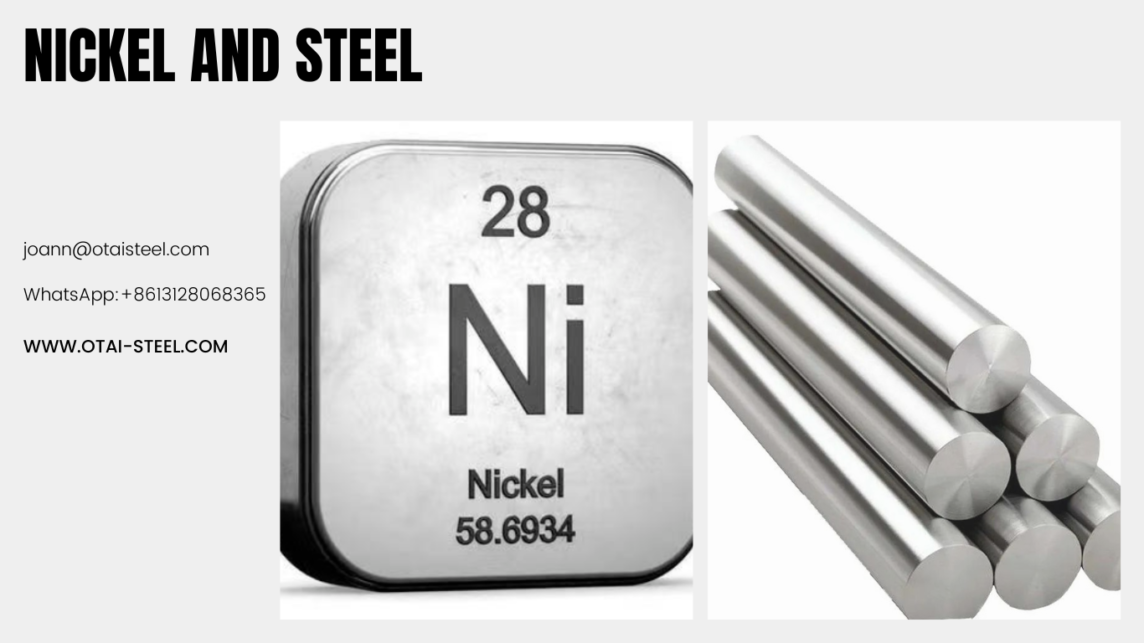
We all know that in addition to iron and carbon, the main elements of steel include silicon, manganese, sulfur, phosphorus, etc. And Nickel(Ni) and steel have a good relationship when it express some specail properties .Nickel is one of the main elements that improves and enhances the properties of steel. So what is the main role of nickel in steel? This article details the relationship between Nickel(Ni) and steel.Nickel-Chemical composition

How does Ni affects the microstructure and heat treatment of steel ?

  1. Nickel and iron can form infinite solid solutions. Nickel expands the austenite zone of iron and is the main alloy element that forms and stabilizes austenite.
  2. Nickel and carbon do not form carbides.
  3. Reduce the critical transformation temperature, reduce the diffusion rate of various elements in steel, and improve hardenability.
  4. Reduce the carbon content of eutectoid pearlite, its effect is second only to nitrogen but stronger than manganese. It is about half as effective as manganese in reducing the martensitic transformation temperature.

The influence of nickel on the mechanical properties of steel

  1. Strengthen ferrite and refine and increase pearlite to improve the strength of steel and have little impact on the plasticity of steel.
  2. The carbon content of nickel-containing steel can be appropriately reduced, thus improving the toughness and plasticity.
  3. Improve the fatigue properties of steel and reduce the sensitivity of steel to notches.
  4.  Since it is not very effective in improving the hardenability and tempering stability of steel, nickel is of little significance to quenched and tempered steel.

The influence of nickel on the physical, chemical and process properties of steel

  1.  Greatly reduce the thermal conductivity and electrical conductivity of steel.
  2. Steel with a mass fraction of nickel less than 30% is paramagnetic (i.e. non-magnetic steel), and iron-nickel alloys with a mass fraction of nickel greater than 30% are important precision soft magnetic materials.
  3.  Steel with a nickel mass fraction of 15%-20% or higher has high corrosion resistance to sulfuric acid and hydrochloric acid, but is not resistant to nitric acid corrosion. In summary, nickel-containing steel has certain corrosion resistance to acids, alkalis and the atmosphere.
  4. Austenitic electrodes should be used when welding steel with high nickel content to prevent the occurrence of cracks.
  5. Banded structure and white spot defects are prone to occur in nickel-containing steel, which should be prevented in the production process.

Application of Nickel in steel

  1. Pure nickel steel is only used when there are particularly high impact toughness or very low working temperature requirements.
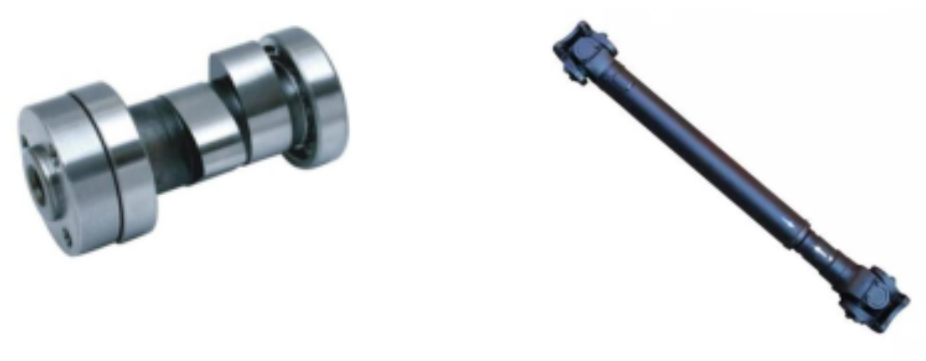
  2.  Nickel-chromium or nickel-chromium-molybdenum steel used in machinery manufacturing can obtain comprehensive mechanical properties with good strength and toughness after heat treatment. Nickel-containing steel is particularly suitable for parts that require surface carburization, as shown in the figure. a) Cam mechanism shaft b) Drive shaftNickel parts
  3. Nickel is an austenitizing element in high-alloy austenitic stainless heat-resistant steel, which can provide good comprehensive properties. It is mainly Ni-Cr series steel ,also know as stainless steel, such as 304 stainless steel304 round bar
  4. Since nickel is relatively scarce and an important strategic material, it is relatively expensive. Therefore, it will be used unless it is impossible to meet the performance requirements with other alloy elements. If you are pursuing cost-effectiveness, you can choose the steel with nickel-free or with a less nickel content to instead.

In conclusion

1. Nickel strengthens steel, increasing strength without compromising plasticity.
2. Nickel boosts strength in low carbon steel without sacrificing toughness.
3. Nickel enhances steel strength with minimal impact on toughness and plasticity.
4. Nickel in medium carbon steel reduces pearlite, increasing strength or allowing carbon reduction to enhance toughness.
5. Nickel improves steel fatigue resistance and reduces notch sensitivity.
6. Nickel lowers low-temperature brittleness, enhancing steel toughness for cold applications.
7. High nickel content alters iron-nickel alloy expansion coefficients, useful for specialized materials.
8. Nickel in steel provides corrosion resistance to acids, alkalis, atmosphere, and salt, vital for stainless steel.

0 Continue Reading →

Exploring the Versatility of 1.4112(X90CrMoV18) Stainless Steel

1.4112 is a high-carbon, high-chromium member of the stainless steel series. Due to its high carbon content, it provides high mechanical strength values as well as corrosion resistance after heat treatment. Good hardening and wear resistance. But it also sacrifices corrosion resistance due to the higher carbon content . 1.4112(X90CrMoV18) commonly known as AISI 440B.

Standard:

DIN EN 10088-3

Chemical composition

Standard Grade C Si Mn S P  Cr Mo
DIN EN10088-3 1.4112 0.85-0.95 Max1.00 Max1.00 Max0.030 Max0.040 17.00-19.00 0.90-1.30
ASTM A 276 – 10 440B 0.75-0.95 Max1.00 Max1.00 Max0.030 Max0.040 16.00-18.00 Max0.75

1.4112 material has a good capability of getting hardness. It containes ~%0.95 carbon element and because of high carbon, this grade is really good grade for high hardness. But since it contains ~%0.95 carbon, its corrosion resistance is not soo good.

Physical properties and mechanical propeties of 1.4112 stainless steel

  • Thermal conductivity, λ20℃: 15 W * m-1 * K-1
  • Linear expansion coefficient, α = 10,4 * 10-6 * K-1
  • Heat capacity, cp = 430 J * kg-1 * K-1
  • Resistance: 0,8 mkOhm * m
  • Modulus of elasticity, E = 215 GPa
  • Density = 7,7 g/cm3
  • Hardness in annealed condition +1C, +1E, +1D, +1X, +1G, +2D: < 285HB
  • Hardness after hardening and tempering of steel 1.4112 : 55-57 HRC

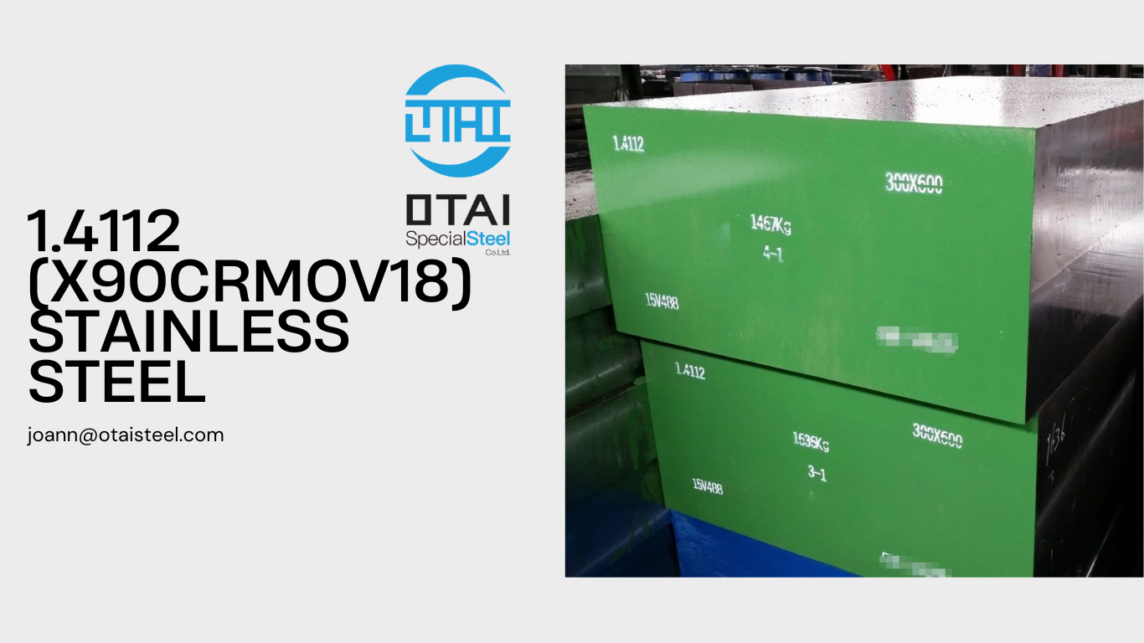
1.4112 stainless steel application Application of 1.4112 stainless steel

1.4112 stainless steel is used in the manufacture of a variety of cutting tools, bearings, gauges, molds, valve components, blades.  And widely used in measuring instruments that require corrosion resistance in applications requiring both wear and corrosion resistance. Used in glass moulds, pumps and plastics industry.

0 Continue Reading →

Comparing 1.2311 VS 1.2738 Steel for Mould Making

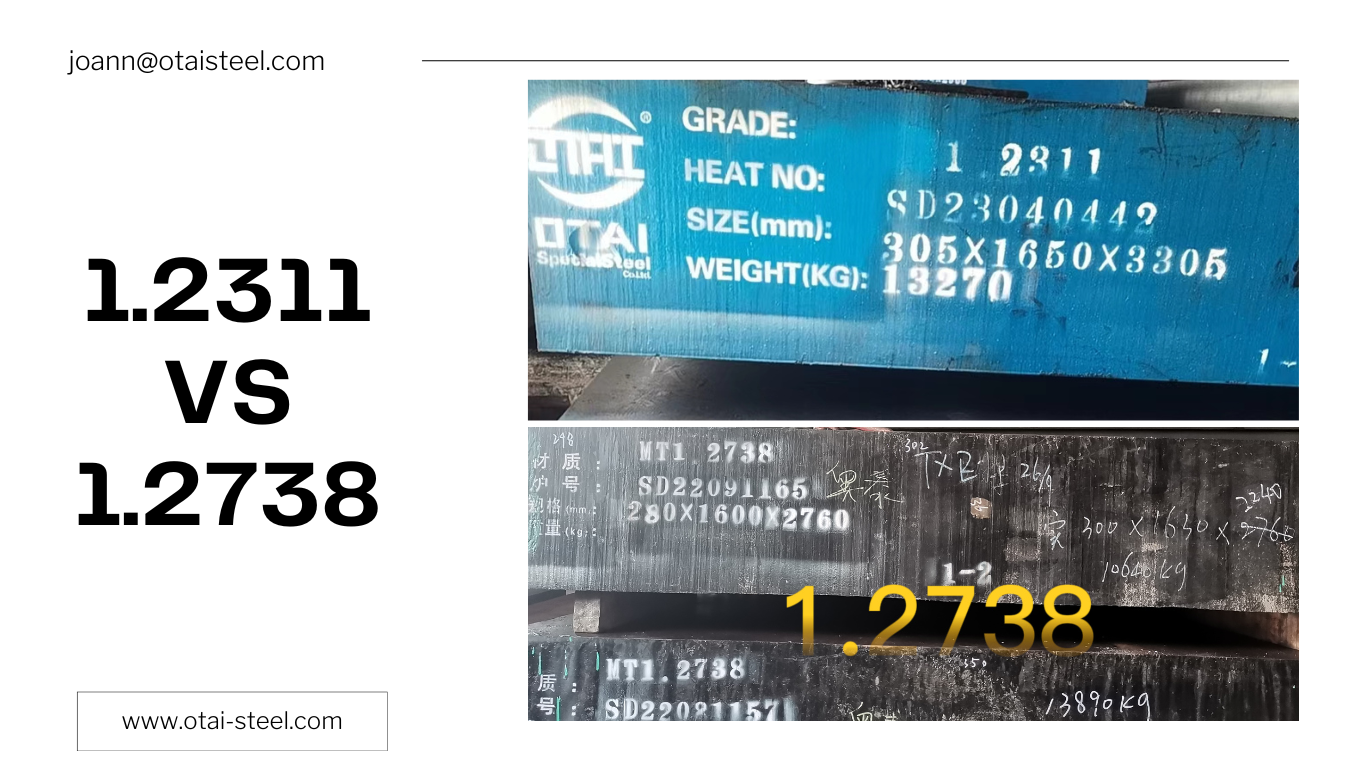
When we talk to  choosing the right steel for mould making, the most important is consider the precision and performance . Two popular options of mould steel are 1.2311 and 1.2738 steel. In this article, we’ll  analyzes from the chemical composition, physical properties and mechanical properties,  price, and applications of these two steels , hope to help you make an informed decision.

Chemical Composition 1.2311 VS 1.2738 steel:

1.2311 and 1.2738 steel belong to the category of plastic mould steels and exhibit different chemical compositions that influence their properties.

 Grade C Si Mn S P  Cr Mo  Ni
1.2738 0.35-0.45 0.20-0.40 1.30-1.60 ≤0.030 ≤0.030 1.80-2.10 0.15-0.25 0.90-1.20
1.2311 0.35-0.45 0.20-0.40 1.30-1.60 ≤0.035 ≤0.035 1.80-2.10 0.15-0.25 /

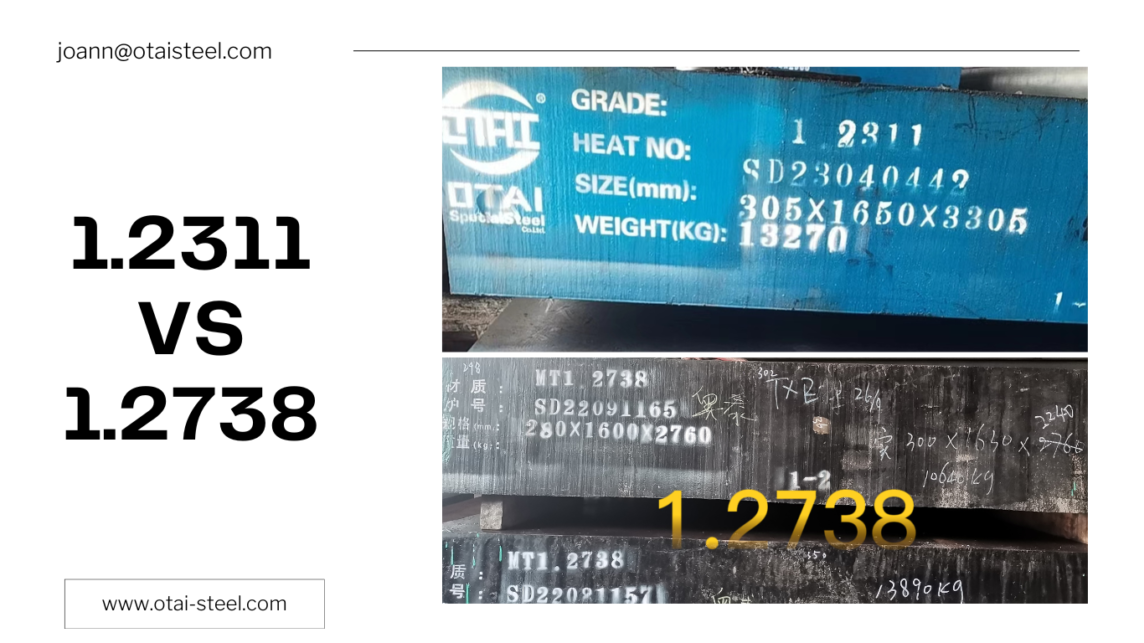
1.2311 steel, equivalent ASTM P20 steel.In contrast, 1.2738 steel, often referred to as P20+Ni steel, it easlier to find 1.2738 add 0.90%-1.20%  Nickel  base on 1.2311 , it means 1.2738 have a better strength than 1.2311.

Physical Properties 1.2311 VS 1.2738 steel :
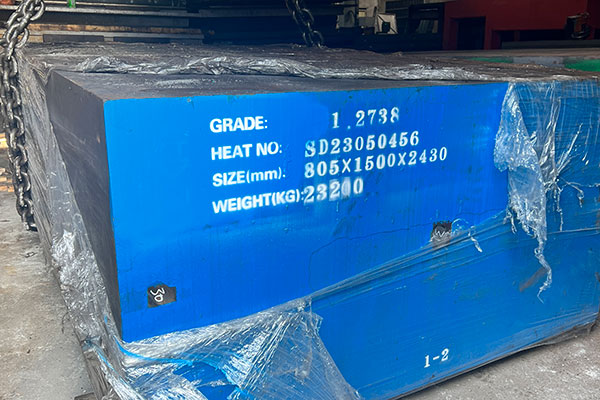
Both steels have excellent machinability and polishability, therefore , both  1.2311 and 1.2738 steel are all suitable for mould making.

The little difference is the hardness between them. 1.2311 and 1.2738 steel both are pre-harden steel , but 1.2311 hardness is 28-34HRC , 1.2738 is 30-36HRC.

1.2311-plate-blockMechanical Properties 1.2311 VS 1.2738 steel :

1.2311:

  • Tensile Strength: 1050-1200 MPa.
  • Yield Strength: 950-1100 MPa.
  • Elongation: 15-20%.

1.2738:

  • Tensile Strength: 1000-1150 MPa.
  • Yield Strength: 900-1050 MPa.
  • Elongation: 15-20%.

In summary, both 1.2311 and 1.2738 steel grades have similar tensile and yield strength along with comparable elongation properties, the key difference is their hardness, toughness, and impact resistance. 1.2311 steel offers good wear resistance and dimensional stability with slightly lower hardness, while 1.2738 steel provides improved toughness and impact resistance due to the addition of nickel, making it suitable for applications requiring enhanced mechanical properties under high-stress conditions.

Price compare :

Considering  prices, 1.2311 steel is generally more cost-effective than 1.2738 steel due to differences in their chemical compositions . However, the overall cost may vary depending on factors such as market demand and supplier pricing.

Applications :

1.2311 Steel:

  • Widely used for low to medium-volume production of plastic molds, particularly for injection molding applications.
  • Suitable for making prototypes and master models due to its good machinability and polishability.
  • Often employed in industries such as automotive, consumer goods, and electronics for producing various plastic components and parts.
  • Ideal for applications where moderate mechanical strength and wear resistance are required, making it a cost-effective choice for molding applications with lower stress and impact requirements.

1.2738-STEEL-BLOCK1.2738 Steel:

  • Preferred for applications requiring higher toughness and impact resistance, especially in large-sized injection molds and tooling for automotive components.
  • Well-suited for molds subjected to high-stress conditions and impact loads, such as those encountered in automotive and aerospace industries.
  • Due to its enhanced toughness and resistance to deformation under high-stress conditions, 1.2738 steel is commonly used in applications where reliability and durability are paramount.
  • Offers superior performance in applications where the mold is subjected to frequent loading and unloading, as well as in situations where molds need to withstand abrasive wear and prolonged use.

In summary, both 1.2311 and 1.2738 steel grades have their respective applications in mold making, the key difference lies in the specific requirements of the application. 1.2311 steel is suitable for low to medium-volume production with moderate mechanical strength requirements, whereas 1.2738 steel is preferred for applications demanding higher toughness and impact resistance, particularly in large-sized molds subjected to high-stress conditions.

Conclusion:

In summary, both 1.2311 and 1.2738 steels offer excellent properties for mould making applications, with slight differences in their chemical compositions, hardness levels, and prices. The choice between the two ultimately depends on specific project requirements, budget considerations, and desired performance characteristics.


Otai special steel stock compelete size of 1.2311, 1.2738 steel, if there is any interest ,please contact below information to get the stock list.

0 Continue Reading →

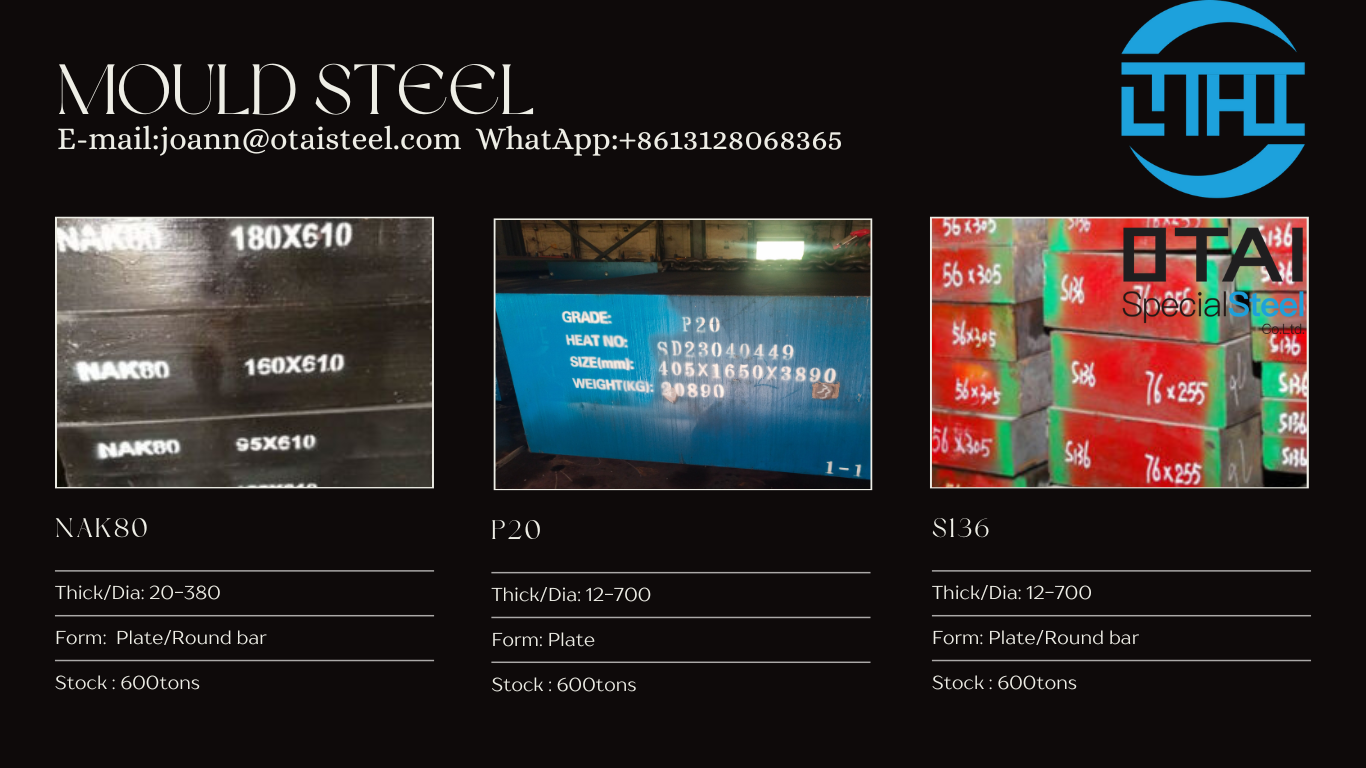
What mould steel is best for your mold? S136, NAK80 or P20?

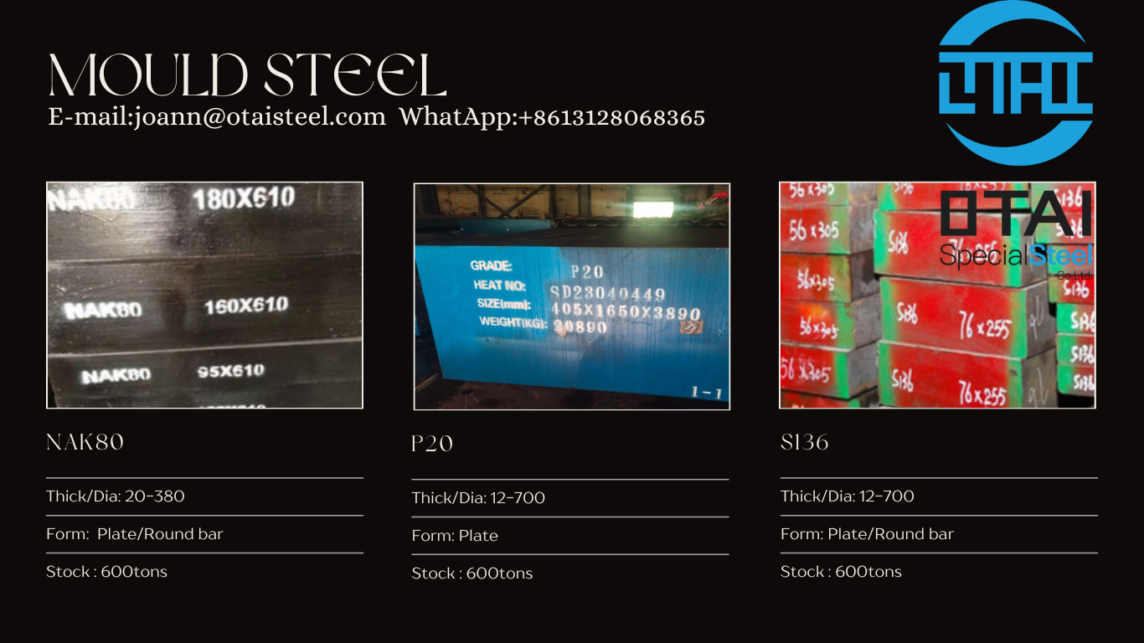
This week, I had a customer inquire with us about several mould steel NAK80, S136 and P20. We knew that these steels would be used in plastic molds, and he wanted to compare the prices of these materials. This article analyzes the differences between the above materials and helps customers choose the most suitable material.

Description of mould steel S136,NAK80 and P20:

P20 steel plate S136 steel is chromium-nickel-molybdenum-vanadium alloy steel. As a high-quality plastic mold steel, S136 is widely used in injection molds, extrusion molds, blow molds and other fields. This mold steel has excellent corrosion resistance, polishability, wear resistance, and machinability, making it an ideal choice for manufacturing high-quality, high-precision plastic products.
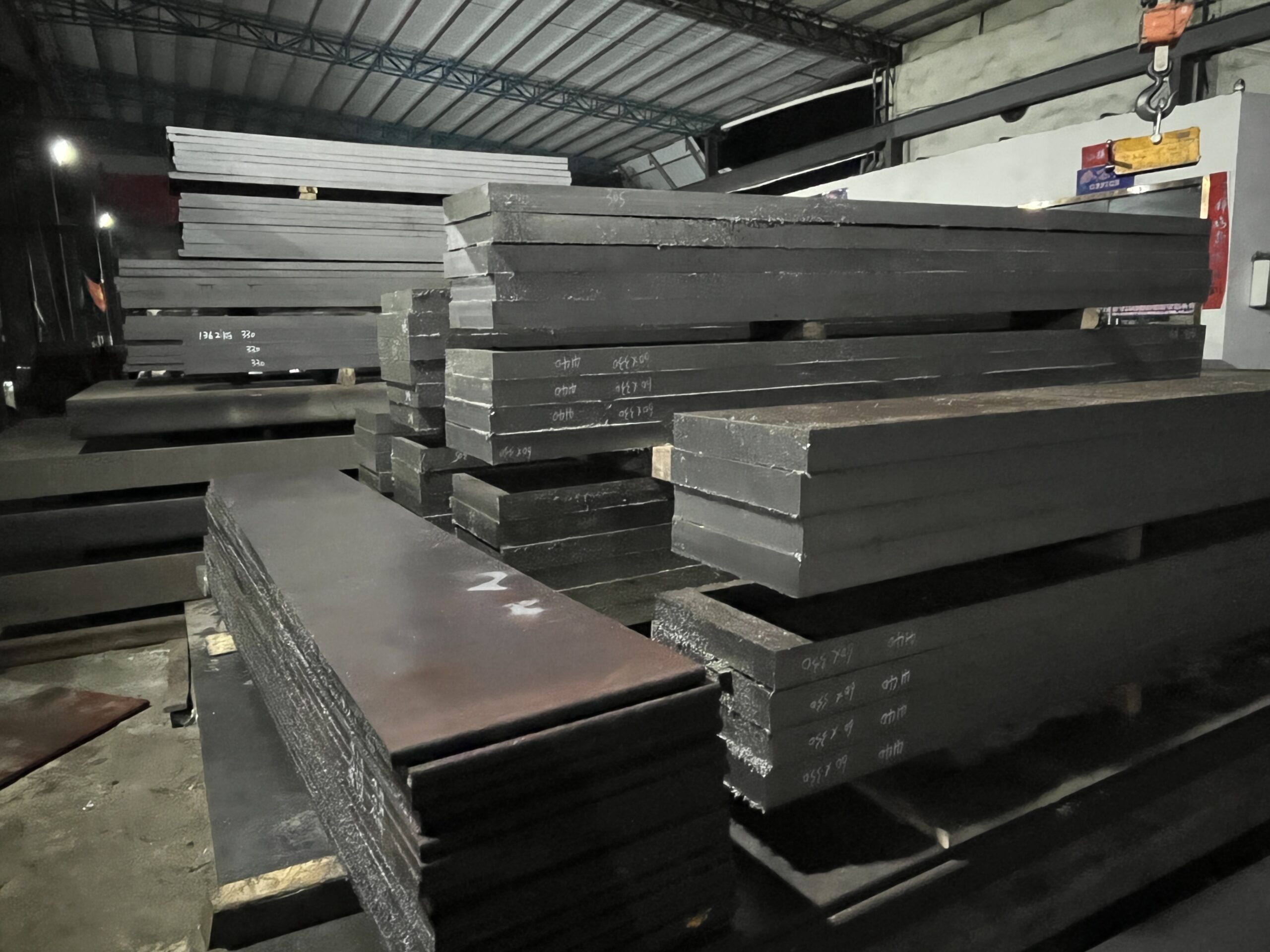
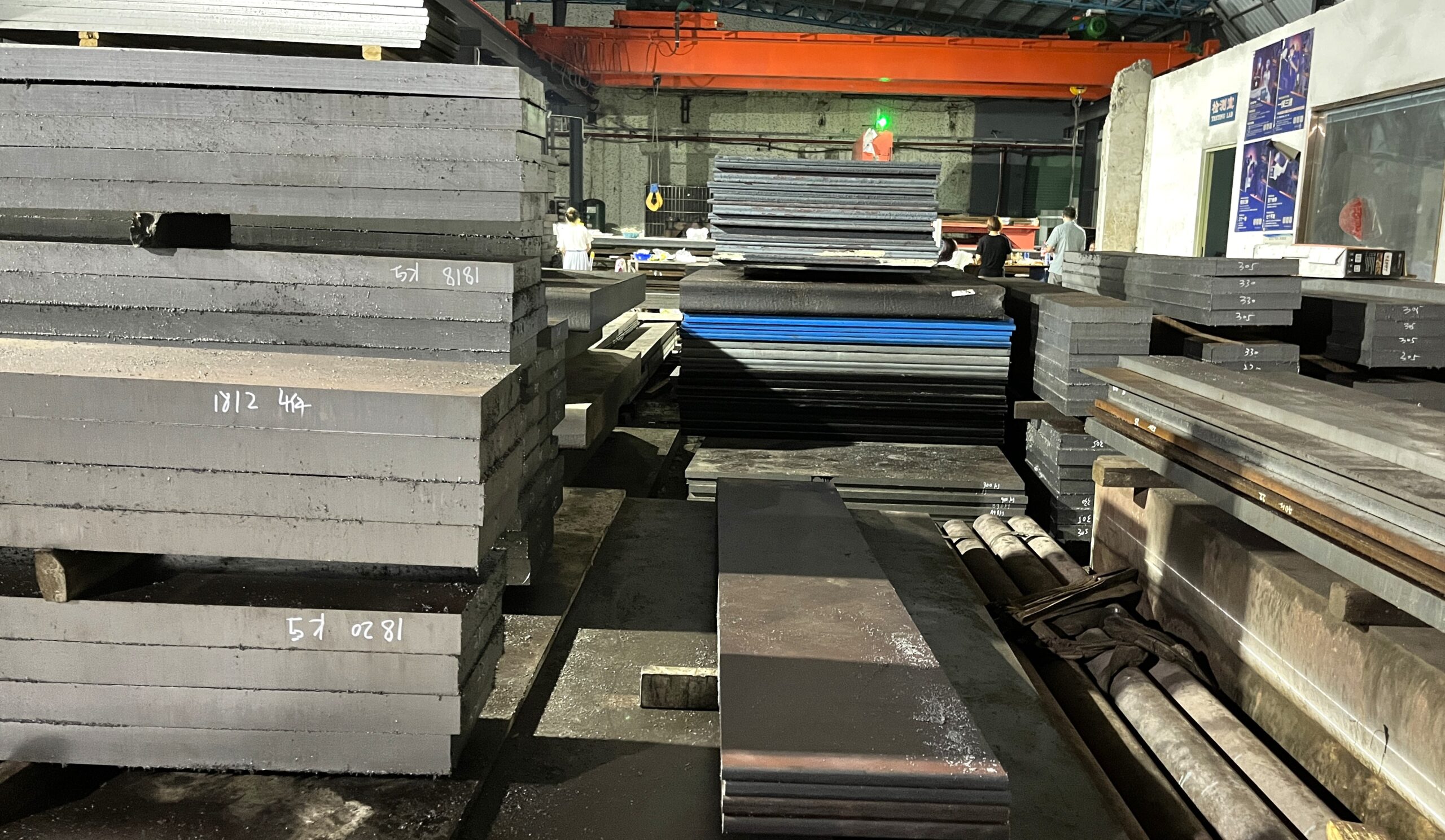
NAK80 steel  is a kind of pre-hardened plastic mold steel, it is from Japan ,Daido . NAK80 steel generally used for mirror polishing molds, dustproof, TV filter plates, cosmetic boxes, precision wrinkle treatment molds, office automation equipment, auto parts electrical discharge processing molds, etc.
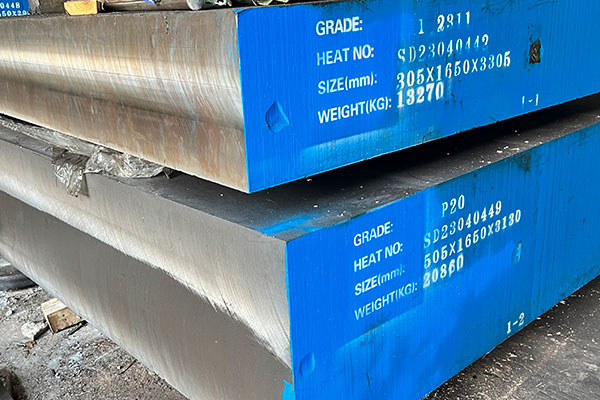
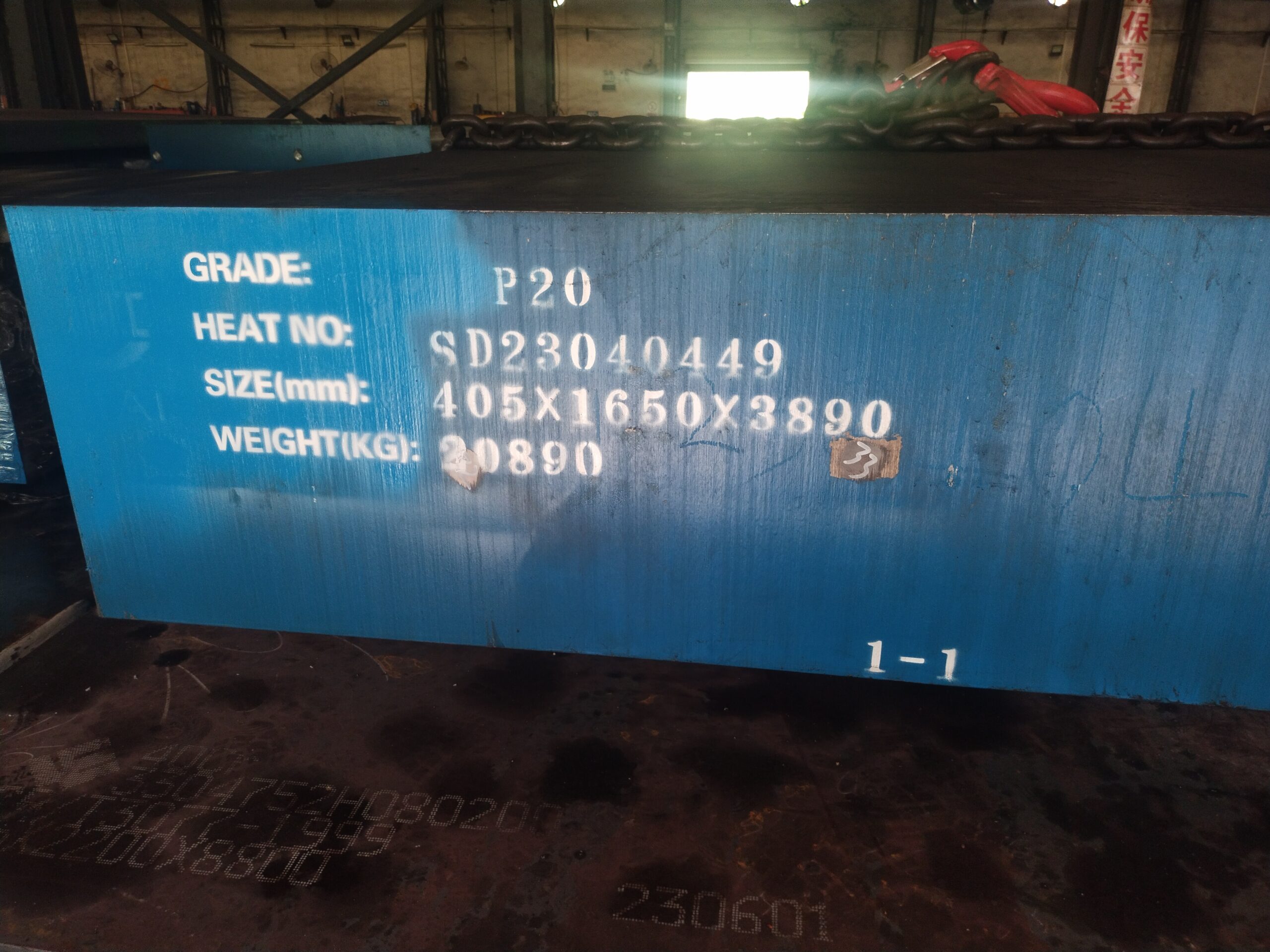
P20 steel  is an American standard pre-harden plastic mold steel. Widely used in China, factory hardness HRC30~42, suitable for large and medium-sized precision molds, suitable for long-term production of high-quality plastic molds, and used for large mold bases. This steel has good machinability and can be generally polished.

Chemical composition difference

Grade C Si Mn S P  Cr
 ASSAB S136 Max0.38 Max0.80 Max0.50 MAX0.030 MAX0.030 Max13.6
Grade C Si Mn S P  Cr Mo
ASTM P20 0.28-0.40 0.20-0.80 0.60-1.00 ≤0.030 ≤0.030 1.40-2.00 0.30-0.55
Grade C Si Mn  Cr Mo  Ni Al Cu
 JIS NAK80 0.15 0.30 1.50 0.30 0.30 3.00 1.00 1.00

Characteristic between mould steel S136 , NAK80 and P20

S136 mold steel

  1. Corrosion resistance: It has excellent corrosion resistance and apply  in humid environments for a long time without rusting.
  2. High hardness: It has high hardness and can maintain good hardness and wear resistance at high temperatures.
  3. Excellent cutting performance: It has good cutting performance and is easy to process and manufacture.
  4. Good heat treatment performance: It has good heat treatment performance and can obtain the required hardness and strength through heat treatment.
  5.  Excellent wear resistance: It has excellent wear resistance and can maintain good surface finish and dimensional accuracy during long-term use.

NAK80 steel

  1.  High hardness: NAK80 mold steel is pre-hardened steel, and its hardness can reach 37-43HRC before leaving the factory.NAK80 STEEL
  2.  Excellent polishing performance: very suitable for molds with high surface requirements, such as optical devices or injection molded parts
  3. Ease of processing: NAK80 has very good processing performance, is easy to cut, mill and drill, and can meet the requirements of mold processing.
  4. Good thermal stability: NAK80 can still maintain stable performance in high-temperature working environments. It has a low thermal expansion coefficient and excellent thermal conductivity, and can effectively resist plastic mold deformation and thermal stress caused by high temperatures.

P20 steel

  1. Hardness: Factory pre-hardened, hardness 29-33HRC. Uniform hardness, good polishing performance and photo-etching performance, and good processing performance
  2. It has excellent cutting performance and wear resistance, and can withstand high pressure and impact. Suitable for long term mold use.
  3. P20 mold steel also has high strength and toughness and can withstand long-term mold work.
  4. It has good heat resistance and corrosion resistance, making it the first choice material for plastic injection molds.

Application between mould steel S136 , NAK80 and P20

NAK80  Steel application :

Mould steel NAK80 widely used in plastic injection molds, die-casting molds and precision molds also in industries such as auto parts, home appliances, electronic products, and medical devices.

It is suitable for flat panel displays, cameras, audio equipment, transparent covers, films and other shell molds with mirror polishing requirements.

S136 steel application

S 136 is suitable for plastic molds with high corrosion resistance and mirror polish requirements.

Therefore  the highly smooth surfaces of S136 steel for the production of optical products, such as cameras, sunglasses, chemical instruments and plastic products;

mould steelP20 Steel application

  • P20 is suitable for plastic molds and mold bases such as TV front casings, telephones, water dispensers, vacuum cleaners, etc.
  • Thermoplastic plastic injection molds, extrusion molds.
  • Thermoplastic blow molds. Heavy duty mold main components.
  • Cold structural parts.
  • Commonly used in manufacturing TV casings, washing machines, refrigerator inner casings, buckets, etc.

The difference of price between mould steel S136 , NAK80 and P20

P20 < S136 < NAK80

In conclusion

S136 , NAK80  and P20 are all good material widely used for steel mould.

But there are some application  differences.

  • If you need a mold with good polishability and relatively high requirements, you can choose NAK80 steel.
  • If you want to produce injection molds or extrusion molds with certain corrosion resistance but also have certain surface requirements, you can choose S136 steel.
  • If you have a budget Limited, if the surface requirements are not high, you can choose the more cost-effective P20 steel.

Otai special steel stock more than 1500tons for S136 , NAK80  and P20 steel. If you want to get the stock list and the price details , please contact below information:


Joann -Otai specai steelName: Joann

E-mail:joann@otaisteel.com

WhatsApp:+8613128068365

0 Continue Reading →

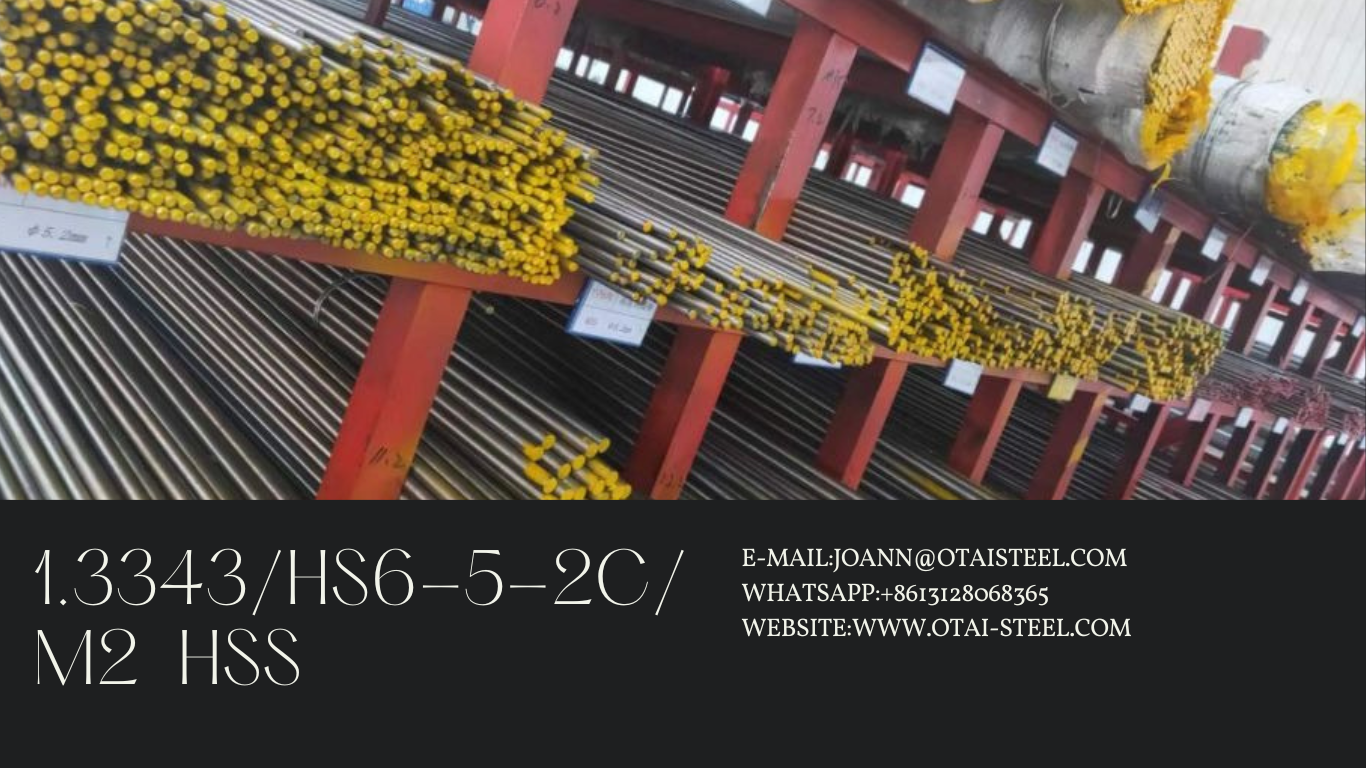
The Power of 1.3343/M2/HS6-5-2C High-Speed Steel

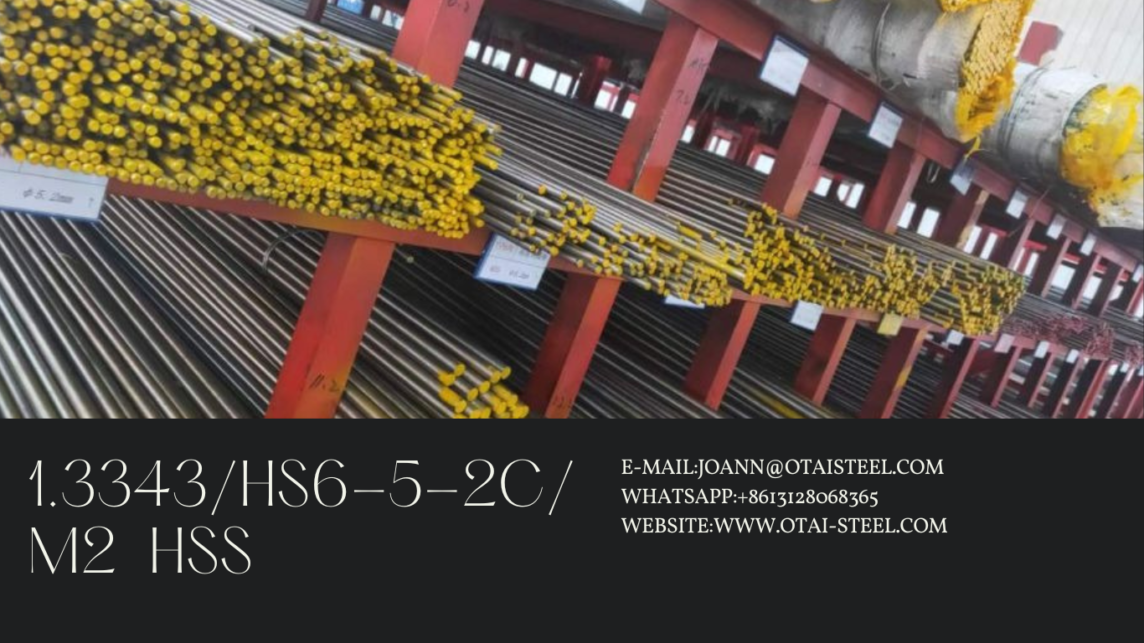
1.3343 steel is a high-toughness high-speed steel containing a high proportion of tungsten and has the characteristics of high wear resistance and high efficiency. Grade 1.3343 is the HSS type steel. HSS refers to high speed steel grade. The grade is defined in the ISO 4957.This kind of steel has excellent comprehensive mechanical properties and good cutting performance. Therefore, it is widely used in various tool and mold manufacturing fields.

1.3343 is supplied with a hardness of 230HBS and can reach 64HRC after quenching and tempering.

Chemical composition and its equivalents

ASTM A600 C Mn P S Si Cr V Mo W
M2 regular C 0.78 0.88 0.15 0.40 0.03 0.03 0.20 0.45 3.75 4.50 1.75 2.20 4.50 5.50 5.50 6.75
DIN ISO 4957 C Mn P S Si Cr V Mo W
1.3343/HS6-5-2C  0.86 0.94 0.45 3.80 4.50 1.70 2.10 4.70 5.20 5.90 6.70
JIS G4403 C Mn P S Si Cr V Mo W
SKH51 0.80 0.88 0.40 0.03 0.03 0.45 3.80 4.50 1.70 2.10 4.70 5.20 5.90 6.70

Physical properties of 1.3343

Density         0.294 lb/in3 (8138 kg/m3)
Specific Gravity                  8.15
Modulus of Elasticity         0.294 lb/in3 (8138 kg/m3)
Thermal conductivity         24 Btu/ft/hr/°F  41.5 W/m/°K
Machinability          65% of a 1% carbon steel

Mechanical properties of 1.3343

Mechanical properties Metric Imperial
Hardness, Rockwell C (tempered at 1150°F, quenched at 2200°F) 62 62
Hardness, Rockwell C (as hardened, quenched at 2200°F) 65 65
Compressive yield strength (when tempered at 300°F) 3250 MPa 471000 psi
Izod impact unnotched (when tempered at 300°F) 67 J 49.4 ft-lb
Abrasion (loss in mm3, as-hardened; ASTM G65) 25.8 25.8
Abrasion (loss in mm3, tempered at 1275°F; ASTM G65) 77.7 77.7
Poisson’s ratio 0.27-0.30 0.27-0.30
Elastic modulus 190-210 GPa 27557-30458 ksi

1.3343-high-speed-steel-tool-steelHeat treatment about DIN 1.3343 steel
Soft annealing:
820 to 850 °C for about 2 to 5 hours
slow controlled cooling of 10 to 20 °C per hour to about 550 °C;
further cooling in air. Maximum 270 HB

Hardening:
1190 – 1230 °C
Quenching in oil/compressed gas/air/hot bath
Min: 64 HRC

Tempering:

Min560 °C

Slow heating to tempering temperature (to avoid forming of cracks)
immediately after hardening;

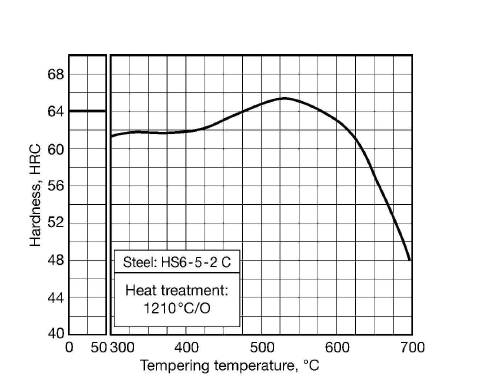
Hardneess -tempering temperature -curves for 1.3343/H6-5-2C steel

Hardne s s -te mpe ring te mpe rature -c urve s fo r 1.3343

Characteristic of 1.3343 HSS steel

  1. High hardness, MinHRC64 after final heat treatment,
  2. The carbides are fine and evenly distributed and have good wear resistance.
  3. Good thermoplasticity.

Application of 1.3343 HSS steel

  1. Particularly suitable for cold rutting dies and extrusion tools.
  2. General toughness precision wear-resistant hardware cold stamping dies, cold extrusion blades, punches and dies.
  3. Suitable for processing into various types of drill bits, milling cutters and other cutting tools.
  4. Particularly suitable for tools subjected to vibration and impact loads.


Joann -Otai specai steelName: Joann

E-mail:joann@otaisteel.com

WhatsApp:+8613128068365

0 Continue Reading →

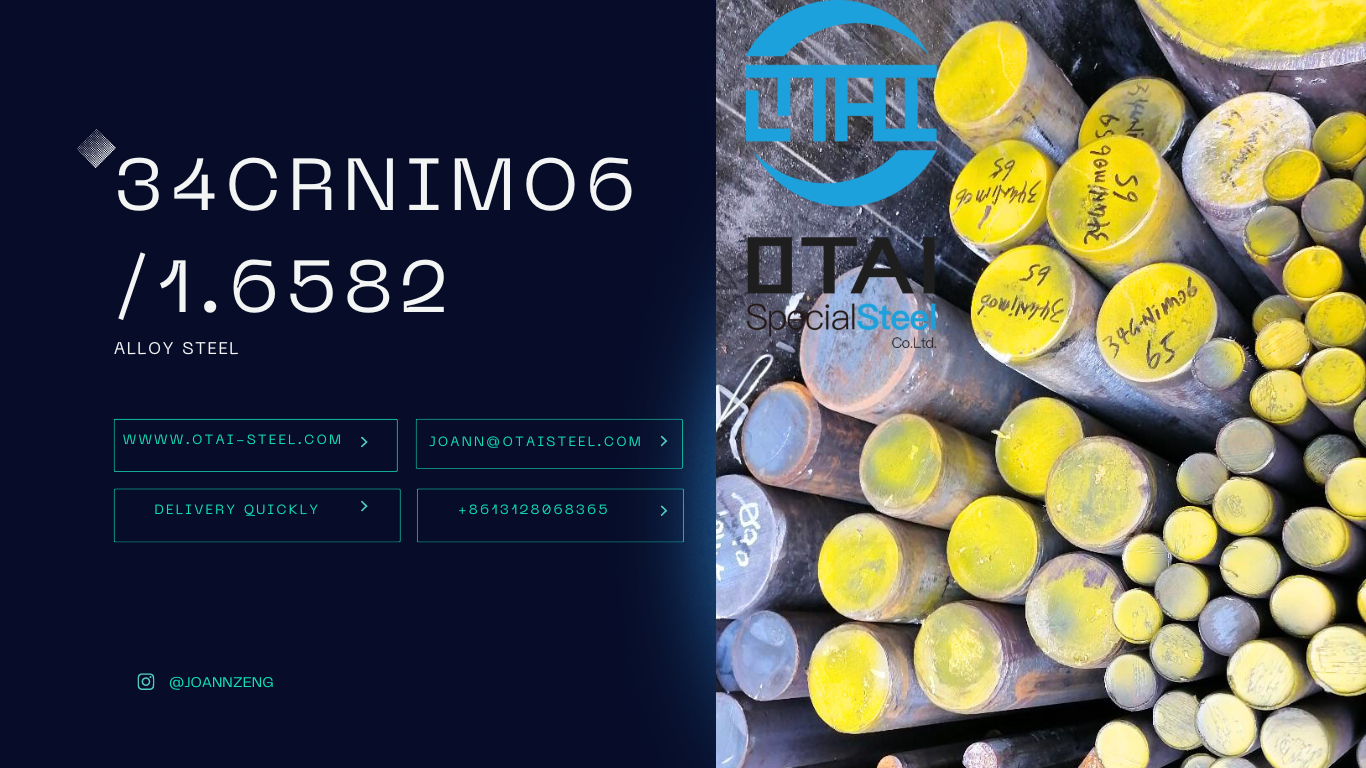
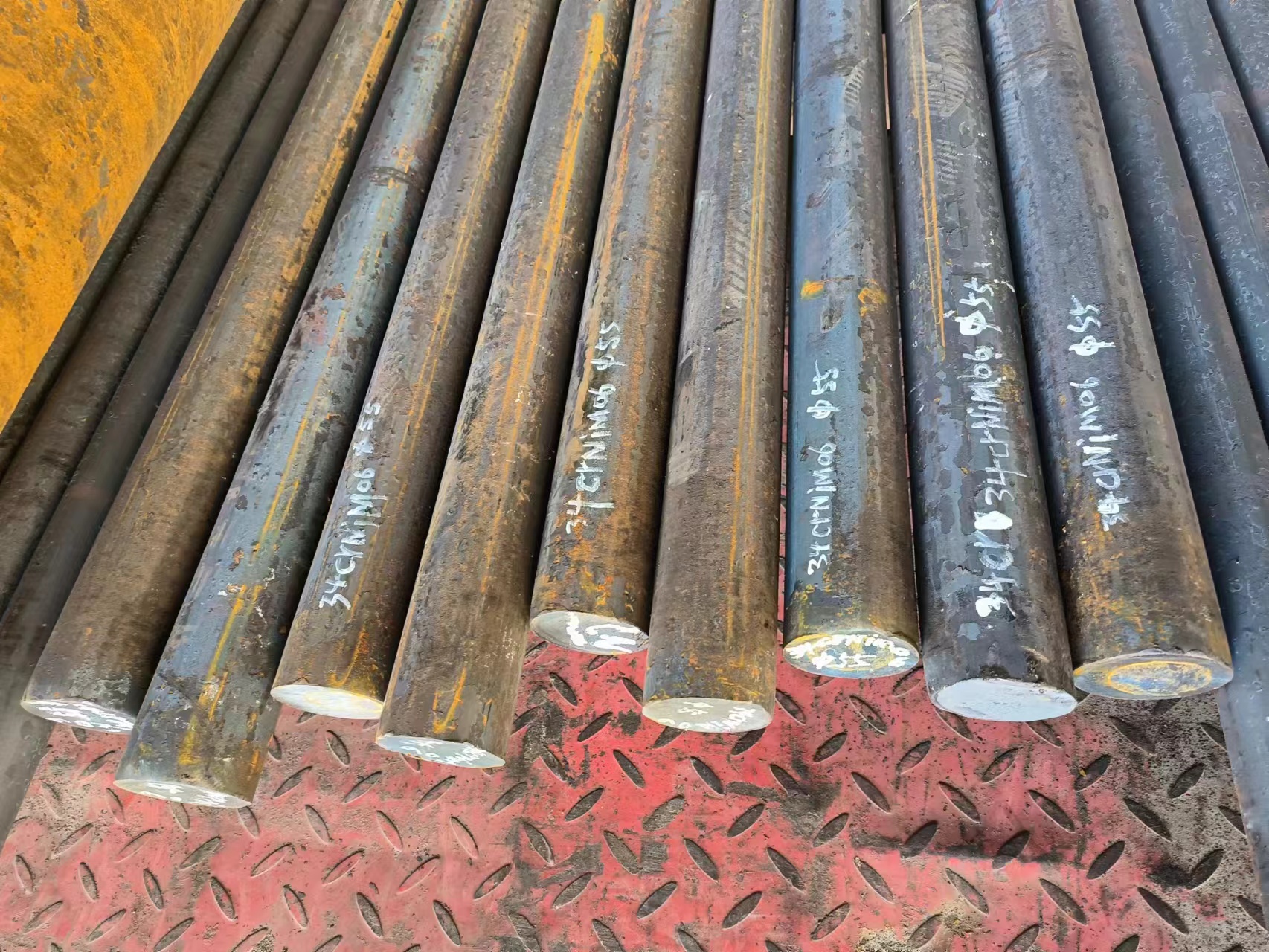
A material for engineering projects-34CrNiMo6/1.6582 alloy steel

34CrNiMo6/1.6582 alloy steel  is high-strength engineering steel as per BS EN 10083-3:2006 . It  is widely used in the manufacture of important parts such as engine camshafts and connecting rods due to its excellent comprehensive mechanical properties.

What is 34CrNiMo6/1.6582 alloy  steel ? Below let’s  explain it from its chemical composition , properties , application etc aspect.

Chemical composition of 34CrNiMo6/1.6582 alloy steel and its equivalent steel

BS EN 10083 – 3:2006 34CrNiMo6
/1.6582
C Mn Si P S Cr Mo Ni
0.30-0.38 0.5-0.8 0.40 max 0.025 max 0.035 max 1.3-1.7 0.15-0.30 1.3-1.7
BS EN 10250-3:2000 C Mn Si P S Cr Mo Ni
0.30-0.38 0.5-0.8 0.40 max 0.035 max 0.035 max 1.3-1.7 0.15-0.30 1.3-1.7
ASTM A29: 2004 4337 C Mn Si P S Cr Mo Ni
0.30-0.40 0.6-0.8 0.20-0.35 0.035 max 0.040 max 0.70-0.90 0.20-0.30 1.65-2.00

Mechanical  Properties of 34CrNiMo6/1.6582 alloy steel

34CrNiMo6/1.6582 alloy steel round bar

Below is the mechanical Properties after QT in room temperture

Properties < 16 >16 – 40 >40 – 100 >100 – 160 >160 – 250
Thickness t [mm] < 8 8<t<20 20<t<60 60<t<100 100<t<160
Yield strength Re [N/mm²] min. 1000 min. 900 min. 800 min. 700 min. 600
Tensile strength Rm [N/mm2] 1200 – 1400 1100 – 1300 1000 – 1200 900 – 1100 800 – 950
Elongation A [%] min. 9 min. 10 min. 11 min. 12 min. 13
Reduction of area Z [%] min. 40 min. 45 min. 50 min. 55 min. 55
Toughness CVN [J] min. 35 min. 45 min. 45 min. 45 min. 45

Heat treatment of 34CrNiMo6/1.6582 alloy steel

Grade Quenching Tempering Annealing  Normalizing
Temperture(°C) Media Time (mins) Temperture(°C) Time (mins)
34CrNiMo6/1.6582 830-860 Oil or Water 30 540-660 60 850-880°C and then slowly cool in the furnace to below 600°C for annealing. Heat the material to around 870-900°C and then cool in still air

The heat treatment of 34CrNiMo6 typically involves processes to achieve desired mechanical properties.

It’s essential to follow precise temperature and cooling rate guidelines during each step to achieve the desired microstructure and mechanical properties in the final product. Additionally, specific requirements for hardness, strength, and toughness will dictate the exact parameters of the heat treatment process. Consulting material specifications and/or a metallurgical engineer is recommended for precise heat treatment instructions.

Characteristic of 34CrNiMo6 steel

34CrNiMo6 round bar

High Strength: 34CrNiMo6 has excellent high strength and is able to withstand high load and high stress conditions.

High toughness: The alloy has good toughness and is able to maintain structural integrity under high loads and avoid easy fracture.

Wear Resistance: Due to its alloy composition, 34CrNiMo6 has good wear resistance and is suitable for applications in high friction and high wear environments.

High-temperature properties: The alloy maintains a certain hardness and strength in high-temperature environments, making it suitable for high-temperature applications.

Application of  34CrNiMo6  steel

34CrNiMo6 material is widely used in manufacturing various high-load and high-wear parts, including but not limited to:

Gears and drive shafts: Used in automobiles, industrial machinery, aerospace and heavy equipment, etc.

Bearings: Bearings used to support rotating parts, such as engines and machinery.

Forgings and forging dies: Used to make forgings and forging dies, such as hammer heads and dies.

Oil and Gas Extraction Equipment: Used in the manufacture of drill bits, drill pipe and parts for oilfield equipment.

Stock and price

Otai stock 34CrNiMo6 more than  1000tons ,   size from 12mm to  600mm . If you have any interest , please contact :


Joann -Otai specai steelName: Joann

E-mail:joann@otaisteel.com

WhatsApp:+8613128068365


0 Continue Reading →

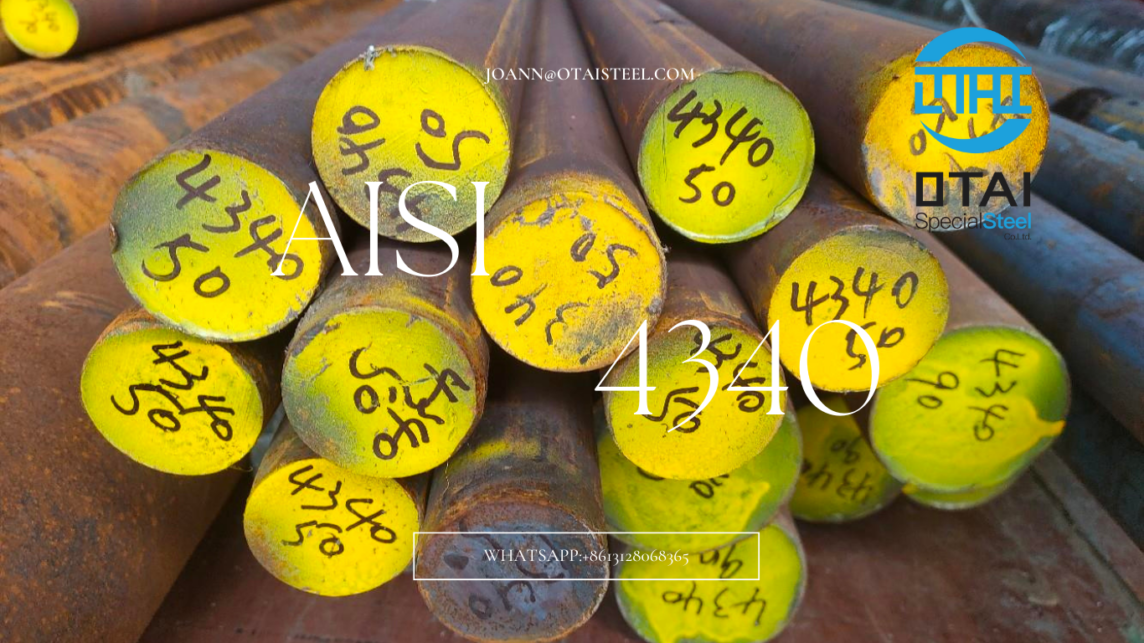
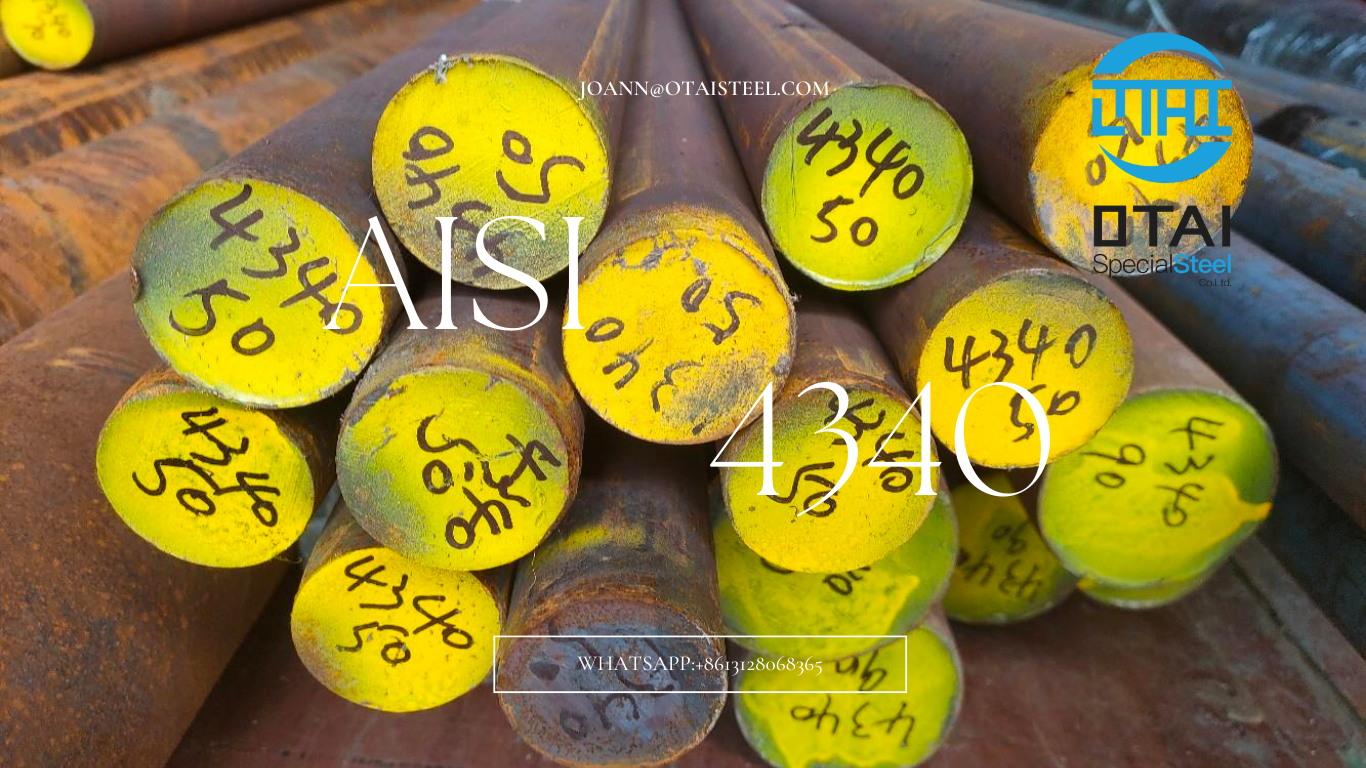
Unlocking the Secrets of AISI 4340 Steel

AISI 4340 steel is a medium-carbon low-alloy high-strength steel and a typical representative of low-alloy ultra-high-strength steel. It has good hardenability, well-matched strength and toughness, high fatigue strength and low notch sensitivity, high low-temperature impact toughness, and no obvious temper brittleness.

AISI 4340 steel standard

The execution standard for 4340 steel is ASTM A29/A29M-04

Chemical composition of AISI 4340 steel and equilvalent grade

Standard Grade C Mn P S Si Ni Cr Mo
ASTM A29 4340 0.38-0.43 0.60-0.80 0.035 0.040 0.15-0.35 1.65-2.00 0.70-0.90 0.20-0.30
EN 10250 36CrNiMo4/
1.6511
0.32-0.40 0.50-0.80 0.035 0.035 ≦0.40 0.90-1.20 0.90-1.2 0.15-0.30
BS 970 EN24/ 817M40 0.36-0.44 0.45-0.70 0.035 0.040 0.1-0.40 1.3-1.7 1.00-1.40 0.20-0.35
JIS G4103 SNCM 439/ SNCM8 0.36-0.43 0.60-0.90 0.030 0.030 0.15-0.35 1.60-2.00 0.60-1.00 0.15-0.30


Heat treatmemt

Quenching:AISI 4340 alloy steel heat treat at 830°C (1525°F) followed by quenching in oil.

Forging:AISI 4340 alloy steel is forged at 427 to 1233°C (1800 to 2250°F).

Cold Working:AISI 4340 alloy steel can be cold worked using all conventional methods in the annealed condition. It has high ductility.

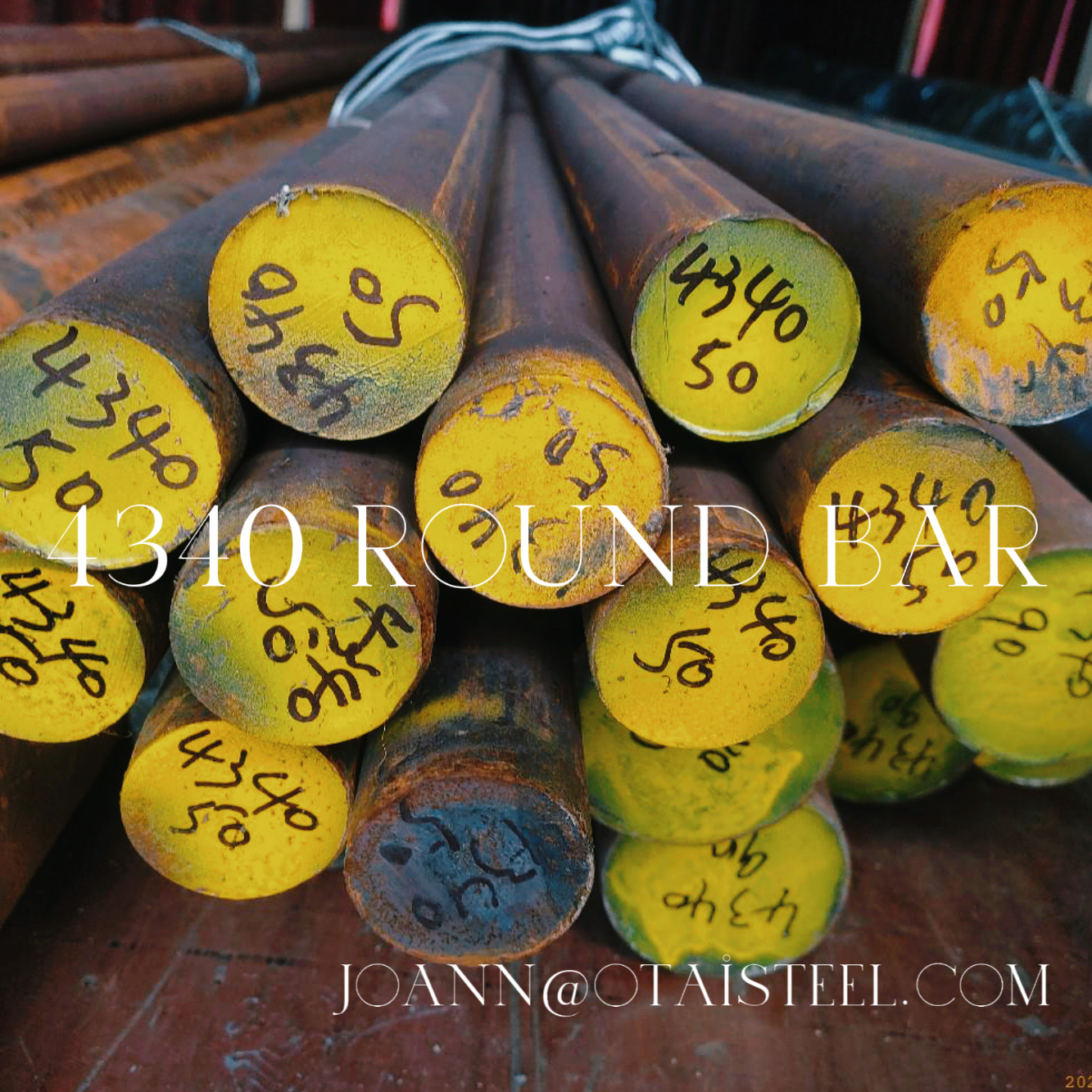
4340 round bar

Annealing:AISI 4340 alloy steel is annealed at 844°C (1550°F) followed by cooling the furnace.

Tempering:AISI 4340 alloy steel should be in the heat treated or normalized and heat treated condition before tempering. The tempering temperature for depends upon the strength level desired. For strength levels in the 260 – 280 ksi range temper at 232°C (450 F). For strength in the 125 – 200 ksi range temper at 510°C (950 F). And don’t temper the 4340 steels if it is in the 220 – 260 ksi strength range as tempering can result in degradation of impact resistance for this level of strength.

Hardening:AISI 4340 alloy steel can be hardened by cold working or heat treatment.

Physical properties

Properties Metric Imperial
Density 7.85 g/cm3 0.284 lb/in³
Melting point 1427°C 2600°F


Mechanical Properties

Mechanical Property Designation T *U V W X Y Z
Limited Ruling Section (mm) 150 100 63 30 30 30 30
Tensile Strength (Min.) 850 930 1000 1080 1150 1230 1550
Tensile Strength (Max.) 1000 1080 1150 1230 1300 1380
0.2% Proof Stress Mpa (Min.) 665 740 835 925 1005 1080 1125
Elongation on 5.65√S0 % 13 12 12 11 10 10 5
Izod Impact J (Min.) 54 47 47 41 34 24 10
Charpy Impact J (min.) 50 42 42 35 28 20 9
Brinell Hardness HB (Min.) 248 269 293 311 341 363 444
Brinell Hardness HB (Max.) 302 331 352 375 401 429
*Material stocked generally in condition U.

Check test certificate if critical for end use.

AISI 4340 Steel Application

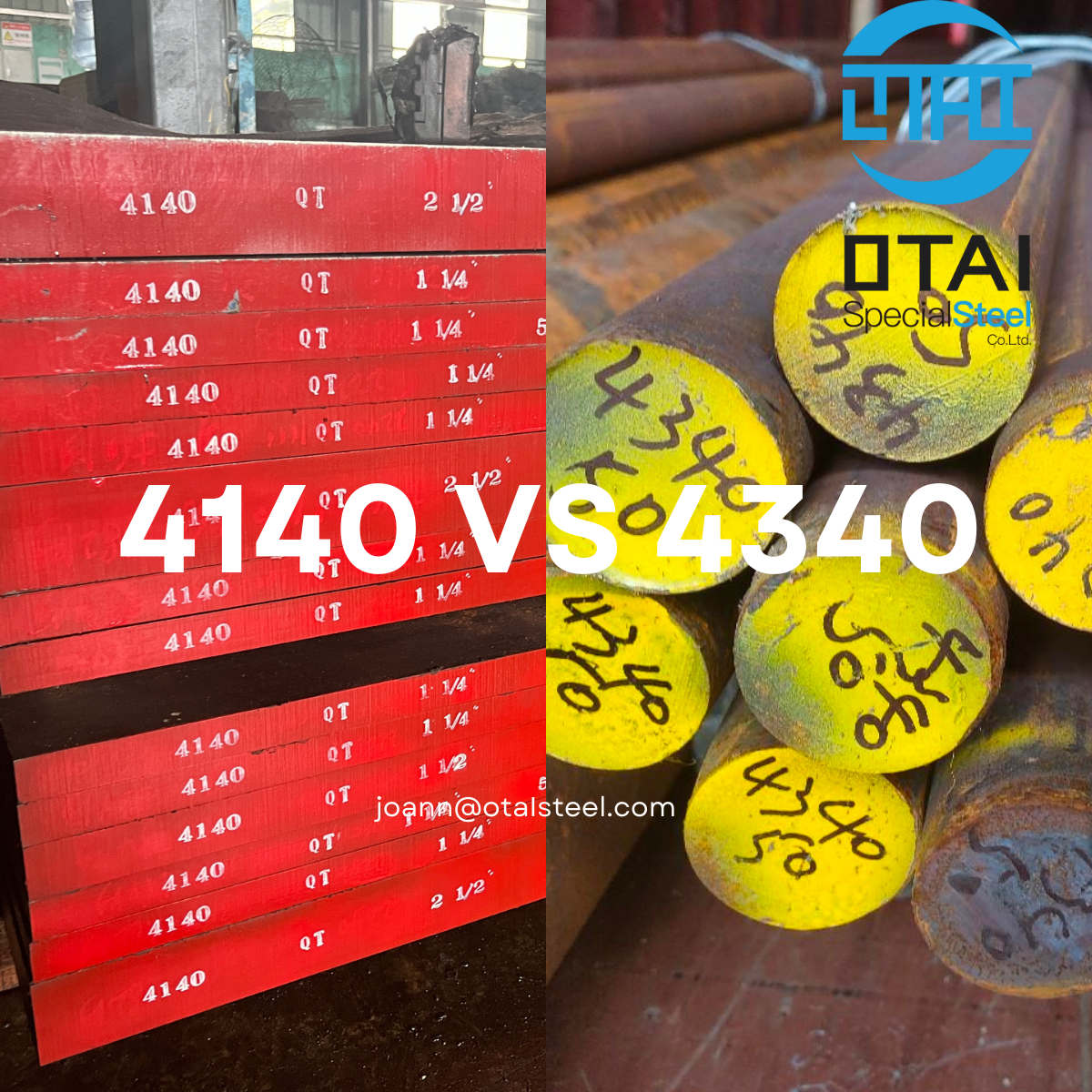
4140 and 4340 steelDue to  its high strength, toughness, and weldability. It finds applications in various industries, including:

  1. Aerospace: Components such as landing gear, engine parts, and structural components in aircraft.
  2. Automotive: Crankshafts, axle shafts, gears, and other critical components in high-performance engines and transmissions.
  3. Oil and Gas: Drill collars, drill rods, and other downhole drilling equipment require materials with high strength and toughness to withstand harsh drilling conditions.
  4. Marine: Components in marine environments, such as propeller shafts and crankshafts for ship engines.
  5. Defense and Military: Applications include gun barrels, gears, and other components in firearms and military vehicles .
  6. Industrial Machinery: Various industrial machinery components, including gears, shafts, and crankshafts, use 4340 steel due to its high strength and fatigue resistance.
  7. Tool and Die Making: Dies, punches, and other tooling components benefit from the wear resistance and toughness of 4340 steel in applications such as stamping and forming.
  8. Power Generation: Components in power generation equipment, such as turbine shafts and gears, utilize 4340 steel for its strength and resistance to fatigue and wear.
  9. Heavy Equipment: Components in heavy machinery and equipment, such as axles, gears, and crankshafts in construction and mining equipment, rely on the high strength and durability of 4340 steel.
  10. Racing and Motorsports: High-performance racing cars and motorcycles often use 4340 steel for critical components like crankshafts and connecting rods due to its strength and fatigue resistance.

Want to know  more about the AISI 4340 steel details and stock list ?

Pls contact : JoannJoann -Otai specai steel

E-mail:joann@otaisteel.com

WhatsApp:+8613128068365


0 Continue Reading →


Recent Comments by Joann

    No comments by Joann