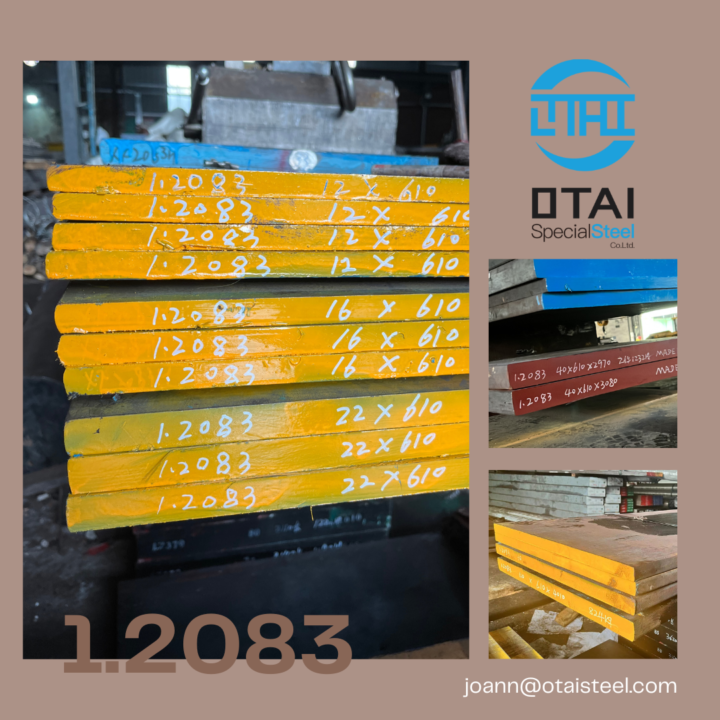
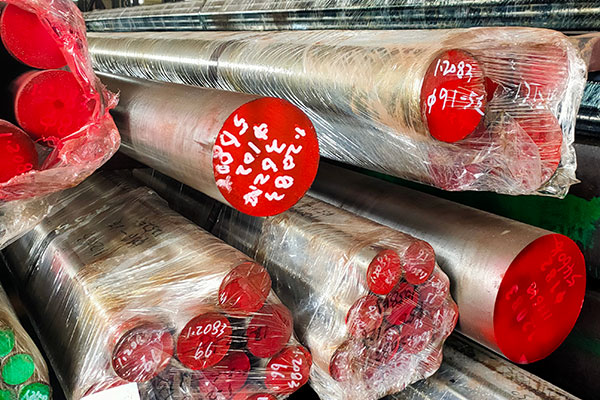
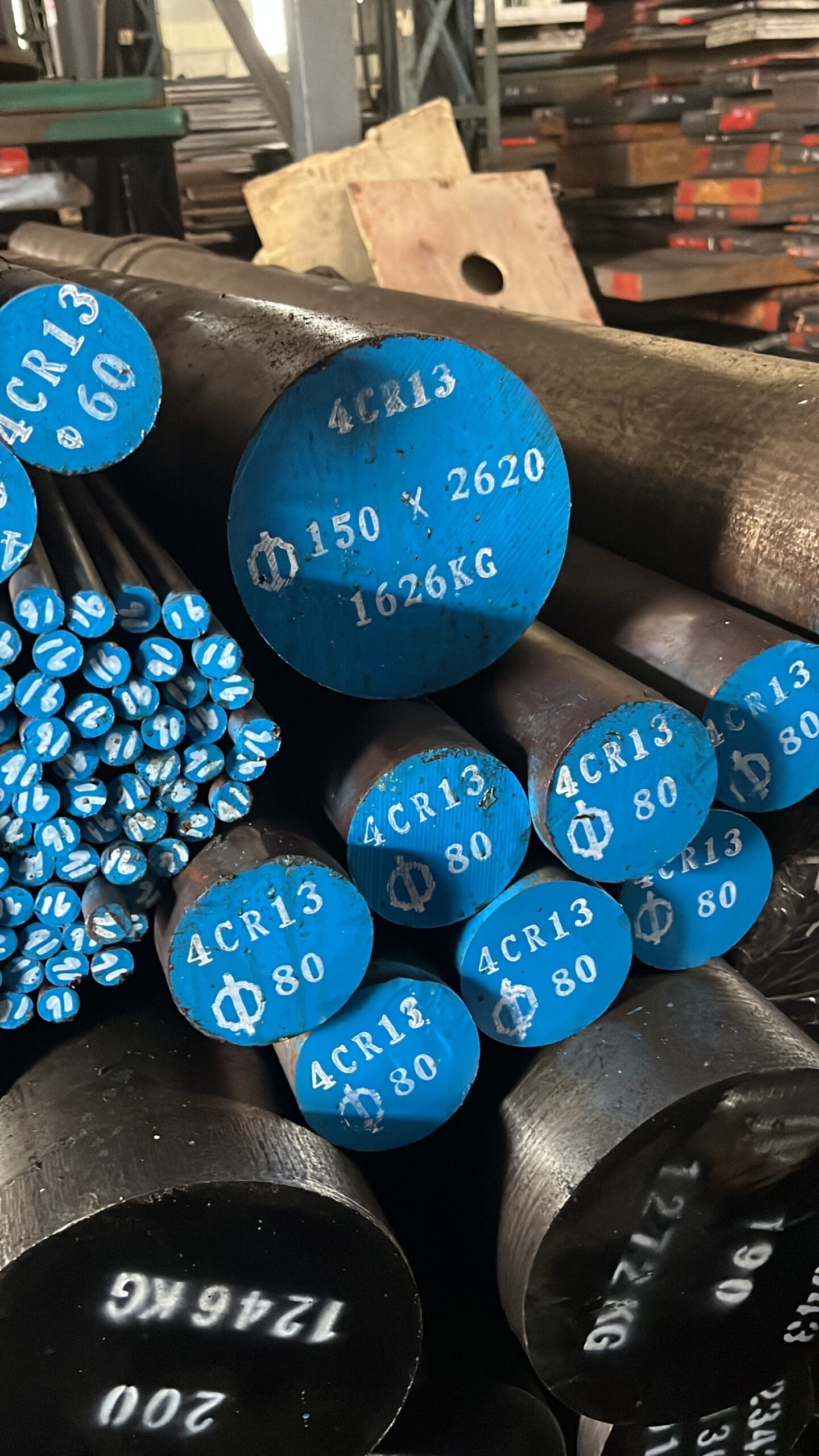
1.2083 ( X40Cr14) steel is belong to German standard EN ISO 4957-2000 which is a plastic mold steel. 1.2083 steel equivalent to the AISI 420,GB 4Cr13 and the JIS SUS420J2 . This material is a high-chromium martensitic stainless steel, belonging to the category of plastic mold steels. Its core characteristics are high hardness, excellent corrosion resistance, and polishing performance. It is typically with annealed condition, with a hardness of approximately 215-245 HB.
What Exactly is 1.2083 Steel?
In simple terms, 1.2083 is a martensitic stainless steel renowned for its exceptional combination of corrosion resistance, wear resistance, and high hardness . Think of it as the “bodyguard” of the plastics industry . It is specifically designed to withstand the harsh, corrosive environments often found in plastic molding, particularly when processing materials like PVC which release acidic gases .
Its secret lies in its chemical composition. With a high Chromium content (around 13%) and a carefully balanced carbon level, it offers the best of both worlds: the durability of a tool steel and the corrosion resistance of stainless steel .
The Global Family: 1.2083 Steel Equivalent
One of the most common questions we encounter is about the different names for this steel. In short, it has different names all over the world. Understanding these equivalents is crucial for sourcing material and ensuring you are getting the right product for your application.
To make this clear, here is a quick reference table of 1.2083 steel equivalents :
| Standard | Steel Grade |
|---|---|
| Germany / Europe (DIN/W.Nr) | 1.2083 |
| Europe (EN) | X40Cr14 / X42Cr13 |
| USA (AISI/SAE) | 420 |
| Japan (JIS) | SUS420J2 |
| China (GB) | 4Cr13 |
| Sweden (ASSAB) | S136 / Stavax ESR |
Chemicial composition for 1.2083 Steel Equivalent
Let’s look under the hood at the 1.2083 chemical composition. It is this precise blend of elements that gives the steel its unique properties .
| Standard | Grade | C | Si | Mn | S | P | Cr | Ni |
| EN ISO 4957-2000 | 1.2083 | 0.36-0.42 | Max1.00 | Max1.00 | Max0.030 | Max0.030 | 12.50-14.50 | / |
| GB/T 4237-2015 | 4Cr13 | 0.36-0.45 | Max0.60 | Max0.80 | Max0.030 | Max0.030 | 12.00-14.00 | Max0.60 |
| JIS G4303 | SUS420J2 | 0.26-0.40 | Max1.00 | Max1.00 | Max0.030 | Max0.040 | 12.00-14.00 | / |
| ASTM A 276 – 08A | 420 | Min0.15 | Max1.00 | Max1.00 | Max0.030 | Max0.040 | 12.00-14.00 | / |
| ASSAB | S136 | Max0.38 | Max0.80 | Max0.50 | Max0.030 | Max0.040 | Max13.6 | / |
Recommendations: How to Choose 1.2083 Steel Equivalent ?
So, how do you translate these technical specifications into a purchasing decision? 1.2083 steel and its equivalents are generally interchangeable. However, if the usage conditions are very strict, you can choose the most suitable product according to the table below. The table below serves as a practical guide. It recommends which steel grade equivalent is best suited for different operational priorities and applications.
| If Your Priority Is… | The Ideal Choice | Key Properties to Leverage | Best Fit Applications |
|---|---|---|---|
| Maximum Wear Resistance & Hardness | 4Cr13 | High carbon content enables slightly higher hardness and improved edge retention. | Molding parts for highly abrasive plastics, glass-filled materials, or large-series production where wear is a primary concern. |
| Highest Corrosion Resistance & Toughness | AISI 420 | Lower carbon improves toughness while maintaining strong corrosion resistance. | Complex mold inserts that require high toughness, molds in highly humid environments, or processing mildly corrosive plastics. |
| A Universal, Reliable Standard | 1.2083 | A well-balanced composition offering a proven combination of all key properties. | General-purpose plastic molds, frames, and plates where a reliable and well-understood material . |
Key Properties: Hardness, Polishability, and Corrosion Resistance
What makes 1.2083 steel a front-runner in its class? It’s a trifecta of performance features .
-
Corrosion Resistance: Thanks to its high Chromium content, it resists moisture, weak acids, and the aggressive environments generated during the processing of corrosive plastics . It’s important to note that its best corrosion resistance is achieved when the surface is hardened, ground, and polished .
-
High Hardness & Wear Resistance: This steel can be hardened up to 48-55 HRC. This high hardness translates to excellent wear resistance, meaning molds made from 1.2083 have a longer lifespan and require less maintenance .
-
Excellent Polishability: This is a key advantage. It can be polished to a mirror finish (Ra ≤ 0.05 μm), which is absolutely essential for producing high-gloss plastic parts, such as optical lenses or cosmetic packaging .
Key Applications
The unique properties of 1.2083 steel make it the go-to material for a variety of demanding applications .
-
Plastic Molds: This is its primary use. It is ideal for molds requiring high wear resistance and corrosion resistance, especially for PVC, POM, and flame-retardant plastics which release corrosive gases .
-
Transparent Plastic Molds: Its superior polishability makes it perfect for creating clear, transparent products like optical components, lenses, and CD molds .
-
Medical Technology: Its corrosion resistance and ability to maintain a sterile surface make it suitable for medical instruments and equipment .
-
Food Processing: It is used in equipment where hygiene and corrosion resistance are paramount .
Technical Data at a Glance
Here are some key physical and mechanical properties for your reference .
| Property | Value (Typical) |
|---|---|
| Density | 7.80 g/cm³ |
| Modulus of Elasticity | 200 – 220 GPa |
| Thermal Conductivity (at 20°C) | ~20 W/(m·K) |
| Hardness (Annealed Delivery) | 210 – 245 HB |
| Hardness (Hardened & Tempered) | 48 – 52 HRC |
What about Size and Price?
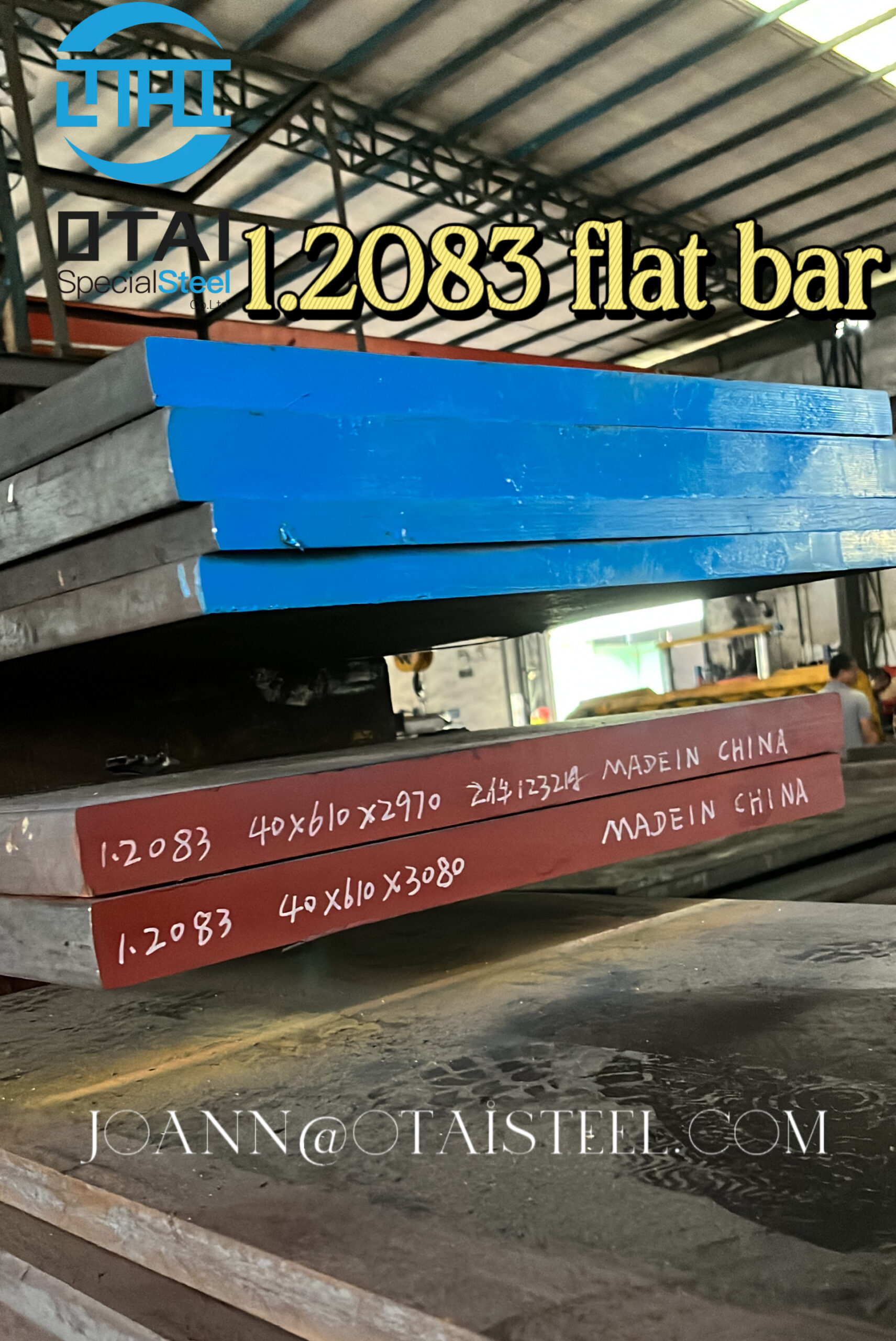
At Otai Special Steel, we supply 1.2083 steel in a wide range of shapes and sizes to fit your specific project needs . We offer round bars from 8mm to 500mm diameter and flat bars from 6mm to 500mm thickness. Furthermore, we can customize sizes according to your request.
Regarding 1.2083 steel price, it offers a favorable balance between performance and affordability. While prices can fluctuate based on market conditions, size, and quantity, 1.2083 is known for its cost-effectiveness, often offering a better price-to-performance ratio than higher-end grades like 1.2316 . Its cost-effectiveness, combined with its extended tool life, makes it a smart investment in the competitive molding industry.
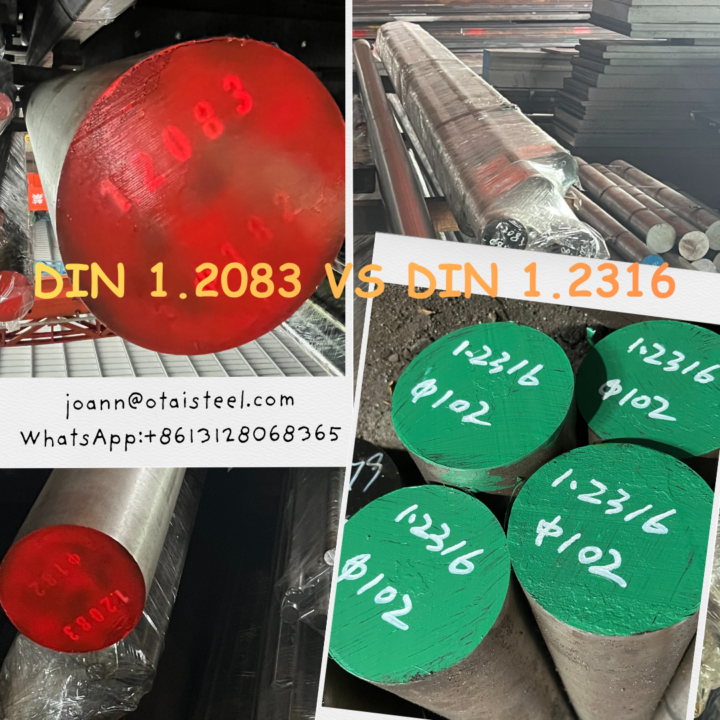
1.2083 vs. 1.2316: Which One is Right for You?
A question we often get is how 1.2083 compares to 1.2316. While both are stainless mold steels, they have distinct personalities. To put it simply, 1.2083 is for hardness and wear resistance, while 1.2316 is for superior corrosion resistance and toughness .
Think of it this way: 1.2083 is a reliable raincoat, perfect for a shower. 1.2316, on the other hand, is a full storm jacket, better for a downpour .
-
Choose 1.2083 if: You process standard plastics (ABS, PP, PE), need maximum hardness and wear resistance, and your budget is a primary concern.
-
Choose 1.2316 if: You process highly corrosive materials (PVC, POM), your workshop is in a humid environment, and you need maximum protection and longer maintenance intervals.
Conclusion: The Smart Choice for Molding Excellence
DIN 1.2083 steel stands as a reliable, high-performance pillar in the tool steel industry. Its unique combination of excellent corrosion resistance, high hardness, and outstanding polishability makes it the undisputed champion for a vast range of plastic molding applications.