Let me ask you a straight question: Are you overpaying for corrosion protection you don’t need—or under-buying and risking mold failure?
That’s the real battle between DIN 1.2083 and DIN 1.2316. Both are stainless mold steels. Both resist rust. But they are not twins—more like cousins with different personalities.
At Dongguan Otai Special Steel, we see customers hesitate between these two every single week. So let me cut through the confusion. Here is the honest, side-by-side comparison.
Quick Overview: DIN 1.2083 vs DIN 1.2316
| Feature | DIN 1.2083 | DIN 1.2316 |
|---|---|---|
| Common name | X42Cr13 (basic stainless mold steel) | GX42Cr13 (modified with molybdenum) |
| AISI equivalent | 420 | 420 modified (with Mo) |
| Primary strength | Good corrosion resistance + high hardness | Excellent corrosion resistance + better polish retention |
| Typical hardness (HRC) | 48 – 52 | 45 – 50 (slightly softer) |
| Molybdenum (Mo) | None | 0.80 – 1.20% |
| Relative cost | Lower | Higher (approx. 30–50% more) |
Chemical composition compare
Both grades contain high chromium for rust protection. But DIN 1.2316 adds molybdenum. That single change shifts the battlefield entirely.
| Element | DIN 1.2083 | DIN 1.2316 |
|---|---|---|
| Carbon (C) | 0.38 – 0.42 | 0.33 – 0.43 |
| Chromium (Cr) | 12.0 – 14.0 | 15.0 – 17.0 |
| Molybdenum (Mo) | — | 0.80 – 1.20 |
| Manganese (Mn) | ≤ 1.00 | ≤ 1.00 |
| Silicon (Si) | ≤ 1.00 | ≤ 1.00 |
Think of molybdenum as the bodyguard of the steel. It fights off pitting corrosion from acidic gases (like PVC or POM) and chloride ions. 1.2083 has no bodyguard—just a good raincoat.
Corrosion Comparison: DIN 1.2083 vs DIN 1.2316
Here’s the short answer: Both resist rust. But 1.2316 fights harder, especially in aggressive environments.
Think of it this way:
-
1.2083 = A good raincoat. Fine for a shower.
-
1.2316 = A full storm jacket with a hood. Better for a downpour.
Why the difference? It comes down to chemistry. Let me show you.
| Property | 1.2083 | 1.2316 | What It Means for You |
|---|---|---|---|
| Chromium (Cr) content | 12.0 – 14.0% | 15.0 – 17.0% | More chromium = stronger passive oxide layer = better rust protection. |
| Molybdenum (Mo) content | None (0%) | 0.80 – 1.20% | Mo fights pitting corrosion from chlorides and acidic gases. 1.2083 lacks this shield. |
| Carbon content | 0.38 – 0.42% | 0.33 – 0.43% | Similar hardness potential. |
| Resistance to humid air | Good | Excellent | 1.2083 works fine in dry workshops. 1.2316 handles tropical storage better. |
| Resistance to PVC / flame-retardant gases | Moderate | Very good | Both resist, but 1.2316 lasts longer before surface etching appears. |
| Resistance to salt spray / brine | Poor | Moderate | Don’t use 1.2083 near seawater. 1.2316 buys you time, but still not marine grade. |
| Resistance to acidic condensation (e.g., POM / acetal) | Moderate | Good | 1.2316 is preferred for high-cavitation molds processing aggressive polymers. |
| Polished surface durability in service | Good – may stain over time | Very good – stays cleaner longer | Mirror-polished 1.2316 resists “blooming” (micro-rust spots) better. |
The Practical Bottom Line
| Application Scenario | Recommended Grade | Why? |
|---|---|---|
| Standard plastics (ABS, PP, PE, PS) | 1.2083 (cost-effective) | No need to overpay. 1.2083 handles normal humidity fine. |
| PVC, POM, flame-retardant materials | 1.2316 | Aggressive gases will eventually stain 1.2083. 1.2316 delays that by years. |
| Medical or food-contact molds | Either, but 1.2316 preferred for long runs | Hygiene demands no rust. 1.2316 adds insurance. |
| Molds stored in humid environments | 1.2316 | 1.2083 can develop light surface rust if stored poorly. 1.2316 is more forgiving. |
| Budget-limited projects | 1.2083 | You get 80% of the corrosion performance at ~60-70% of the cost. |
Mechanical & Physical
Stronger doesn’t always mean better. Let me show you the trade-offs.
| Property | 1.2083 | 1.2316 |
|---|---|---|
| Max hardness (HRC) | 52 | 50 (slightly lower) |
| Wear resistance | Higher | Moderate (softer matrix) |
| Toughness | Moderate (more brittle at high hardness) | Better (thanks to lower carbon + Mo) |
| Polishability | Good (mirror possible) | Very good (fewer inclusions) |
| Thermal conductivity | ~24 W/(m·K) | ~22 W/(m·K) (slightly slower cooling) |
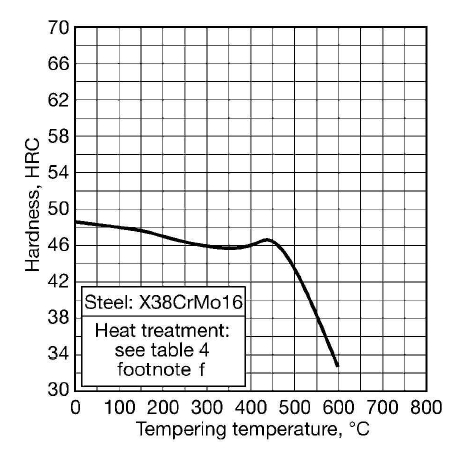
So 1.2083 gets harder and resists abrasion better. 1.2316 is tougher and less likely to crack under impact.
Application Guide: Which One Do You Actually Need?
Let me save you time and money.
Choose DIN 1.2083 if:
-
Your workshop stays dry and climate-controlled.
-
You process standard plastics (ABS, PP, PE, PS).
-
You need maximum hardness and wear resistance.
-
Your budget is tight.
-
Mold life requirement is under 500,000 shots.
Choose DIN 1.2316 if:
-
You run PVC, POM, or flame-retardant plastics.
-
Your factory or storage area has high humidity.
-
You want longer maintenance intervals (less polishing/staining).
-
The mold must stay mirror-bright for years.
-
You can accept slightly lower hardness for better toughness.
Price vs. Value
1.2316 typically costs 30–50% more than 1.2083 per kilogram. Is it worth it? That depends entirely on your application.
Ask yourself these two questions:
-
How much would one rust-related mold failure cost you in downtime?
-
How many production cycles do you need before the next maintenance?
If the answer to question #1 is “thousands of dollars,” buy 1.2316.
If you need 2 million shots from a PVC mold, 1.2316 pays for itself.
If you run ABS in a clean room? 1.2083 is your smart, economical choice.
Final Verdict: No Absolute Winner—Only the Right Fit
I won’t tell you one grade always beats the other. That would be dishonest.
-
1.2083 wins on: Hardness, wear resistance, and price.
-
1.2316 wins on: Corrosion resistance, toughness, and polish durability.
So here’s my closing question for you: What environment will your mold live in, and what plastic will it digest?
Answer those two questions honestly, and the choice between 1.2083 and 1.2316 becomes crystal clear.
Need help deciding? At Dongguan Otai Special Steel, we supply both grades in rounds, flats, and plates—cut to size, heat-treated if needed. Contact us with your application details, and we’ll recommend the grade that saves you money without cutting corners.