If you’re comparing 4140 and 4130 steel, you’re probably holding a drawing in one hand and a calculator in the other. You need the right material—not just the one that looks good on paper.
So, what’s the real difference? In short: carbon content. 4130 contains 0.28–0.33% carbon, while 4140 contains 0.38–0.43%. That small gap—roughly 0.10%—creates a completely different personality for each steel.
Think of them as two tools from the same workshop. 4130 is the flexible wrench that bends without breaking. 4140 is the hardened hammer that delivers maximum force but doesn’t like being twisted.
Standards and Equivalent Grades
Both grades belong to the AISI/SAE 41xx series, meaning they share chromium and molybdenum as key alloying elements. Here are their global equivalents:
| Standard | 4130 | 4140 |
|---|---|---|
| AISI/SAE | 4130 | 4140 |
| JIS | SCM430 | SCM440 |
| DIN | 1.7218 (25CrMo4) | 1.7225 (42CrMo4) |
| GB (China) | 30CrMo | 40CrMo |
| UNS | G41300 | G41400 |
If your customer specifies 42CrMo4, you need 4140. If they ask for 25CrMo4, that’s 4130. Simple.
Chemical Composition 4140 vs 4130 Steel
Let’s put the numbers side by side. Pay attention to carbon and manganese.
| Element (%) | 4130 | 4140 |
|---|---|---|
| Carbon (C) | 0.28 – 0.33 | 0.38 – 0.43 |
| Manganese (Mn) | 0.40 – 0.60 | 0.75 – 1.00 |
| Chromium (Cr) | 0.80 – 1.10 | 0.80 – 1.10 |
| Molybdenum (Mo) | 0.15 – 0.25 | 0.15 – 0.25 |
| Phosphorus (P) | ≤ 0.035 | ≤ 0.035 |
| Sulfur (S) | ≤ 0.040 | ≤ 0.040 |
Why does this matter? Higher carbon directly increases strength and hardness but reduces ductility and weldability. The extra manganese in 4140 improves hardenability—meaning it responds more deeply to heat treatment.
Peformance Properties 4140 vs 4130 Steel
Mechanical Properties 4140 vs 4130 Steel
Here is where the two grades truly separate. Assume both are heat treated to 28–32 HRC.
| Property | 4130 | 4140 |
|---|---|---|
| Tensile Strength (MPa) | ~850 – 950 | ~1000 – 1200 |
| Yield Strength (MPa) | ~650 – 750 | ~850 – 1000 |
| Elongation (%) | 12 – 18% | 10 – 14% |
| Reduction of Area (%) | 45 – 55% | 35 – 45% |
| Impact Toughness (Charpy) | Excellent | Good to Moderate |
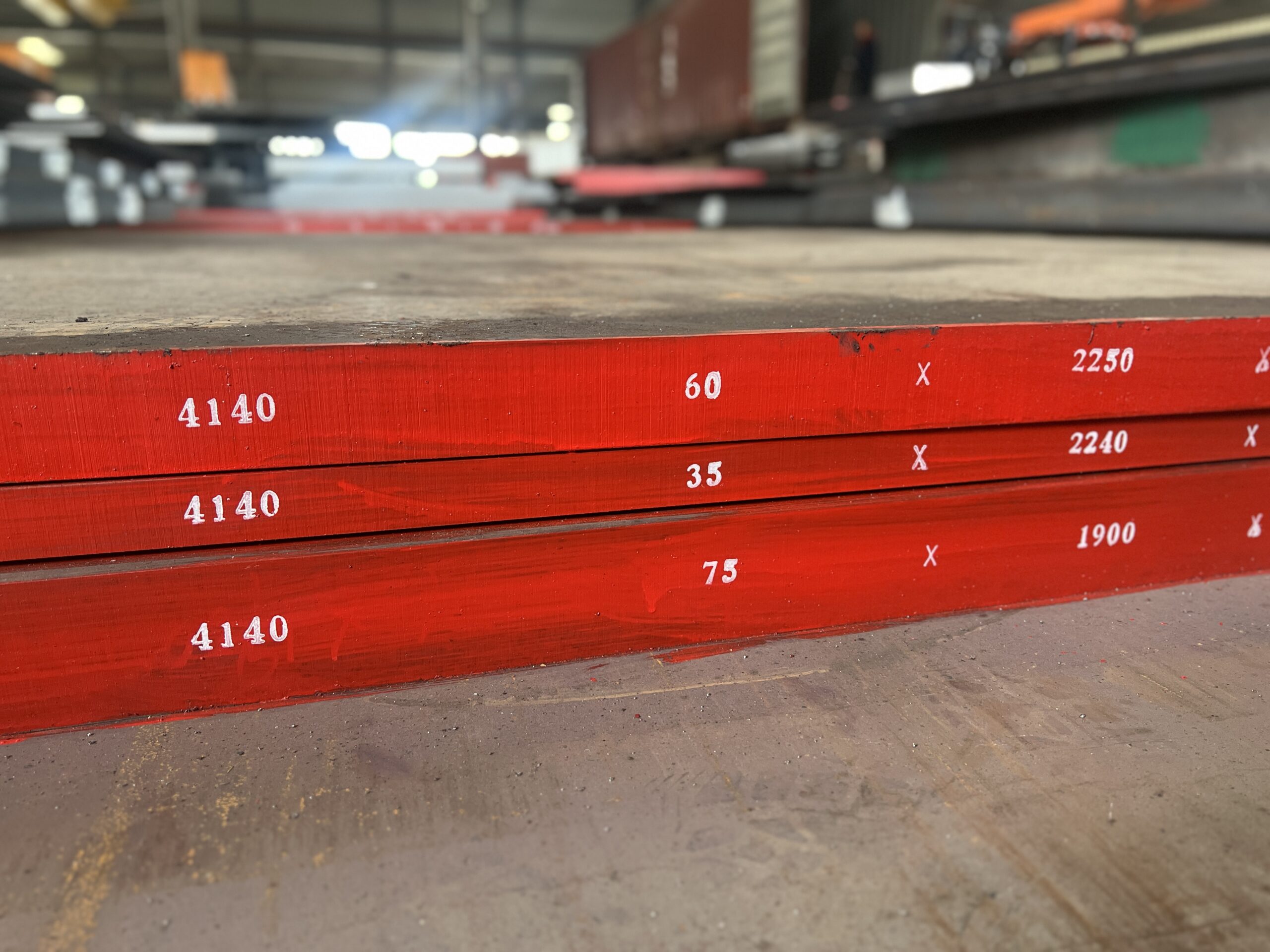
In plain English:4140 is stronger. 4130 is tougher. If your part experiences sudden impact or vibration, 4130 absorbs the energy better. If your part needs to resist deformation under high static load, choose 4140.
Technical Properties: Hardenability, Weldability, and Machinability
This section often determines the final decision.
Hardenability (Jominy Test)
– 4130: Shallow hardenability. Sections thicker than 50mm may retain a soft core after quenching in oil.
– 4140: Deep hardenability. You can harden sections up to 100mm or more in oil. For larger diameters, water quenching is possible.
Weldability 4140 vs 4130 Steel
– 4130: Good. Pre-heat to 150–250°C. Post-weld stress relief is recommended but not always mandatory for thin sections.
– 4140: Fair to poor. Requires pre-heat at 300–400°C, strict interpass temperature control, and immediate post-weld heat treatment. Skip these steps, and you risk hydrogen cracking.
Machinability 4140 vs 4130 Steel
– 4130 (annealed):Gummy and tendency to form built-up edge. Use sharp tools and proper coolant.
– 4140 (pre-hardened 28–32 HRC): Excellent. Produces short, broken chips and good surface finish.
Rhetorical question for you: Do you really want to manage a complex welding procedure for 4140 if 4130 will do the job? Probably not.
Typical Applications 4140 vs 4130 Steel
Let’s match the steel to real-world use.
| Industry | 4130 Applications | 4140 Applications |
|---|---|---|
| Aerospace | Aircraft tubing, structural frames | Landing gear components (heat treated) |
| Automotive | Roll cages, chassis, suspension parts | Axles, crankshafts, steering knuckles |
| Oil & Gas | Downhole tools, drill collars (light duty) | Heavy-duty drill collars, tool joints |
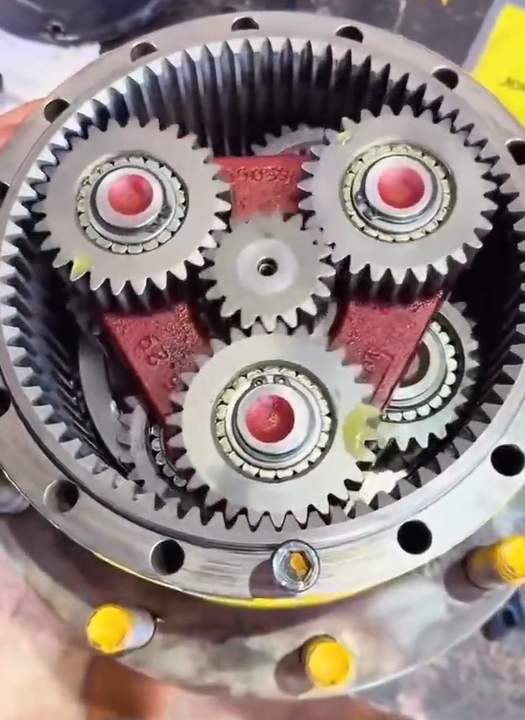
| General Engineering | Welded structures, hydraulic tubing | Gears, spindles, bolts, die holders |
| Tooling | Not common | Sockets, wrenches, hammer heads, mold bases |
Analogy time: 4130 is your reliable pickup truck—does the job every day without drama. 4140 is the semi-truck—massive capacity, but you wouldn’t use it to pick up groceries.
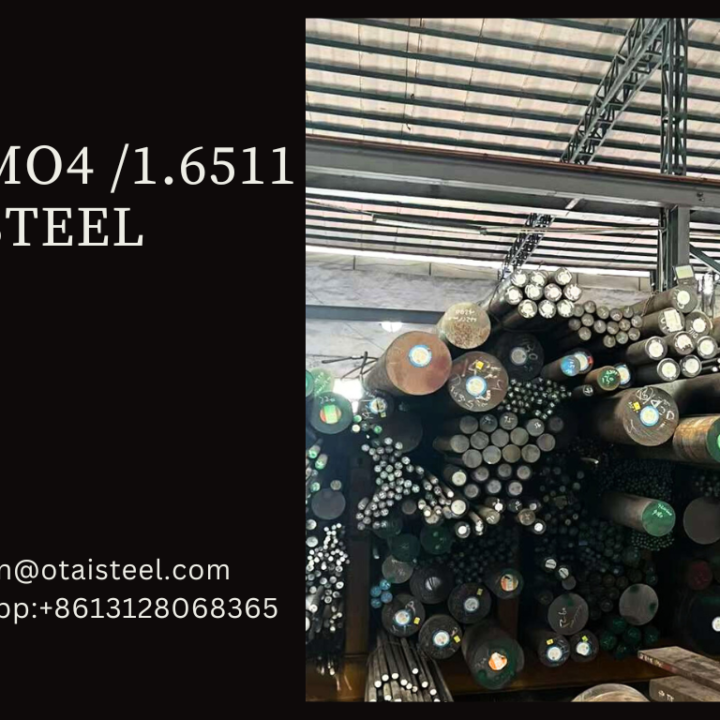
Available Sizes (From Otai Special Steel)
We stock both grades in a wide range of dimensions. Here’s what you can expect:
| Form | 4130 | 4140 |
|---|---|---|
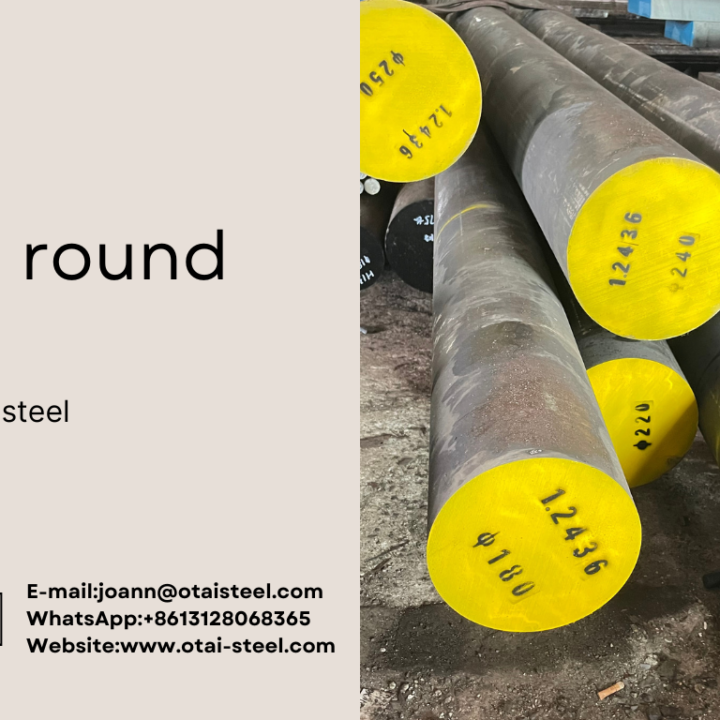
| Round Bar | 6mm – 200mm dia. | 6mm – 800mm dia. |
| Flat Bar | 10mm – 150mm thickness | 10mm – 300mm thickness |
| Seamless pipe | 20mm – 200mm OD (seamless) | 20mm – 300mm OD (seamless) |
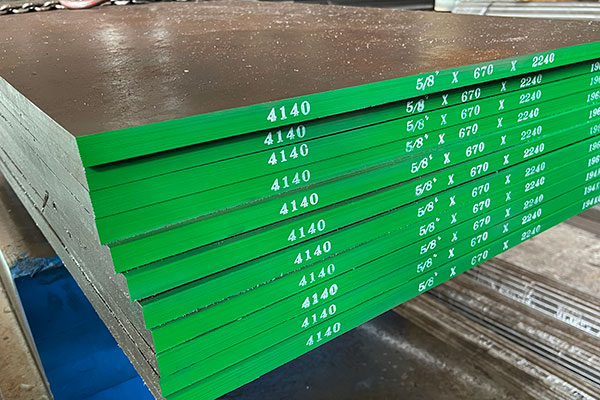
| Plate | 20-70mm thickness stock | 8mm – 200mm thickness |
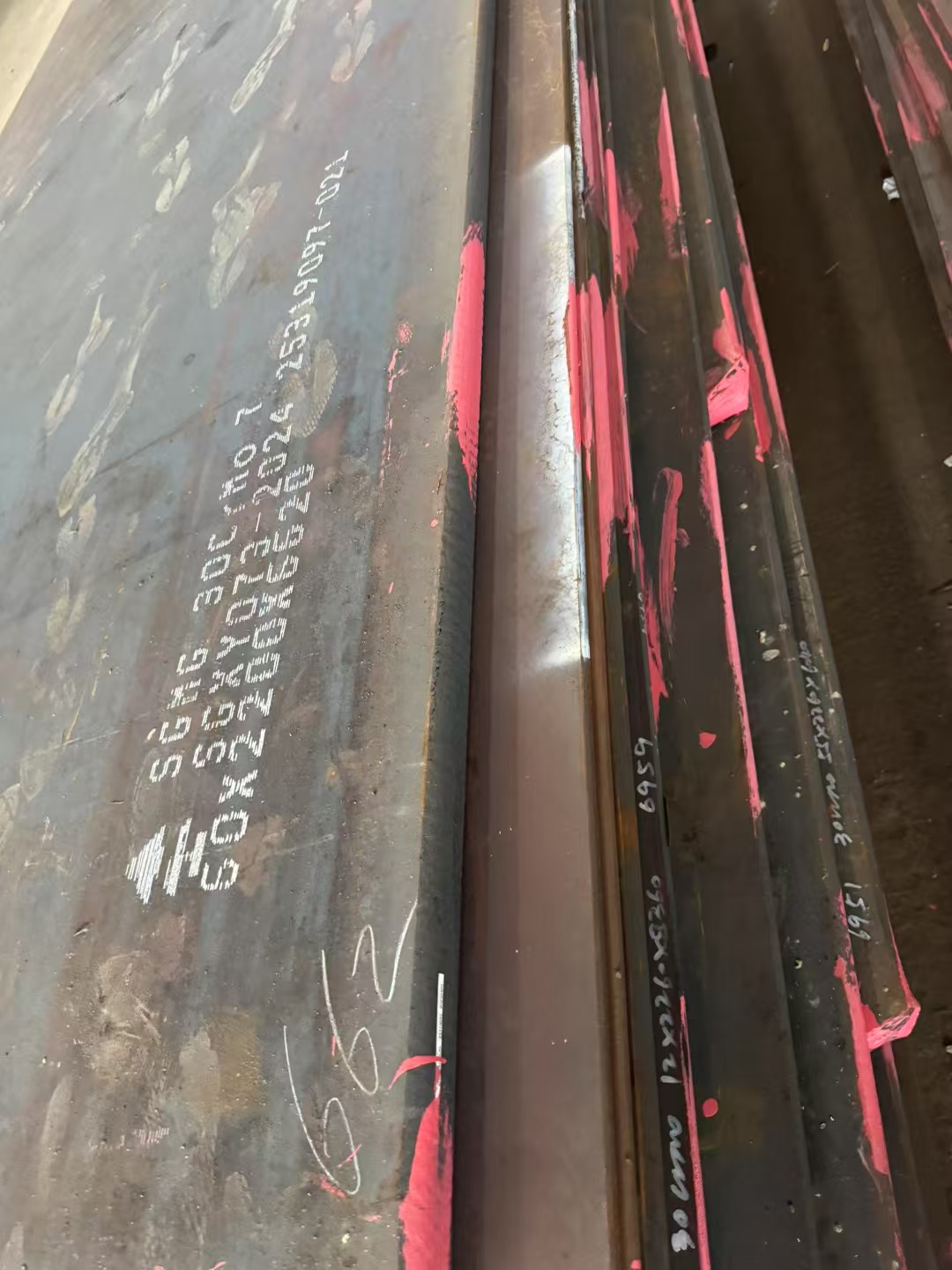
Need a non-standard size? Contact us. We do custom cutting and turning.
Price Comparison 4140 vs 4130 Steel
Let’s talk money openly. 4140 typically costs 10–20% more than 4130 for equivalent dimensions and quantities.
Why? Three reasons:
- Higher alloy content (manganese and tighter carbon control)
- More demanding heat treatment requirements
- Lower production volumes for certain shapes
But here’s my professional advice: Do not select based on price alone. I’ve seen buyers choose 4130 to save $200 per ton, only to experience premature wear. I’ve also seen engineers spec 4140 unnecessarily, paying extra for strength they never used.
Calculate the total lifecycle cost, not just the raw material price.
Additional Technical Considerations (Expert Ideas)
Here are four extra points that experienced engineers appreciate.
a. Surface Wear Resistance
4140 forms a harder, more durable surface under nitriding or induction hardening. For shafts running against seals or bushings, 4140 lasts significantly longer.
b. Stress Relieving
Both grades require stress relief after heavy machining. For 4130, use 600–650°C. For 4140, use 550–600°C. Do not skip this step—especially for precision components.
c. Cold Forming
4130 bends and forms more easily in the annealed condition. 4140 resists cold forming and may crack if you attempt tight radii.
d. Flame Hardening
4140 responds beautifully to flame or induction hardening (achieving 50–55 HRC at the surface). 4130 does not—you’ll struggle to exceed 45 HRC.
Final Recommendation (Stop Guessing)
| If you need… | Choose… |
|---|---|
| High weldability and good toughness | 4130 |
| Deep hardenability for thick sections | 4140 |
| Fatigue resistance under vibration | 4130 |
| High surface wear resistance | 4140 |
| Easy machining in pre-hardened condition | 4140 |
| Cost-effective solution for welded structures | 4130 |
Still unsure? Send your application details to Dongguan Otai Special Steel. Tell me the part function, thickness, welding requirements, and expected loads. I’ll give you a clear, objective recommendation—no upselling, no vague answers.
Because at Otai, we don’t just sell steel. We sell the right steel for your job.
Contact us today for a quote or technical consultation.